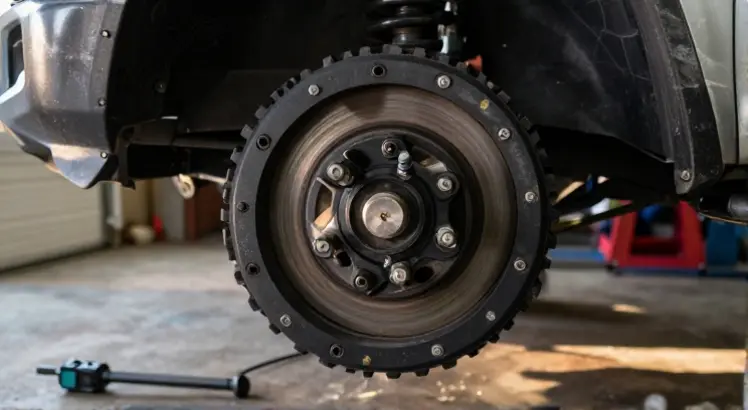
Wheel spacers can dramatically change the stance and handling of your vehicle. Many truck and car owners consider them to fit wider tires or achieve a more aggressive look. Before you buy a set, you need to understand the real answer to the question, are wheel spacers safe. This guide cuts through the myths and gives you the facts based on engineering principles, real-world driving, and long-term durability.
Not all spacers are created equal. The safety of a wheel spacer depends on its design, material, installation quality, and how it matches your specific vehicle. Cheap, poorly made spacers are a danger. High-quality, hub-centric spacers installed correctly can be perfectly safe for daily driving and even light off-roading. We will explain exactly what to look for so you can make a smart decision.
What Exactly Are Wheel Spacers?

KSP 6X5.5 Wheel Spacers for Silverado Sierra
Check PriceA wheel spacer is a flat, disc-shaped piece of metal that bolts onto your vehicle’s wheel hub. Its only job is to push the wheel farther outward, increasing the track width. This changes the vehicle’s offset and can create clearance for larger brake calipers, suspension components, or wider tires. Spacers typically come in two main types: lug-centric and hub-centric.
Lug-centric spacers rely solely on the wheel studs and lug nuts to center the wheel. Hub-centric spacers have a machined lip that fits snugly onto the hub and a corresponding lip for the wheel. This lip carries the weight of the vehicle and keeps everything perfectly centered, reducing vibration and stress. Understanding this difference is the first step in knowing when wheel spacers are safe.
How Wheel Spacers Affect Safety: The Engineering Truth

KSP 2 inch 6×139.7mm Wheel Spacer
Check PriceAre wheel spacers safe from an engineering standpoint? The answer hinges on your suspension geometry and the quality of the parts. Installing spacers alters the scrub radius, the distance between the tire’s centerline and the steering axis. A larger scrub radius can increase steering effort and make the vehicle more sensitive to bumps and road imperfections. This does not automatically make the car unsafe, but it does change the feel.
The biggest concern is the additional load on wheel bearings and suspension joints. Pushing the wheels outward creates a longer lever arm. This extra leverage increases the bending moment on the hub and the axial load on the wheel bearing. Over many miles, this can accelerate bearing wear and, in extreme cases, cause a hub failure if the spacer is abnormally thick or the vehicle is overloaded.
Leverage and Wheel Bearing Stress
Think of a wrench. The longer the handle, the easier it is to turn a stubborn bolt. A wheel spacer acts like a longer handle on your wheel bearing. The further the wheel sits from the bearing, the more force it can exert. With a modest 5mm to 15mm spacer, the added stress is usually negligible for a well-maintained daily driver. Racing and severe off-roading with large spacers push these components much harder.
Hub-Centric vs. Lug-Centric: A Critical Safety Distinction
Hub-centric spacers are the standard for safety. They transfer the vehicle’s weight directly to the hub lip, exactly like the factory setup. The studs simply clamp the assembly together. Lug-centric spacers put all the shear force on the studs. This can lead to broken studs and a wheel separation if the spacer is not perfectly centered, or if the studs are of insufficient grade. For any street-driven vehicle, never compromise on a hub-centric design.
Key Benefits of Installing Wheel Spacers

KSP 6X139.7 Silverado Hubcentric Spacer
Check PriceWhen they are safe and properly matched to the car, spacers offer several practical advantages. The visual improvement is obvious, but the performance benefits often surprise people. A wider track lowers the center of gravity slightly and can reduce body roll during cornering. This makes the car feel more planted and stable, especially when paired with upgraded tires.
- Creates necessary clearance for big brake kits or upgraded suspension.
- Allows fitment of wider tires without rubbing on the inner fender or strut.
- Enhances the vehicle’s stance and fills out the fender gaps nicely.
- Can improve high-speed stability by widening the track footprint.
These benefits only materialize with a proper installation. Any spacer that causes vibration, loose lugs, or steering wobble is a hazard. The moment you feel a shimmy in the steering wheel after installing spacers, stop driving and re-check the mounting surfaces and torque specs immediately.
When Are Wheel Spacers Not Safe?

dynofit 2in 6×5.5 Wheel Spacers
Check PriceThere are clear warning signs and scenarios where the answer to are wheel spacers safe is a firm no. The number one cause of dangerous failure is a poor-quality spacer made from soft, cast aluminum. These can crack or deform under load. Another common mistake is using spacers that are too thick without upgrading to longer wheel studs, leaving the lug nuts with only a few threads of engagement.
- Stacking multiple spacers together to achieve a desired offset.
- Using lug-centric spacers on a vehicle designed for hub-centric wheels.
- Running spacers with a thickness that prevents the hub lip from engaging the wheel (common with slip-on spacers over 5mm).
- Ignoring the correct torque specifications and failing to re-torque after 50 miles.
- Installing spacers without checking for adequate fender clearance under full suspension compression.
If you plan to track your car, consult a professional. Some motorsport organizations ban wheel spacers entirely due to the increased risk of stud failure under extreme stress. For street use, sticking to a reputable brand and a conservative thickness keeps you in the safe zone.
How to Choose Safe Wheel Spacers

KSP 5×5 Wheel Spacers for Jeep Grand Cherokee & Wrangler
Check PriceMaterial quality is non-negotiable. Billet 6061-T6 or 7075-T6 aluminum is the industry benchmark for strength and corrosion resistance. Steel spacers are also available and extremely strong but add more weight. Always look for a brand that CNC machines its spacers and provides precise center bore measurements. A high-quality spacer will not be the cheapest option on the shelf.
Confirm your vehicle’s bolt pattern, center bore, and thread pitch before ordering. The spacer must match exactly. A common safe starting point is a 5mm to 15mm slip-on spacer for mild aesthetic upgrades. For anything over 20mm, bolt-on spacers with their own pressed-in studs are necessary. This style bolts to your existing hub, and then the wheel bolts to the spacer. When shopping, you can find a detailed list of high-quality wheel spacer recommendations that meet these exact criteria.
Pay close attention to the hub-centric design. A properly fitted spacer should require light hand pressure to seat onto the hub. There should be zero play. For the best load distribution and vibration-free driving, hub-centric wheel spacers are the only type you should consider for a road car. Never settle for close enough when it comes to the center bore fitment.
Proper Installation: The Make-or-Break Step
Even the best spacer becomes a hazard if installed incorrectly. Start by thoroughly cleaning the hub face and the back of the wheel to remove all rust and dirt. Any debris trapped between the spacer and the hub will cause run-out, vibration, and uneven clamping force. A wire brush and brake cleaner are your best friends during this process.
Apply a small amount of anti-seize compound on the hub lip to prevent the spacer from bonding to the rotor over time. Thread the lug nuts or bolts by hand to avoid cross-threading. Use a calibrated torque wrench and follow the vehicle manufacturer’s torque spec, tightening in a star pattern. After driving 50 to 100 miles, remove the wheels and re-torque the spacers and lug nuts. This is not optional, it is critical.
Torque and Re-Checking Procedures
Heat cycles and vibration cause the metal to settle. A loose spacer will shear the studs rapidly. Many catastrophic wheel separations happen simply because the owner skipped the re-torque step. Mark each lug nut with a paint pen after the final torque. If the marks ever shift, you know something is loose. This habit takes seconds and saves lives.
Also be aware of your lug seat type. Spacers may require a conical seat, ball seat, or flat seat lug nut. Using the wrong seat type distributes clamping force incorrectly and can crack the lug holes in the wheel or spacer. If your spacer uses open-ended lug nuts, check the stud engagement regularly. You need a minimum of six to eight full turns of thread engagement.
Long-Term Maintenance and Monitoring
Are wheel spacers safe over the long haul? Yes, but only with a committed maintenance routine. Include a spacer and lug nut inspection with every tire rotation. Look for hairline cracks around the bolt holes or any sign of galvanic corrosion between the aluminum spacer and the steel hub. A seized spacer that has welded itself to the rotor can be a major headache to remove later.
Listen for new noises. A failing wheel bearing often hums or growls and changes pitch when you load that side of the car in a turn. If you notice this shortly after installing spacers, the extra leverage may have accelerated a bearing that was already weak. Catching it early prevents a dangerous lock-up on the highway.
Frequently Asked Questions
Do wheel spacers cause vibration?
High-quality, hub-centric spacers should not cause any vibration. Vibration occurs when the spacer does not center perfectly on the hub, which is common with universal lug-centric spacers. It can also happen if the mounting surfaces are dirty or if the spacer has a manufacturing defect. Always test drive gently at first.
Will wheel spacers damage my ball joints and bearings?
They increase the load, but damage is not guaranteed. A mild spacer of 10mm on a truck with robust bearings will have a minimal impact over the service life. Pushing a wheel out 2 inches on a compact car will accelerate wear noticeably. It is a trade-off between aesthetics and long-term component life.
Are bolt-on spacers safer than slip-on spacers?
Bolt-on spacers are generally safer for large thicknesses over 20mm because they provide dedicated studs and eliminate the need for excessively long factory studs. However, they add another set of lug nuts that must be torqued and maintained. As long as the bolt-on spacer is hub-centric, it is a very safe design when installed properly.
Can I use wheel spacers on a lifted truck?
Yes, many off-road enthusiasts use them. The key is to choose spacers rated for the increased stress of heavy tires and rough terrain. Steel spacers are often preferred for extreme abuse. Remember that a wider track on a lifted truck changes the scrub radius drastically and can make steering wander on the highway.
Is it true that wheel spacers are illegal?
Regulations vary by region. In some areas, any modification that causes the tire tread to protrude beyond the fender flare is illegal. Others do not specifically ban spacers as long as the vehicle passes a safety inspection. Always check your local vehicle equipment laws before purchasing a set.
Conclusion: Making the Smart, Safe Choice
So, are wheel spacers safe? They are only as safe as the person choosing and installing them. Cheaping out on a no-name aluminum disc from an auction site is never safe. Investing in precision-machined, hub-centric spacers from a known brand and installing them with meticulous care is a reliable way to modify your car. The difference between a secure upgrade and a roadside disaster is entirely in your hands.
Always prioritize a perfect center bore match, verified material grade, and a religious adherence to torque values. If you are not comfortable pulling a wheel and using a torque wrench, pay a professional shop to do the work. A wider stance looks fantastic, but safe motoring feels even better. For a deeper understanding of how Spacers Affect Your Car’s Handling, a detailed explanation from a reputable automotive resource confirms these core principles.