Sloppy handling, tires rubbing the inner fender, and a weak, tucked-in stance can ruin the look and feel of your truck or SUV. You spent good money on your vehicle, and it deserves to sit right. The fix is installing a quality set of wheel spacers. We’ve analyzed the market to save you from vibration-prone, unsafe junk and bring you the solid, forged options that actually work.
Short Answer: The KSP 6×5.5 Wheel Spacers for Silverado Sierra (1.5 inch Forged, 78.1mm Hub Bore) is the best overall choice for most truck owners. It combines a true forged 6061-T6 aluminum construction, precise hub-centric fitment for Chevy/GMC, and pre-installed M14x1.5 studs to eliminate dangerous vibrations. This gives you the perfect flush stance without compromising safety or reliability.
What Exactly Are Wheel Spacers and Why Do You Need Them?
Wheel spacers are precision-machined metal discs that mount onto your vehicle’s wheel hub. They effectively push the wheel out farther from the suspension components, creating a wider track width. Most high-quality spacers are made from billet aluminum, specifically 6061-T6 or 7075-T6 aerospace-grade alloys, combined with pressed-in steel studs for maximum shear strength.
Vehicle owners typically look for spacers to solve three main problems. First, they correct tire rubbing issues that occur when upgrading to larger, wider tires. Second, they provide the necessary clearance for aftermarket brake calipers that might scrape against the inside of the wheel barrel. Finally, many drivers simply want to improve the visual appeal of their ride by achieving a flush stance with the fenders.
It is a common misconception that spacers are purely cosmetic accessories. When installed correctly, a wider track width can lower the vehicle’s center of gravity, reducing body roll during cornering. A properly matched spacer set can actually enhance stability, provided you never sacrifice hub engagement or use low-grade materials that crack under pressure.
Best Wheel Spacers of 2025
When selecting the best wheel spacers, it is essential to understand the different types available and how they affect your vehicle’s stability. Our detailed guide to hub-centric wheel spacers explains why these precision-fit spacers are often the safest choice for maintaining proper wheel alignment. For a broader technical perspective, you can also refer to this comprehensive overview of wheel spacer technology, which covers the engineering principles behind these components.
1. KSP 6X5.5 Wheel Spacers for Silverado Sierra – Best Overall Hub-Centric Fit

KSP 6X5.5 Wheel Spacers for Silverado Sierra
Check PriceWhy it stands out
This spacer uses a real forged 6061-T6 construction and includes a 78.1mm hub-centric lip. That lip completely eliminates the high-speed wobble you get with cheap, flat spacers. It is built exactly for the heavy-duty demands of your Silverado or Sierra.
Key points
- True forged 6061-T6 aluminum resists cracking under heavy load
- Pre-installed M14x1.5 heat-treated studs with red threadlocker
- 1.5-inch thickness clears most factory and aftermarket UCA upgrades
- Matte black anodized finish protects against corrosion
Pros
- Perfectly flush stance on stock 20-inch wheels
- Zero vibration at highway speeds thanks to hub-centric design
- Simple direct bolt-on with no permanent modifications needed
- Includes a long-term warranty against manufacturing defects
- Does not require trimming the factory wheel studs
Cons
- You must torque them to spec, then re-torque after the first 50 miles
- Adds a slight amount of rotating mass compared to staying stock
Best for
The Chevy Silverado or GMC Sierra owner who wants a dead-reliable, zero-vibration fit and a significantly improved aggressive stance without swapping wheels.
2. KSP 2 inch 6×5.5 Wheel Spacers for Silverado/Sierra – Aggressive Wide Stance for GM Trucks

KSP 2 inch 6×139.7mm Wheel Spacer
Check PriceWhy it stands out
This 2-inch option gives you that head-turning, bulldog stance. It uses a 108mm center bore and M14x1.5 studs. If you plan to run aggressive negative-offset wheels or need maximum clearance for lifted spindles, this thick adapter gets the job done safely.
Key points
- 50mm thick forged spacer allows for large tire clearance
- 108mm bore diameter works with a huge range of aftermarket wheels
- Black anodized coating for long-term resistance to road salt
- Pre-installed studs with high-grade 12.9 strength bolts
Pros
- Maximum clearance for lifted trucks with oversized tires
- Solid one-piece forging prevents flex under torque
- Fits a wide variety of GM 1500 trucks and SUVs
- Noticeably improves cornering stability by widening the track
- Precision CNC machining ensures a perfectly flat mounting surface
Cons
- Excessive poke for someone who only wants a mild flush look
- May require trimming the factory stud tips on some specific wheel pockets
Best for
Lifted truck owners who want an extreme stance and need the extra backspacing clearance to stop 35-inch tires from rubbing the frame at full lock.
3. KSP 6×135 Hubcentric Wheel Spacers for F150 – Best for 2015-2025 Ford F-150

KSP 6×135 Hubcentric Wheel Spacers for F150
Check PriceWhy it stands out
For the F-150 owner, generic spacers simply do not work safely. This KSP kit is specifically machined for the 6×135 bolt pattern, and it includes the crucial 87.1mm hub-centric ring. That ring takes all the weight off the studs and puts it on the hub.
Key points
- Designed for Ford F-150, Expedition, and Lincoln Navigator
- M14x1.5 pre-installed pressed-in studs come with threadlock
- 1.5-inch thickness achieves a perfectly flush look on stock wheels
- Forged 6061-T6 billet aluminum with a durable black coating
Pros
- Eliminates the factory sucked in look on modern F-150s
- Exact hub match prevents high-speed steering wheel shimmy
- High tensile strength holds up well to heavy towing
- No need to change the brand new factory studs to longer versions
- Precision tolerances make sliding the wheel on very easy
Cons
- The black finish can fade to a dark gray over several years in harsh sun
- Does not fit the pre-2014 F-150 generation without a different bolt pattern
Best for
Ford F-150 drivers from 2015 through 2025 who need a safe, vibration-free spacer that fits the unique Ford hub perfectly and allows for a more planted stance.
4. KSP 1.5 inch 6X139.7 Silverado Hubcentric Spacer – Premium Forged Construction

KSP 6X139.7 Silverado Hubcentric Spacer
Check PriceWhy it stands out
This is another variant in the KSP lineup that doubles down on hub-centric accuracy with a 78.1mm center bore. The forging process here is top-tier, ensuring the grain structure of the metal follows the contours of the spacer for maximum strength and zero porosity.
Key points
- CNC machined from a single block of forged 6061 aluminum
- High-grade 12.9 wheel bolts rated for heavy torque specs
- Corrosion-resistant anodizing on both faces and inside the stud holes
- Direct fit for Chevy Tahoe, Avalanche, Express, Suburban, and Yukon
Pros
- Extremely tight machine tolerances leave zero slop on the hub
- Removes the awkward tuck on the GMT900 and K2XX platforms
- Properly heat treated to avoid brittleness in cold climates
- Easy to clean and maintain the matte dark finish
- Works with factory lug nuts on most stock GM wheels
Cons
- Only available in black, which not all truck owners prefer
- You need to check clearances closely if you run mud flaps with wide tires
Best for
Owners of full-size GM SUVs, such as the Tahoe or Suburban, who prioritize a perfectly smooth highway ride and the highest material strength available.
5. KSP 6X5.5 Wheel Spacers for Tacoma 4Runner – Forged Hub Adapters with Open Nuts

KSP 6X5.5 Wheel Spacers for Tacoma 4Runner
Check PriceWhy it stands out
This kit is specifically tailored for the Toyota truck platform, often overlooked by universal spacer brands. It comes with extended open-end lug nuts, making it a comprehensive kit. The 6061-T6 aluminum build stands up to off-road abuse without deforming.
Key points
- Fits Toyota Tacoma, 4Runner, and vehicles without a locking hub
- Includes 24 extended open-top lug nuts for easy installation
- Hub-centric design balances the tire perfectly on the axle
- 1.5-inch push-out clears aggressive mud-terrain tires
Pros
- No need to source separate lug nuts, everything is in the box
- Stops tire rub on the frame rail during tight trail turns
- Lightweight feel despite being incredibly strong forged metal
- Corrosion-resistant for crossing water and mud holes
- Lifetime warranty backs up the durable spec sheet
Cons
- Open nuts can collect dirt and require more cleaning than closed caps
- Not compatible with the FJ Cruiser without verifying the hub lock setup
Best for
The Toyota enthusiast who takes their 4Runner or Tacoma off-road on weekends and needs a complete, forged kit that handles rock impacts without cracking.
6. KSP 5X5.5 Ram 1500 Wheel Spacers – Perfect Fit for 5-Lug Dodge Classics

KSP 5X5.5 Ram 1500 Wheel Spacers
Check PriceWhy it stands out
Owners of the 2012-2018 classic body Ram 1500 often struggle to find the correct 5×139.7 bolt pattern with a proper 77.8mm hub bore. This spacer solves that perfectly, filling the rear wheel wells and making those stock chrome-clad wheels look aftermarket.
Key points
- 5×5.5 pattern with a tight 77.8mm hub-centric fit
- M14x1.5 threaded studs match the factory thread exactly
- 1.5-inch thick forged aluminum adds stability
- Comes in a set of four with a robust black coating
Pros
- Transforms the dated look of the 4th-gen Ram 1500
- Factory-style acorn lug nuts seat securely without bottoming out
- Smooths out body roll slightly by widening the track
- No plastic hub rings needed, it is all structural metal on metal
- Direct bolt-on with just a torque wrench required
Cons
- Only fits the 5-lug config, so 6-lug owners must choose a different model
- Can cause some rubbing on models without the factory fender flares
Best for
Dodge Ram 1500 drivers from the 2012 to 2018 era who want a cosmetic upgrade that also provides a tangible improvement in handling stability.
7. KSP 2 inch Wheel Spacers for F150 Expedition – Maximum Ford Flush Fit

KSP 2 inch Wheel Spacers for F150 Expedition
Check PriceWhy it stands out
This is the big brother to the 1.5-inch F-150 spacer, hitting a 50.8mm thickness. It retains the critical 87.1mm hub-centric design. If you are doing a full lift and want those tires way out of the fenders, this adapter is engineered to handle the added leverage without strain.
Key points
- Huge 50.8mm spacing for 2 inches of extra track width
- M14x1.5 studs with premium heat treatment for strength
- Fits 6-lug Ford Expedition and Lincoln Navigator perfectly
- 87.1mm center bore for exact alignment on the Ford axle hub
Pros
- Creates an unmistakably aggressive trophy-truck stance
- Maintains factory ride quality while looking totally custom
- Deep clearance stops UCA interference on lifted suspension
- Comes with a clear, easy-to-follow torque guide
- The thick profile actually helps cool the brake components slightly
Cons
- Significantly increases the debris thrown onto the side of the vehicle
- Will stick out too far on stock-height trucks with narrow tires
Best for
Ford owners with lifted Expeditions or F-150s who embrace the wide, wide stance and need a hub-centric solution that won’t shear studs during heavy off-road use.
8. dynofit 2in 6×5.5 Wheel Spacers for Silverado/Ram – Direct Bolt Kit with Geomet Bolts

dynofit 2in 6×5.5 Wheel Spacers
Check PriceWhy it stands out
Dynofit shakes things up by using Geomet-coated bolts, which offer incredible rust prevention compared to standard zinc plating. This 2-inch kit is lug-centric with a 108mm bore, making it widely universal for GM and even newer Ram 1500s.
Key points
- Lug-centric design relies on precise tapered lug holes
- Geomet-coated bolts provide 1000+ hours of salt spray resistance
- Forged aluminum body with a tough painted finish
- 108mm center bore clears most aftermarket wheel hub diameters
Pros
- Impressive corrosion resistance for snowy belt truck owners
- Bolts do not gall or seize during the torquing process
- Thick 50mm spacer allows for a very deep dish wheel look
- Universal fit that covers decades of 6-lug models
- Strong value for the price point on a 2-inch lift spacer
Cons
- Lug-centric design requires very careful centering during install
- The painted finish may chip away if you use impact tools carelessly
Best for
Budget-conscious owners who drive in the rust belt and need 2 inches of spacing with hardware that will not become a corroded mess after one winter season.
9. KSP 1.5in Wheel Spacers for Ram 1500 2019+ – Best for the 5th Gen Rebel and Laramie

KSP 1.5in Wheel Spacers for Ram 1500 2019
Check PriceWhy it stands out
The 2019+ Ram 1500 switched to a 6×139.7 bolt pattern, and this KSP spacer is machined just for that generation, including the Grand Wagoneer. It uses a 77.8mm hub bore that matches the Ram hub perfectly, offering a true hub-centric ride with no wobble.
Key points
- Precise 77.8mm center bore for the modern Ram DT platform
- M14x1.5 forged studs handle the heft of a full-size truck
- 38mm thickness pushes the OEM 22-inch wheels flush
- Fully forged billet with a durable anodized layer
Pros
- Makes the factory air-suspension Rams sit perfectly
- No plastic hub rings required, unlike some universal brands
- Steering feel remains rock solid at 80mph on the interstate
- Easy to remove and leave no permanent marks on the hub face
- Fits both the new Ram and the heavy Jeep Wagoneer models
Cons
- A bit pricey compared to lug-centric generic brands
- Gen 5 Rams with the off-road package may still need minor mud flap trimming
Best for
The owner of a brand new Ram 1500 Limited or Grand Wagoneer who refuses to use cheap adapters on a luxury truck and demands a perfect factory-like fit.
10. 4Pcs Universal 5mm Wheel Spacers by Glorider – Best Affordable Shim for Minor Clearance Fix

4Pcs Universal 5mm Wheel Spacers
Check PriceWhy it stands out
These are not for aggressive stances, they are specifically for solving minor clearance problems. At a thin 5mm slip-on, these shims can stop the caliper from kissing the wheel spokes or fix a slight tire rub. The multi-pattern design works on an incredible range of 4-lug and 5-lug hubs.
Key points
- 5mm thick slip-on spacer design, no stud replacement needed
- Multi-lug pattern covers 4×100 up to 5×120 and everything in between
- Aircraft-grade aluminum with a smooth machined finish
- Works on 5×4.5, 5×4.75, 5×100, 5×10⁸, 5×110, 5×112, and 5×114.3
Pros
- Extremely easy install, you just slide them over the studs
- Very affordable fix for a vibrating brake shield or tight caliper
- Lightweight addition does not affect unsprung mass
- Acts as a barrier between the steel rotor hat and alloy wheel, stopping galvanic corrosion
- Includes four pieces for a complete axle set
Cons
- Reduces the hub-centric lip engagement, which effectively makes the wheel lug-centric
- Not intended to widen the track for cosmetically visible results
Best for
Anyone running aftermarket wheels that need an extra millimeter of clearance to stop rubbing the brake caliper or suspension arm, and who wants to protect the hub from rust welding.
11. KSP 1 inch 6X5.5 Wheel Spacers for Tacoma – Slim Spacer with M12x1.5 Pitch

KSP 1 inch 6X5.5 Wheel Spacers for Tacoma
Check PriceWhy it stands out
This is the go-to for Toyota owners who want a mild boost. It accounts for the specific M12x1.5 thread pitch found on many Tacomas and 4Runners. With a 25mm thickness, it pushes the wheels out subtly but allows the use of wider tires without heavy modifications.
Key points
- Forged 6061 aluminum with a corrosion-resistant finish
- 25mm thickness for a subtle, functional poke
- 108mm center bore hub diameter for universal 6-lug fit
- Specific M12x1.5 studs for Toyotas to ensure perfect lug nut threading
Pros
- Correct thread pitch prevents stripping the studs
- Maintains a close-to-stock scrub radius for good handling
- No need to trim the factory wheel studs on most applications
- Helps balance out the look of a leveled lift kit
- Solid customer service and warranty from KSP
Cons
- Lug-centric design requires careful star-pattern torquing
- Thinner profile may not clear all aftermarket UCA designs
Best for
Toyota truck owners who want a 1-inch bump in stance while keeping the steering geometry tight and the wheel assembly as vibration-free as possible.
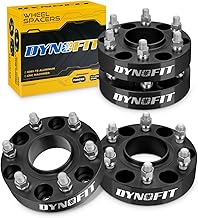
12. Dynofit 1.5 inch 6×5.5 Silverado Hubcentric Spacer – 78.1mm Bore GM Specialist
Dynofit 1.5 inch 6×5.5 Silverado Spacers
Check PriceWhy it stands out
Dynofit competes directly with KSP here by offering a 78.1mm hub-centric bore real forged spacer. It is optimized for the weight and torque of the GM 1500 series. The precise hub lip ensures your heavy 33-inch tire assembly spins true every time.
Key points
- Real forged construction with high load-bearing capacity
- M14x1.5 high-strength stud bolts, pre-installed with threadlocker
- 78.1mm precise hub lip for a snug fit on the axle
- Black anodized surface finish for oxidation protection
Pros
- Very snug fit on the hub removes any guesswork during alignment
- Does not require hub-centric rings, eliminating a failure point
- Good value for a fully forged, hub-centric design
- Modern manufacturing quality rivals more expensive brands
- Packaged well to prevent shipping damage to studs
Cons
- Limited to just the 1.5-inch option for this specific p/n
- Hardware finish can be slightly tacky until the first heat cycle cures it
Best for
Silverado and Sierra owners who want a trusted alternative to KSP that still delivers a true forged hub-centric design and high-grade M14x1.5 studs.
13. KSP 5×5 Wheel Spacers for Jeep Grand Cherokee & Wrangler – JK and WJ Hub Fit

KSP 5×5 Wheel Spacers for Jeep Grand Cherokee & Wrangler
Check PriceWhy it stands out
Jeeps have specific hub sizes, and this KSP spacer nails the 71.5mm bore for Wrangler JK and Grand Cherokee WJ/WK. The 1/2-20 stud thread is correct for the platform, making it a safe, direct bolt-on. It gives you the clearance needed for lift kits and oversized tires on the trail.
Key points
- 71.5mm hub-centric bore for perfect Jeep hub engagement
- 1.5-inch thickness stops tire rub on sway bars and control arms
- 1/2-20 thread pitch grade 10.9 heat-treated studs
- Forged 6061-T6 aluminum resists rock rash and chipping
Pros
- Proper brawny studs that match Jeep torque specs
- Widens the footprint to add side-hill stability
- Clears 35-inch tires on most moderate lift setups
- Does not cause the death wobble when properly torqued
- Robust enough to handle rock crawling without cracking
Cons
- Adding rotational width can accelerate wheel bearing wear on older Jeeps
- You absolutely must break loose any seized factory nuts before taking it to a shop
Best for
Jeep JK and WJ owners who off-road hard and need a hub-centric spacer that can survive being smashed against rocks, mud, and water crossings without failing.
How to Choose the Best Wheel Spacers
Selecting the right spacer is not just about looks, it is a critical safety decision. You must first identify your vehicle’s exact bolt pattern. Most trucks use 6×135, 6×5.5, or 5×5 bolt circles, and getting this wrong means the spacer will not even bolt up to your hub.
The center bore is the next vital spec. A hub-centric spacer features a machined lip that fits snugly over your truck’s axle hub. This lip carries the weight of the vehicle and eliminates high-speed vibrations. Lug-centric spacers lack this lip, forcing the wheel studs to bear all the weight, which can cause shear failure.
Material quality separates a safe investment from scrap metal. Real 6061-T6 forged aluminum spacers are far superior to standard cast aluminum spacers. The forging process aligns the metal grain structure under extreme pressure, eliminating hidden air pockets and microscopic cracks that lead to spacer failure during hard cornering.
Stud grade matters just as much as the aluminum body. Look for heat-treated 10.9 or 12.9 grade studs already pressed into the spacer. Pre-installed studs with red thread locker ensure the stud does not back out when you remove your wheel. Finally, verify the thread pitch, such as M14x1.5 or 1/2-20, matches your factory lug nuts to avoid a dangerous cross-threading situation.
Critical Materials: Billet Aluminum vs. Steel
Material science plays a massive role in determining which spacer set will survive years of abuse. While both steel and aluminum are used in the industry, the best wheel spacers for modern vehicles are almost exclusively crafted from high-grade billet aluminum. This choice is not about cost cutting, it is about physics and corrosion resistance.
Tensile Strength and Heat Dissipation
6061-T6 aluminum offers an exceptional strength-to-weight ratio, allowing a significant reduction in unsprung mass compared to raw steel. Lighter unsprung mass means your suspension can react faster to bumps, keeping the tire planted on the road. Furthermore, aluminum dissipates heat far better than steel, which helps pull heat away from the brake rotor and extends the life of your brake pads.
You might wonder if aluminum is strong enough to handle the torque of a heavy-duty truck. The answer lies in the forging process. When a solid block of T6 aluminum is CNC-machined into a spacer, the grain structure remains continuous and incredibly strong. High-end spacer brands subject these units to strict tolerance tests, often exceeding the strength of a standard cast steel wheel.
The Role of Carbon Steel Studs
While aluminum forms the body, the heart of the spacer is the stud. The best wheel spacers use cold-forged, 10.9-grade carbon steel studs that are pressed into the aluminum at a specific pressure. This prevents the studs from cross-threading or spinning in place. A quality spacer will have the stud splines fully embedded, ensuring that torquing down the lug nut never rotates the stud inside the spacer body.
Be wary of spacers that come with pre-installed “mystery metal” studs that rust within a month. Coated studs, like zinc-plated or geomet finishes, resist salt corrosion and make seasonal tire changes effortless. If you live in an area where roads are salted in winter, anti-corrosion coating on both the aluminum and the steel components is non-negotiable.
Common Mistakes to Avoid When Installing Wheel Spacers
The most dangerous mistake is using an impact wrench for the final torque. You must hand-torque the spacer nuts to the manufacturer’s specification using a calibrated torque wrench in a star pattern. Impact guns can easily over-torque and stretch the studs, creating a microscopic fracture zone that snaps off when you hit a pothole at highway speed.
Do not ignore hub corrosion. The mating surface on your truck’s hub must be perfectly clean and flat before you slide the spacer on. A chunk of rust or brake dust trapped between the spacer and the hub creates a wobble that mimics a bent rim. A wire brush and some patience here save you hours of chasing a vibration that simply will not go away.
Re-torquing is not optional, it is mandatory. You must drive the vehicle for about 50 miles and then re-torque every single bolt. Aluminum spacers go through a heat cycle, and specifically, the material expands and contracts slightly during the first drive, which loosens the clamping force. Skipping this step is the number one reason spacers loosen up and damage components.
Also, do not assume a 2-inch spacer clears everything without checking. Turn the steering wheel to full lock and inspect the tire clearance at the front and rear of the wheel well, and also the suspension bolt heads. A spacer can solve a frame rub but push the tire straight into the fender lip if you do not verify clearances first.
Frequently Asked Questions
Are wheel spacers actually safe to use on heavy trucks?
Yes, absolutely safe when they are high-quality forged hub-centric spacers installed correctly. These spacers relocate the load safely onto the axle flange, not just the studs. The horror stories you hear online come from cheap cast spacers or improper installations where the lug nuts were not torqued correctly.
Will installing wheel spacers ruin my bearings?
It can accelerate wear slightly, but it is not as dramatic as many fear. By moving the tire centerline outward, you change the scrub radius and add a slight lever effect on the hub. For a daily driven street truck, the difference is negligible over the life of the vehicle, though hard-core off-roaders may replace bearings a bit earlier.
Do I need to cut my factory studs for a 1.5-inch spacer?
Usually not. Most 1.5-inch thick spacers have pockets machined into the back face. These cavities accept the tip of the factory wheel stud that protrudes past the mounting face. You only need to cut or grind down the factory studs if your specific wheel lacks a relief pocket between the lug holes and you feel a hard stop during mounting.
What is the difference between hub-centric and lug-centric?
A hub-centric spacer has a machined lip that physically engages the center bore of the hub, centering the spacer and carrying the load. A lug-centric spacer relies entirely on the cone shape of the lug nuts to center the wheel. Hub-centric is always preferable because it eliminates high-speed vibrations.
Can I use wheel spacers if I tow a heavy trailer?
You can, provided you use forged spacers with a high load rating. The spacer must be rated for at least your Gross Vehicle Weight Rating per axle. Do not use slip-on 5mm shims for heavy towing, as they don’t add structural support, stick to bolt-on hub-centric adapters like the KSP or Dynofit models.
Do I need an alignment after installing spacers?
No, spacers themselves do not change alignment angles like camber or toe. However, if you install a lift kit at the same time, you absolutely need an alignment. If you widen the track significantly and feel it pulling, an alignment check is a good secondary step to optimize tire wear.
How often should I check the torque on my spacers?
Re-torque them after the first 50 miles of driving. After that initial re-check, you should verify the torque every time you rotate your tires, roughly every 5,000 miles. If you off-road and expose components to heavy vibrations and impacts, check them after every trip.
What thread locker should I use on the spacer bolts?
You must use red thread locker compound on the bolts that hold the spacer to the original hub. This prevents the bolts from loosening. For the outer lug nuts that hold the wheel to the spacer, just use a small dab of anti-seize or nothing at all, but always torque them dry to the wheel specification.
Can I stack two wheel spacers together?
Never stack spacers. Adding a spacer on top of another spacer creates double the shear planes and an extreme lever effect. This setup is incredibly dangerous and known to snap studs clean off. Buy a single forged spacer in the correct thickness you need for the job.
Do off-road spacers need to be certified or DOT approved?
There is no official DOT certification specifically for aftermarket wheel spacers in the US. Instead, you should look for evidence of rigorous independent testing, material certifications like 6061-T6, and a solid manufacturer warranty. Brands that specifically state their forging process are much safer bets.
Conclusion
Choosing the right wheel spacer is entirely about trusting the engineering beneath the surface. A block of cheap cast metal hiding behind your expensive wheels is a risk no one should take with their daily driver. The market leaders, like the top-rated KSP units, prove that you can get a massive aesthetic and handling improvement without sacrificing the structural integrity of your suspension.
Hub-centric fitment is the gold standard you should aim for, as it maintains the factory engineering principle of putting the weight on the axle flange. Whether you are pushing a Silverado stance out to 2 inches or just fixing a minor caliper rub on a Jeep, there is a specific solution in this lineup. Just remember that even the best spacer demands a correct install, specifically a clean hub surface, red thread locker, and a mandatory 50-mile re-torque session.
Invest in solid forged metal now, and you will enjoy a truck that looks perfectly planted and drives straight as an arrow for years. Check the links above to lock in the correct bolt pattern for your rig and get that aggressive, flush look dialed in without compromise.
Of course, even the best design requires reliable manufacturing, which is why many drivers also ask about the safety of popular brands like Bora. Our in-depth look at Bora wheel spacer safety examines real-world testing and build quality, helping you decide if these spacers are a trustworthy option for your daily driver.