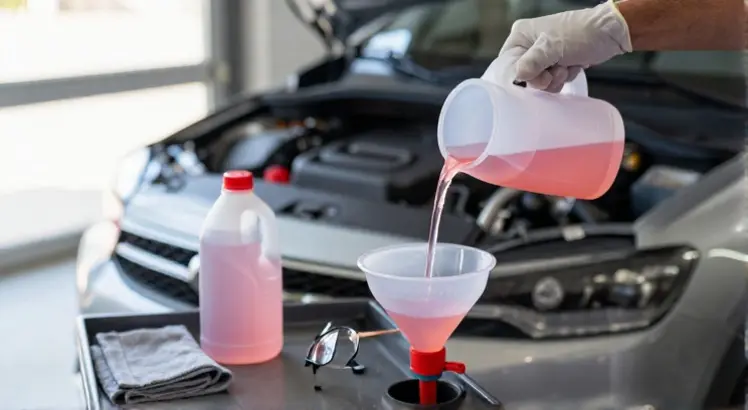
If you own a Toyota, you have probably stared at a shelf full of green, orange, and yellow jugs and wondered, does Toyota require special coolant? The short answer is yes, your Toyota engine is designed to work with a very specific formula. Pouring the wrong universal coolant into your radiator can lead to serious long-term damage, even if it looks the same.
Many drivers assume all coolants are technically the same, but that assumption costs thousands of dollars in repairs every year. Toyota engineers their cooling systems with particular metals and gasket materials. Using an off-the-shelf universal fluid might keep your temperature gauge down temporarily, but it silently eats away at your water pump and head gasket. Understanding exactly what makes Toyota coolant different will protect your engine and your wallet.
We have deep hands-on experience maintaining high-mileage Toyota fleets, and we have seen the ugly results of coolant mistakes firsthand. In this guide, we will break down exactly what factory-spec coolant looks like, why generic alternatives fail, and how you can confidently refill your system without ever risking your engine. Whether you drive a Corolla, Camry, RAV4, or Tacoma, this information applies directly to your vehicle.
Why Toyota Recommends a Specific Coolant

Toyota Genuine Parts – Antifreeze/Coolant (00272-1LLAC)
Check PriceToyota does not recommend specific fluids just to sell more parts at the dealership. Their cooling systems rely largely on aluminum radiators, heater cores, and cylinder heads. Aluminum is lightweight and transfers heat beautifully, but it is also prone to electrolysis and corrosion if the coolant chemistry is wrong. A specialized corrosion inhibitor package keeps the metal surfaces passive and scale-free.
Beyond the aluminum, Toyota uses specific rubber compounds and silicone seals in the water pump and thermostat housing. Generic coolants often contain silicate and phosphate additives, which provide quick surface protection for iron blocks but slowly grind away at Toyota’s seals. Over time, those chemical friction points become leaks that require expensive teardowns. A dedicated Toyota formulation preserves the integrity of every soft component inside the loop.
Additionally, the factory Hybrid Organic Acid Technology (HOAT) blend is designed for extended drain intervals. Many Toyotas leave the factory with a pink fluid rated for up to 100,000 miles before the first change. If you swap in a conventional green coolant that breaks down in 30,000 miles, you are actually downgrading your protection and doubling your maintenance schedule. Following the exact specification keeps your car reliable and dramatically reduces long-term ownership costs.
What Type of Coolant Does Toyota Use?
To answer the question of does Toyota require special coolant properly, we have to look at the two most common factory fills. Toyota categorizes their engine coolants by color and chemical makeup, and mixing them incorrectly can create a harmful sludge. The most widely recognized factory fluids are the pink Super Long Life Coolant and the red Long Life Coolant.
If you are unsure about which one came in your car from the assembly line, checking the owner’s manual is the safest route. However, for modern Toyotas built after 2004, the standard fill is almost always the pink variety. For a deeper dive into the chemistry behind these fluids, our detailed guide on what coolant Toyota uses breaks down the exact formulation for each model year.
Toyota Pink Coolant (Super Long Life Coolant)
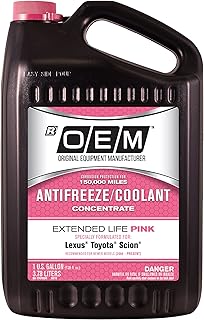
Recochem OEM 86-174POEM Pink Premium Antifreeze Concentrate Extended Life PINK, 1 gallon, 1 Pack, BROWN
Check PriceToyota Super Long Life Coolant, commonly referred to as pink coolant, is the factory fill for the vast majority of modern Toyota and Lexus vehicles. This fluid is a pre-diluted 50/50 mix of propylene glycol-based antifreeze and deionized water. What truly sets it apart is the advanced organic acid corrosion inhibitor package that contains no silicates, no phosphates, and no borates.
Because the pink coolant is silicate-free, it eliminates the abrasive micro-scrubbing that damages water pump mechanical seals. This is the single biggest reason you cannot substitute an American-style green coolant in a late-model Toyota. The pink fluid’s corrosion inhibitors bond directly with the aluminum surfaces to form a protective molecular layer, a process that takes a bit of heat cycling to activate. After that initial passivation, the protection remains stable for up to 100,000 miles or 10 years, whichever comes first.
If you want to visualize exactly what the factory fluid looks like and understand its service limits, you can see our full breakdown on Toyota pink coolant specifics. The color alone is not the only indicator, but it is a helpful visual marker to confirm you are using the genuine TM-spec formulation.
Toyota Red Coolant (Long Life Coolant)

Zerex Asian Vehicle Red Silicate and Borate Free 50/50 Prediluted Ready-to-Use Antifreeze/Coolant 1 GA
Check PriceBefore the pink fluid became standard, Toyota used a red Long Life Coolant based on a more traditional silicate-free but slightly less durable acid technology. You will typically find red coolant in older models from the late 1990s through the early 2000s. While still far better than generic green coolant, this red variety has a shorter service interval, usually around 60,000 miles or 5 years.
You should never assume a red jug on the shelf is equal to Toyota red. Many aftermarket manufacturers sell a generic red coolant that uses a European HOAT formula containing phosphates. Those additives destabilize the protective layer inside a Japanese aluminum radiator. If you have an older Toyota that requires red coolant, it is wise to stick with genuine Toyota Long Life Coolant or a specifically labeled Asian vehicle formula that explicitly matches the JIS K 2234 standard.
Can You Use Universal Coolant in a Toyota?
The labels on universal coolant bottles look reassuring, but they often cause more confusion than clarity. Many universal formulas claim to mix safely with any color of antifreeze, which is chemically true in some cases. However, mixing does not eliminate the core problem, those universal blends often contain silicates and phosphates that actively damage a Toyota water pump over time. Engineers design these universal products to be a compromise for all engines, but they are a perfect match for none.
When you pour universal coolant into a Toyota, you immediately dilute the protective additive balance. The aluminum passivation layer begins to degrade, and you might notice a gradual drop in cabin heat output or a very slow loss of coolant with no visible leak. These are telltale signs of early water pump seal wear. Even if the universal jug says compatible with Asian vehicles, you need to verify the back label confirms it is a phosphate-free, silicate-free HOAT formula.
To put it simply, does Toyota require special coolant? Yes, because the margin for error with universal fluids is too small. There are a few high-quality aftermarket coolants that replicate the Toyota pink specification perfectly, and we will discuss how to identify them later. But the average universal gallon on the discount rack is not one of them.
Risks of Using the Wrong Coolant in Your Toyota Engine
It is easy to ignore the coolant reservoir until the check engine light flashes, but the long-term risks start building immediately. A mismatched coolant creates chemical reactions that produce a gel-like residue, which blocks narrow passages in the radiator and heater core. In severe cases, that blockage causes localized hot spots on the cylinder head, warping the gasket surface and causing a failure that costs thousands to repair.
Because the damage happens slowly without obvious symptoms, many owners mistakenly blame the failure on a weak head gasket design. The truth is the chemical incompatibility was the root cause all along. Reading reputable automotive guides on coolant types confirms that color coding is not a reliable indicator of compatibility, you must verify the specific chemistry.
Corrosion and Water Pump Damage
Water pump failure is the most expensive direct result of using a generic coolant. Silicates act like a mild liquid sandpaper inside the pump bearing seal. Over 20,000 to 30,000 miles, that slow abrasion opens a tiny gap, allowing coolant to weep out of the weep hole. Once the bearing gets wet, the pump begins to howl and eventually seizes.
When we replace water pumps on Toyotas that ran only universal green coolant, we often find scale deposits on the impeller and pitting on the aluminum housing. The damage is so consistent that we can predict the failure just by looking at the fluid history. A genuine Toyota coolant, by contrast, leaves the pump housing spotless even after 150,000 miles.
Gasket Failure and Overheating
Beyond the pump, the head gasket is the next component at risk. Phosphate additives introduced by non-Toyota coolants can destabilize the protective oxide layer on aluminum. Without that layer, the metal surface becomes rough and porous. The gasket cannot maintain a perfect seal against a decaying surface, and combustion gases start leaking into the cooling jacket.
This leads to mysterious coolant loss, air pockets in the heater core, and eventually severe overheating. Once the engine overheats, the cylinder head warps, and the repair bill jumps into the several-thousand-dollar range. Using the correct Toyota-spec coolant is the cheapest insurance you can buy against this catastrophic cascade.
How to Check if Your Coolant Meets Toyota Specifications

PEAK OET Extended Life Red/Pink Concentrate Antifreeze/Coolant for Asian Vehicles, 1 Gal.
Check PriceYou do not have to buy the fluid directly from a Toyota dealership to get the right formula. However, you do need to become a label detective. Turn the bottle around and look for specific claims like Phosphate-free, Silicate-free, and Formulated for Asian vehicles. The most reliable standard to look for is compliance with Toyota’s TS (Toyota Specification) or the Japanese standard JIS K 2234 for long-life coolant.
Some reputable aftermarket brands, such as Aisin (Toyota’s OEM parts supplier) and Zerex Asian Vehicle formula, offer a pink fluid that chemically matches Toyota Super Long Life Coolant. These products are safe to use and available at many auto parts stores. However, you should never mix two different brands of pink coolant without a full system flush, because minor additive variations can still interact unpredictably over time.
When topping off, always buy a pre-diluted 50/50 mix unless you have access to distilled water and accurate measuring tools. Using tap water introduces minerals that cause scaling and corrosion. Even if your aftermarket concentrate says mix with any water, stick to distilled water to preserve the chemical purity Toyota engineers counted on.
Toyota Coolant Maintenance Tips
Keeping your cooling system in top shape goes beyond just picking the right pink jug. You need a maintenance rhythm that respects the factory intervals. For most vehicles with the pink Super Long Life Coolant, the first replacement is due at 100,000 miles or 10 years, but we recommend a coolant health check at every 30,000-mile service to monitor pH and additive strength.
Never open a hot radiator cap to check the level. Instead, use the translucent reservoir and look at the markings when the engine is cool. If you notice the fluid color turning from bright pink to a rusty brown or murky beige, that indicates contamination or internal corrosion starting. At that point, a full drain, chemical flush, and refill with genuine Toyota coolant is your safest course of action.
- Check the reservoir level when the engine is cold, and keep it between the Low and Full lines.
- Inspect the radiator cap seal for cracking every 50,000 miles; a weak cap lowers the boiling point and causes hidden overheating.
- If you trailer heavy loads or live in extreme heat, change the coolant at 50,000 miles instead of the maximum interval.
- Always use a funnel to avoid spilling coolant on painted surfaces; the organic acids can etch your clear coat surprisingly fast.
Frequently Asked Questions
Does Toyota require special coolant for a Corolla?
Yes, every Corolla built since the mid-2000s leaves the factory with Toyota Super Long Life Pink Coolant. The silicate-free formula is mandatory to protect the aluminum engine block and the delicate water pump seal. Using generic green coolant in a Corolla will void any related warranty claims and significantly shortens the water pump life.
Can I mix green and pink coolant if I am in an emergency?
In a true emergency where you are stranded with a leaking hose, adding a small amount of clean distilled water is safer than mixing unknown green coolant. If you must add a different coolant to get home, you should drain and flush the entire system immediately afterward. Mixing the two chemistries creates a thick gel that will restrict flow and overheat the engine quickly.
How do I know if my Toyota has pink or red coolant from the factory?
Check the coolant overflow tank when the engine is cold. If the fluid looks bright pink, it is the Super Long Life Coolant. If it looks deep red or almost magenta, it is the older Long Life Coolant. You can also find the exact specification in your owner’s manual under the maintenance section. For vehicles produced after 2004, pink is almost universal across the Toyota lineup.
Is Zerex Asian Vehicle coolant safe for Toyota?
Yes, the Zerex Asian Vehicle red or pink formula is phosphate-free, silicate-free and meets Toyota’s TS specification. It is a highly regarded aftermarket alternative that we have used in many maintenance cycles without any issue. Just ensure you select the pink bottle that explicitly says it is for Toyota and Lexus, and never mix it directly with the factory red fluid unless you perform a complete flush.
How often should I flush my Toyota coolant?
For modern Toyotas with pink fluid, the factory schedule calls for the initial replacement at 100,000 miles or 10 years, followed by every 50,000 miles or 5 years thereafter. However, if you frequently tow, idle for extended periods, or drive in dusty and high-temperature environments, we recommend shortening that interval to 60,000 miles for the first change and 30,000 miles afterward to keep the corrosion inhibitors fresh.
Conclusion
So, does Toyota require special coolant? Without a doubt, using the factory-specified pink or red fluid is a non-negotiable part of Toyota ownership. The engineering inside your radiator, water pump, and head gasket relies on a precise chemical cocktail that generic store brands simply cannot offer. Short-term savings on cheap coolant inevitably turn into long-term repair bills that dwarf the price of a gallon of genuine Toyota antifreeze.
Next time you pop the hood, take a close look at the color and condition of your coolant reservoir. If it looks murky or the level keeps dropping, consider a full drain and fill with the correct phosphate-free, silicate-free fluid. Whether you choose the genuine Toyota pink formula or a trusted aftermarket alternative like Zerex Asian Vehicle, your engine will reward you with quiet, cool, and leak-free miles for years to come.
Bookmark this guide as your reference, and share it with fellow Toyota owners who might still be grabbing whichever jug is on sale. The right coolant is one of the simplest, most overlooked ways to keep a Toyota running past 300,000 miles with minimal drama.