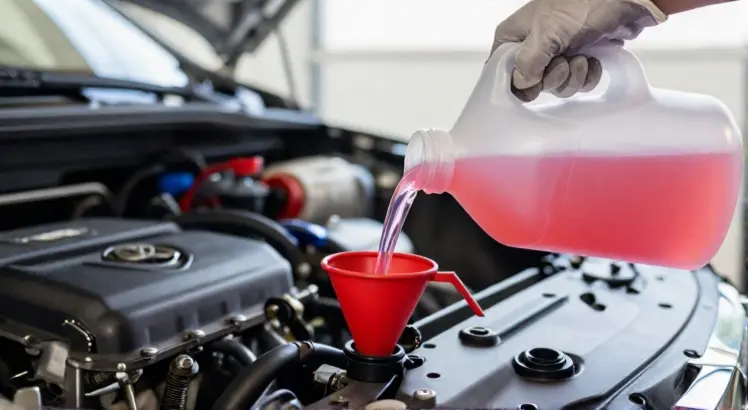
If you own a Toyota, you might have noticed the coolant in your engine bay comes in a bright pink or red hue. Many drivers ask, what coolant does Toyota use? The answer is not just one liquid because Toyota engineered two distinct factory formulas. Using the wrong coolant can lead to corrosion, water pump failure, and expensive overheating damage.
This guide breaks down the exact coolant types Toyota uses. You will learn the differences between Toyota Super Long Life Coolant and Toyota Long Life Coolant. You also get practical advice on mixing, topping up, and choosing a safe aftermarket alternative.
Understanding Toyota’s Factory Coolant Technology

Toyota Genuine Parts – Antifreeze/Coolant (00272-1LLAC)
Check PriceToyota does not use generic green coolant. The automaker developed Hybrid Organic Acid Technology, also called HOAT, with special phosphate additives. These additives protect the aluminum components and seals found extensively in modern Toyota engines. Using the wrong chemistry, such as standard green or some universal coolants, strips away this protection over time.
Toyota’s genuine coolant is pre-diluted and ready to pour. You never need to mix it with water before use, unless you buy a rare concentrate version. The factory fill is designed to last extremely long, but only if you maintain the system correctly. Many Toyota owners go 100,000 miles before the first scheduled replacement.
Identifying your current coolant starts with checking the reservoir under the hood. Toyota uses color coding to help. A pink fluid indicates Super Long Life Coolant, while a red fluid points to the older Long Life Coolant. There is also a blue coolant for some hybrid inverters, but here we focus strictly on the engine cooling system.
The Two Main Toyota Coolants: Pink and Red

PEAK OET Extended Life Red/Pink Concentrate Antifreeze/Coolant for Asian Vehicles, 1 Gal.
Check PriceToyota categorizes its engine coolant into two primary variants. Knowing which one your vehicle needs prevents chemical conflicts and gasket damage. The service history or the user manual will tell you the factory fill, but the color in the reservoir is a quick identifier.
Toyota Super Long Life Coolant (Pink)
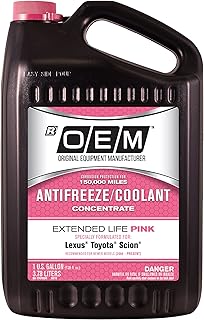
Recochem OEM 86-174POEM Pink Premium Antifreeze Concentrate Extended Life PINK, 1 gallon, 1 Pack, BROWN
Check PriceThis is the current standard for almost all Toyota models from around 2004 onwards. The pink fluid is a pre-mixed 50/50 HOAT formula using phosphate-enhanced organic acids. It offers a factory service interval of up to 100,000 miles for the initial fill, with subsequent replacements every 50,000 miles.
The pink coolant is what Toyota dealerships use on most modern Camry, Corolla, RAV4, and Highlander models. It contains specific anti-corrosion inhibitors for the multi-layer steel head gaskets and aluminum radiators. Drain and refill routines must use the same pink fluid to maintain the long-life properties.
Toyota Long Life Coolant (Red)
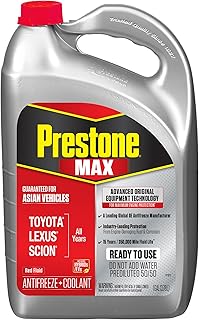
Prestone MAX Asian Red 50/50 Antifreeze Automotive Coolant, Pack of One
Check PriceThe red coolant was primarily used in older Toyota vehicles built before 2004. It is also a HOAT formula but with a slightly different inhibitor package. The initial factory fill interval was 60,000 miles, and after that, replacements were recommended every 30,000 miles.
You often find red coolant in classic Tacomas, older 4Runners, and earlier Camry generations. If your expansion tank shows a rusty red color, do not assume it is dirty. It is likely the original Long Life Coolant that simply needs a flush and fresh red fluid.
- Pink Coolant: For 2004+ models, service life up to 100k miles initial, 50k thereafter.
- Red Coolant: For older models, service life 60k miles initial, 30k miles replacement interval.
Can You Use Aftermarket Coolant in a Toyota?

00272 SLLC2 Engine Coolant / Antifreeze
Check PriceMany auto parts stores sell universal coolants claiming compatibility with all vehicles. While some aftermarket products match Toyota’s chemistry, many do not. The risk comes from silicates and borates found in cheaper European or American formula coolants. These can react with the Japanese silicate-free seal technology and cause premature water pump leaks.
If you must use an aftermarket option, look for a dedicated Asian vehicle formula. These are often labeled as Asian Pink or Phosphate HOAT. Brands like Zerex and Peak offer Asian-specific coolants that replicate the Toyota pink fluid. Still, for best results, sticking with genuine Toyota pink coolant is the safest path.
To further research Toyota’s specific antifreeze requirements, you can explore detailed comparisons of genuine and aftermarket fluids. The chemistry differences matter more than the brand name on the bottle.
Mixing Coolants: What You Must Avoid
Recochem OEM 86-174POEM Pink Premium Antifreeze Concentrate Extended Life PINK, 1 gallon, 1 Pack, BROWN
Check PriceOne of the most common mistakes is mixing pink and red Toyota coolants. While both are genuine Toyota fluids, their additive packages differ. Mixing them reduces the long-life properties of the pink fluid and can cause sludge formation in extreme cases. If you have a pink system, top it up only with pink.
Equally dangerous is mixing Toyota pink coolant with generic green or orange coolant. The chemical reaction creates a gel that clogs radiator cores and heater cores. A clogged heater core means no cabin heat in winter and a costly dashboard removal repair. Always check the reservoir and the cap labeling before adding any fluid.
In an emergency, if you have no genuine Toyota coolant available, distilled water is the safest temporary top-up. It will not react with the factory fluid. Then, plan a full drain and refill soon to restore the proper freeze and corrosion protection.
How to Check and Top Up Your Toyota Coolant
Prestone MAX Asian Red 50/50 Antifreeze Automotive Coolant, Pack of One
Check PriceThe process is simple but must be done on a cold engine. Hot coolant under pressure can spray and cause severe burns. Park on a level surface, open the hood, and locate the translucent plastic expansion tank. You will see minimum and maximum marks on the side.
If the level is close to or below the minimum line, prepare to add fluid. Unscrew the cap slowly to release any residual pressure. Pour in the correct Toyota coolant up to the maximum mark, but never overfill. An overfilled tank will overflow when the engine warms up, making a mess and potentially damaging wiring beneath the tank.
- Always let the engine cool for at least two hours before opening the cap.
- Use a funnel to avoid spilling coolant on painted surfaces or the serpentine belt.
- Replace the cap tightly and wipe away any drips immediately.
When to Change Your Toyota’s Coolant
Many Toyota owners think coolant is a lifetime fluid. That is false. Over time, the additive package depletes, and the fluid becomes acidic. Old acidic coolant eats at the head gasket material and the radiator core from the inside. Toyota recommends the first drain and refill at 100,000 miles for the pink Super Long Life Coolant.
After the first change, the interval drops to every 50,000 miles. For red Long Life Coolant, the initial change is at 60,000 miles, then every 30,000 miles. These intervals keep the pH balanced and the water pump lubricated. Skipping coolant flushes often leads to a failing thermostat or a sudden overheating episode.
You can use a simple coolant tester available at any auto parts store to check freeze point and pH. The cost is minimal compared to a radiator replacement. When you are shopping for a tester, you might also be looking for the specific coolant for your Toyota Corolla or other model with tight engine bays that require precise fill levels.
Genuine Toyota Coolant vs. Aftermarket Alternatives

Zerex Fully Formulated Pink Heavy Duty 50/50 Ready-to-Use Antifreeze Coolant 1 Gallon
Check PriceA quick price comparison often tempts owners to buy cheaper aftermarket jugs. Genuine Toyota pink coolant is more expensive but requires no mixing and guarantees exact chemical compatibility. Aftermarket Asian formula coolants can save money but you must verify the bottle states it is phosphate-based and silicate-free.
Below is a simple comparison to help you decide.
- Genuine Toyota Pink: Exact factory spec, no guesswork, 50/50 pre-mix, long life, dealership availability.
- Zerex Asian Pink: Phosphate HOAT, matches Toyota chemistry, widely available, lower cost.
- Peak Asian Pink: Similar HOAT formula, good compatibility, convenient at major retailers.
- Universal Coolants: Often contain silicates, not recommended long-term for any Toyota engine.
Whatever brand you choose, the key is to avoid silicate and borate additives. The official Toyota genuine fluid specifications detail the exact chemical requirements engineers designed for the cooling system. Cross-referencing with that standard helps you avoid risky generic products.
Common Signs Your Toyota Has the Wrong Coolant
If a previous owner or a quick-lube shop poured the wrong fluid into your Toyota, symptoms will appear. The first sign is often a whitish residue or gelling visible around the radiator cap. This gel forms from a chemical reaction between incompatible inhibitor packages.
Another symptom is a gradual loss of cabin heat. The wrong coolant can cause corrosion debris to settle inside the heater core. You might also notice a sweet, burnt smell from the engine bay or minor seeps at the water pump weep hole. These leaks often stop once you flush and refill with genuine Toyota pink fluid.
Frequently Asked Questions
What coolant does Toyota use from the factory?
Toyota uses either Toyota Super Long Life Coolant, which is pink, or Toyota Long Life Coolant, which is red. The pink fluid is standard for most models built after 2004.
Can I mix pink and red Toyota coolant?
It is not recommended. While both are genuine Toyota fluids, mixing reduces the extended life benefits of the pink formula and may lead to sludge over time.
Is Toyota coolant the same as Dex-Cool?
No. Dex-Cool is a GM-specific organic acid formula that is not compatible with Toyota’s phosphate hybrid organic acid technology. Using Dex-Cool in a Toyota can cause rapid seal damage.
How often should I change Toyota pink coolant?
The initial change is at 100,000 miles. After that, replace it every 50,000 miles to maintain proper corrosion protection and heat transfer efficiency.
Does Toyota coolant come pre-mixed?
Yes, the pink Super Long Life Coolant and red Long Life Coolant sold in North America come pre-diluted 50/50 with deionized water. You pour it straight in without adding water.
Final Advice on Toyota Coolant Choices
When you ask what coolant does Toyota use, the safest answer is the fluid that matches your vehicle’s color and year specification. The pink Toyota Super Long Life Coolant is the modern standard and the only fluid that guarantees the factory durability promise. A small investment in the correct jug prevents cavitation, corrosion, and expensive cooling system overhauls.
Check your radiator cap, verify the color, and top up only with the matching fluid. If you ever suspect contamination, flush the system completely before refilling. Proper coolant care keeps your Toyota running at the right temperature and protects the engine block for many trouble-free miles.
For more guidance, always reference your owner’s manual or speak with a Toyota service advisor. The cooling system is simple to maintain, but it demands the correct chemical partner.