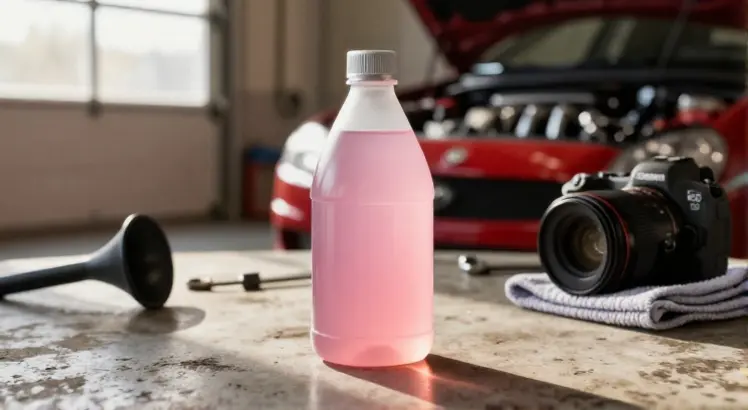
If you have popped the hood of a modern Toyota, you have likely noticed a vibrant, almost neon pink fluid in the reservoir. That is Toyota pink coolant, and it is far more than just a pretty color. This factory-recommended fluid is engineered to provide superior corrosion protection and heat transfer for Toyota’s specific aluminum engines and radiators. Understanding why this coolant is pink and how to maintain it properly can prevent costly repairs down the road.
While many drivers think any old green or orange antifreeze will do, Toyota’s pink formulation is a unique hybrid technology. Using the wrong coolant can lead to water pump failure, clogged heater cores, and even head gasket issues. In this guide, we will break down everything you need to know, from its chemical makeup to the correct change intervals.
What Is Toyota Pink Coolant?

PEAK OET Extended Life Red/Pink Concentrate Antifreeze/Coolant for Asian Vehicles, 1 Gal.
Check PriceToyota pink coolant is a long-life, pre-mixed 50/50 coolant based on Super Long Life Coolant (SLLC) technology. It is also known as Toyota Super Long Life Coolant Pink, and it uses a proprietary Phosphate Hybrid Organic Acid Technology, often shortened to P-HOAT. Unlike older green coolants that rely solely on inorganic additives, this formula blends organic acids with phosphates to create a stable, long-lasting protective barrier inside the cooling system.
The pink dye is simply an identifier, but the chemistry is what sets it apart. It contains no silicates, borates, or amines, which makes it safe for Toyota’s gaskets, seals, and water pump bearings. The fluid arrives pre-diluted, so there is no guessing with distilled water. This eliminates the risk of mineral contamination that could scale up the radiator.
For more context on how this product fits into Toyota’s overall fluid lineup, you can learn more about the different types of Toyota coolant that have been used over the years. That resource explains the evolution from red to pink and which models require which formula.
Why Toyota Uses Pink Coolant
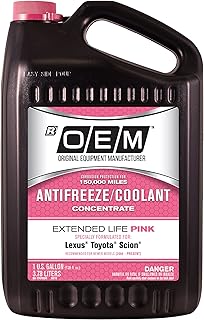
Recochem OEM 86-174POEM Pink Premium Antifreeze Concentrate Extended Life PINK, 1 gallon, 1 Pack, BROWN
Check PriceThe shift from red long life coolant to pink super long life coolant happened primarily to extend service intervals and protect modern engine components. Toyota engines, like the 2.5-liter 4-cylinder and the 3.5-liter V6, rely heavily on aluminum blocks, cylinder heads, and plastic radiator tanks. Pink coolant is formulated to prevent the electrochemical degradation that can happen when dissimilar metals interact inside the engine.
Phosphate in the additive package aggressively protects aluminum surfaces from pitting. At the same time, the organic acid component provides sustained corrosion protection without depleting rapidly. This dual action allows Toyota to confidently recommend a replacement interval of up to 100,000 miles when the system is properly sealed and not contaminated.
Thermal efficiency is another major reason. Pink coolant maintains a high boiling point and a low freezing point, typically around 265 degrees Fahrenheit and minus 34 degrees Fahrenheit. This wide range ensures the engine stays cool under heavy load in summer heat and does not freeze solid during a bitter winter cold snap.
Toyota Pink Coolant vs. Red and Green Coolants

Zerex Fully Formulated Pink Heavy Duty 50/50 Ready-to-Use Antifreeze Coolant 1 Gallon
Check PriceThe coolant aisle can be confusing because Toyota has used red coolant in the past, and generic green antifreeze is still everywhere. Here is a straightforward breakdown of the differences to help you avoid a dangerous mismatch.
- Green Coolant (IAT): Uses inorganic acid technology with silicates. It has a short life of 30,000 miles. It is not compatible with Toyota’s seals and often causes water pump seal failure on modern engines.
- Toyota Red Coolant (LLC): A HOAT formula that does not contain phosphates. It was the standard for older Toyotas and requires a change every 30,000 to 50,000 miles. It should not be mixed with pink coolant unless you are performing a full system flush.
- Toyota Pink Coolant (SLLC): A P-HOAT formula with phosphates, pre-mixed, and designed for extreme longevity. It is backward compatible with many older models after a complete flush to remove the red residue.
The key takeaway is that pink coolant is not just a dye swap. The additive chemistry is fundamentally different to protect Toyota’s advanced lightweight materials. Pouring green coolant into a system designed for pink will dilute the protective phosphates and can lead to gel formation inside the heater core.
If you are trying to determine the absolute best product for your specific year and model, our guide to choosing the best Toyota antifreeze compares OEM and high-quality aftermarket options that meet the same P-HOAT standard.
How Often Should You Change Toyota Pink Coolant?
PEAK OET Extended Life Red/Pink Concentrate Antifreeze/Coolant for Asian Vehicles, 1 Gal.
Check PriceThe official interval for Toyota pink super long life coolant is typically 100,000 miles or 10 years, whichever comes first, for the initial factory fill. After the first replacement, Toyota recommends switching to a 50,000-mile or 5-year interval for subsequent changes. This drop in mileage is because trace amounts of the old fluid and contaminants remain in the block unless you perform an aggressive chemical flush.
However, these intervals assume normal driving conditions. If you frequently tow, idle for long periods, or drive in extreme heat, the coolant degrades faster. It is wise to test the fluid annually with a refractometer or coolant test strip. You should look for a pH between 7.5 and 8.5. A drop in pH indicates the corrosion inhibitors are wearing out and the fluid is turning acidic.
Neglecting a coolant change can lead to electrolysis, which eats away at the radiator tubes and heater core. Replacing these components costs significantly more than a simple drain-and-fill service. Always check the maintenance schedule in your owner’s manual or consult Toyota’s factory maintenance recommendations for the most accurate intervals for your model.
How to Check and Top Off Toyota Pink Coolant
Recochem OEM 86-174POEM Pink Premium Antifreeze Concentrate Extended Life PINK, 1 gallon, 1 Pack, BROWN
Check PriceChecking the coolant level is a simple task that should be done with the engine cold to avoid burns from pressurized hot fluid. Locate the translucent white or clear reservoir near the radiator. You will see low and full marks on the side. The fluid level should be between these two marks. If it is at or below the low line, you need to add the correct fluid.
Never open the radiator cap when the engine is hot. Instead, remove only the reservoir cap and pour genuine Toyota pink coolant directly into the reservoir until it reaches the full mark. Since this coolant is pre-diluted, you do not add water. Using tap water can introduce calcium and magnesium that will scale up the radiator passages.
A constantly low reservoir may signal a slow leak. Common leak points include the water pump weep hole, radiator end tanks, and hose connections. If you smell a sweet maple syrup odor inside the cabin, your heater core may be seeping. Address these issues promptly because low coolant leads to overheating, which can warp the cylinder head on an aluminum engine.
Can You Mix Pink Coolant With Other Types?
Mixing is one of the most dangerous mistakes an owner can make. You should never mix Toyota pink coolant with green, yellow, orange, or even the older Toyota red coolant, except under emergency conditions followed by an immediate flush. The chemical conflict between different additive packages can cause the inhibitors to drop out of suspension, forming a brown sludge that clogs the radiator.
If you are stuck on the side of the road with an overheating engine and only have a universal coolant, adding it is a temporary solution to get you to a repair shop. However, once home, drain the entire system, flush it with distilled water until the water runs clear, and refill it with fresh genuine pink coolant. Even universal coolants that claim to be compatible often lack the phosphate levels Toyota engineers rely on.
There is a common misconception that you can convert red to pink by simply topping off. This is false. The only safe way to switch from red to pink is to perform a thorough flush, removing all traces of the old silicate-free HOAT red fluid. Then fill the system with the new P-HOAT pink formula to get the full 100,000-mile protection.
Where to Buy Toyota Pink Coolant
Genuine Toyota pink coolant is available at any Toyota dealership parts counter, and it is often reasonably priced. You can also find it online through reputable retailers. The part number for the concentrated version is 00272-SLLC2, while the pre-mixed gallon jug often carries the code 00272-1LLAC. Always verify you are buying the pre-mixed ready-to-use fluid unless you specifically want the concentrate and are prepared to mix it with distilled water at a 50/50 ratio.
Aftermarket brands like Aisin or Zerex also produce an Asian vehicle formula that is pink and meets the Toyota P-HOAT specification. These are acceptable alternatives if you confirm on the label that they are phosphate-additized and silicate-free. Saving a few dollars on an unapproved universal coolant is never worth the risk of damaging the engine, so stick with a certified match.
Frequently Asked Questions
What cars use Toyota pink coolant?
Most Toyota and Lexus models manufactured after 2004 use pink super long life coolant from the factory. This includes popular vehicles like the Camry, Corolla, RAV4, Highlander, Tacoma, and Tundra. Scion and some Lexus models also share the same pink P-HOAT fluid specification.
Is Toyota pink coolant the same as Asian pink coolant?
Not always. While many Asian vehicle formulas are dyed pink and claim to be phosphate-enhanced, they may still vary in the exact balance of organic acids. Toyota’s genuine fluid is engineered specifically for their water pump seals and radiator metallurgy. Always check that the aftermarket option explicitly states compliance with Toyota specification 00272-SLLC2.
Can I use water instead of pink coolant in an emergency?
You can use clean, preferably distilled water in a true emergency to get off the road, but it must be flushed and replaced immediately. Water alone provides no corrosion protection, boils at a lower temperature, and will freeze in cold weather. Treat it as a temporary measure, then drain the system and refill with the correct pink coolant.
Does pink coolant expire on the shelf?
Unopened factory-sealed jugs of Toyota pink coolant have a shelf life of several years when stored in a cool, dry place. Once opened, it is best to use the fluid within a year or two to ensure the corrosion inhibitors have not settled or degraded. Always shake the bottle well before pouring.
Why is my pink coolant turning brown?
Brown or muddy coolant usually means contamination, either from mixing incompatible coolants or from rust inside the engine block. This condition destroys the protective additives. You need to flush the entire cooling system and inspect for a blown head gasket that introduces combustion gases into the coolant.
Conclusion
Toyota pink coolant is a precision-engineered fluid that does much more than stop your engine from freezing or boiling over. Its P-HOAT chemistry actively guards against corrosion and cavitation, preserving the life of your water pump, radiator, and heater core. Sticking to the factory pink formula ensures your cooling system operates at peak efficiency without chemical conflicts.
The best maintenance approach is simple. Check your levels every oil change, never mix colors, and replace the fluid according to the severe service schedule if you want to err on the side of caution. Using the factory fill or a verified P-HOAT alternative is an affordable insurance policy against a multi-thousand-dollar engine rebuild.
Whether you are doing a drain-and-fill in your driveway or topping off before a road trip, always keep a gallon of genuine Toyota pink coolant on hand. Treat your cooling system with respect, and it will keep your Toyota running cool and clean for hundreds of thousands of miles.