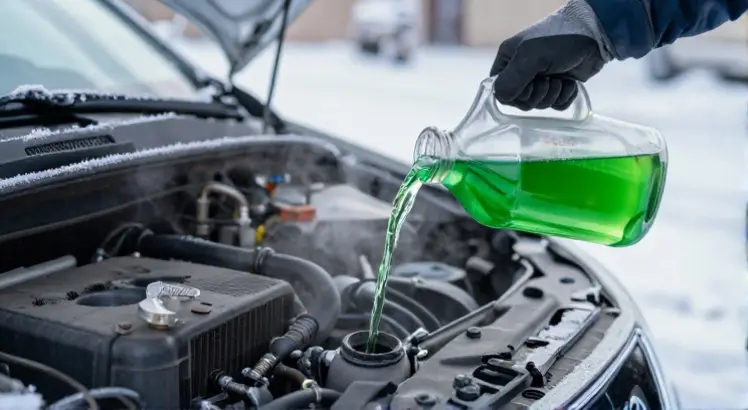
When you pop the hood of your car, you spot a translucent tank filled with bright green, orange, or pink fluid. That liquid is antifreeze, and what does antifreeze do far more important than most people think. It quietly protects your engine every single mile you drive, regardless of the weather outside.
Without a working batch of this fluid, your engine would crack in the winter, boil over in the summer, and rust from the inside out. In this guide, you will learn exactly what antifreeze does for your car, the different types available, and how to keep your cooling system in top shape.
What Is Antifreeze?

Zerex Asian Vehicle Red Silicate and Borate Free 50/50 Prediluted Ready-to-Use Antifreeze/Coolant 1 GA
Check PriceAntifreeze is a chemical liquid, usually made from ethylene glycol or propylene glycol, that gets mixed with water to create engine coolant. The mixture circulates through the engine block, cylinder heads, and radiator, absorbing extreme heat and releasing it into the outside air. While pure antifreeze has a lower freezing point than water, a 50/50 mix with distilled water actually provides the broadest protection range.
The fluid is not a one‑season wonder. Despite the name, it works just as hard in July as it does in January. Modern formulas also carry a package of additives that fight rust, lubricate moving parts, and prevent scale buildup inside the cooling system.
The Core Functions of Antifreeze

00272 SLLC2 Engine Coolant / Antifreeze
Check PriceWhat antifreeze does inside an engine is best understood by breaking down five essential jobs. Each function is critical, and losing any one of them can lead to catastrophic engine failure.
1. Freeze Protection
In cold weather, plain water would freeze solid inside the engine block and radiator. Ice expands with tremendous force, and that expansion can crack the block, split the radiator, or burst the heater core. A correct antifreeze‑water mixture lowers the freezing point dramatically, often down to minus 34 degrees Fahrenheit or lower, depending on the ratio.
Drivers in extremely cold climates can run a 60/40 mix for even greater protection. However, never exceed 70 percent antifreeze, as that actually reduces the freeze protection and impairs heat transfer.
2. Boil‑Over Prevention
Engines generate blistering heat, often beyond the boiling point of water. Without antifreeze, the coolant would boil at 212 degrees Fahrenheit and turn to steam, creating hot spots and causing the engine to overheat rapidly. Antifreeze raises the boiling point of the coolant to around 265 degrees Fahrenheit when combined with a pressurized radiator cap.
This higher boiling threshold keeps the fluid liquid, allowing it to continuously absorb and carry away heat. Even on steep mountain climbs or in stop‑and‑go traffic, the system stays stable.
3. Corrosion Inhibition
An engine’s cooling system is a jungle of different metals, including aluminum, cast iron, steel, copper, and brass. When these metals sit in water, electrolysis and oxidation quickly create rust and scale. Antifreeze contains corrosion inhibitors that coat the metal surfaces and neutralize acids formed during combustion.
Over time these additives get used up, which is why old coolant turns brown and loses its protective qualities. Regular changes prevent pitted cylinder liners, clogged heater cores, and water pump failure.
4. Water Pump Lubrication
The water pump spins constantly, circulating coolant through the engine. Its internal seal and bearing rely on the slippery nature of antifreeze to stay cool and reduce friction. Without that lubrication, the seal would dry out, crack, and leak, eventually causing the pump to seize.
This is one reason you should never run straight water, even in an emergency. The lack of lubrication can destroy the water pump in a matter of days.
5. Efficient Heat Transfer
Antifreeze has a higher specific heat capacity than air, meaning it can absorb a lot of thermal energy before its own temperature rises dramatically. This property allows the cooling system to pull heat away from the combustion chambers quickly and deliver it to the radiator, where fans and airflow dump it outside.
A properly balanced coolant mixture keeps engine temperatures stable, improving fuel efficiency, reducing emissions, and extending engine life.
Types of Antifreeze
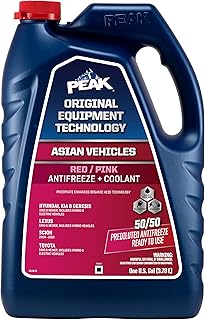
PEAK OET Extended Life Red/Pink 50/50 Prediluted Antifreeze/Coolant for Asian Vehicles, 1 Gal.
Check PriceNot all antifreeze formulas are the same, and using the wrong type can silently damage your engine. The main categories are defined by the corrosion inhibitor technology they use.
- Inorganic Additive Technology (IAT): The traditional green antifreeze used in older vehicles. It relies on silicates and phosphates that coat metal surfaces quickly but deplete in about two years. Ideal for cars built before the mid‑1990s.
- Organic Acid Technology (OAT): Often orange or red, OAT coolants use organic acids that create a long‑term protective layer. They can last up to five years or 150,000 miles and are common in modern GM, VW, and some Asian vehicles.
- Hybrid Organic Acid Technology (HOAT): A blend of IAT and OAT, usually dyed yellow, pink, or blue. HOAT provides fast protection like the old green stuff while still offering extended service life. It is found in many Ford, Chrysler, and European models.
For a closer look at the chemistry behind these formulations, you can explore this resource on engine coolant basics. Knowing which category your car needs is the first step toward a healthy cooling system.
Antifreeze vs Coolant: What’s the Difference?
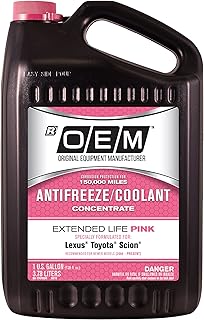
Recochem OEM 86-174POEM Pink Premium Antifreeze Concentrate Extended Life PINK, 1 gallon, 1 Pack , BROWN
Check PricePeople often use the words antifreeze and coolant interchangeably, but there is a small technical difference. Antifreeze refers to the concentrated glycol fluid you buy at the auto parts store. Coolant is the ready‑to‑use mixture already circulating in your car, usually a 50/50 blend of antifreeze and water.
If you buy a jug labeled premixed coolant, it is already diluted and ready to pour in. Concentrated antifreeze must be mixed with distilled water before use. Both accomplish the same job, but pre‑diluted coolant removes the guesswork and helps avoid tap water minerals that cause scale buildup.
How to Choose the Right Antifreeze
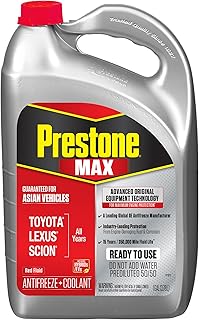
Prestone MAX Asian Red 50/50 Antifreeze Automotive Coolant, Pack of One
Check PriceThe safest path is to open your owner’s manual and find the exact specification listed for your vehicle. Automakers test their engines with a specific coolant chemistry, and straying from that formula can cause chemical reactions that eat away gaskets and aluminum parts.
Color alone is not a reliable guide anymore, because some manufacturers have used the same dye for different formulas. Always match the product to the standards printed on the bottle, such as ASTM D3306 or meets Ford WSS‑M97B44‑D.
If you are ever unsure, consulting a trusted mechanic or your dealership parts counter can save you hundreds of dollars in repairs down the road.
Signs Your Antifreeze Needs Attention

Zerex Asian Vehicle Blue Silicate and Borate Free 50/50 Prediluted Ready-to-Use Antifreeze/Coolant 1 GA
Check PriceEven the best coolant wears out. Recognizing early warning signs can prevent a breakdown on the highway.
- Low coolant level: A consistently dropping reservoir level often points to a leak somewhere in the system.
- Engine overheating: A rising temperature gauge or steam from under the hood means the coolant is no longer absorbing heat properly.
- Sweet smell: Antifreeze has a distinct sweet odor. If you smell it inside the cabin, the heater core might be leaking.
- Rusty or muddy fluid: Fresh coolant is translucent. When it turns brown or sludgy, corrosion has set in and the inhibitors are gone.
- Check engine or temperature light: Modern cars will illuminate a warning if the coolant temperature climbs outside the safe zone.
If you experience overheating, pull over immediately and turn off the engine. Then, refer to our step‑by‑step guide on how to fix an overheating car to diagnose the problem safely.
How to Check and Maintain Your Antifreeze
Routine coolant checks take only a few minutes and can dramatically extend the life of your engine. Always perform these steps with a cold engine to avoid burns from hot fluid.
- Inspect the reservoir level: The expansion tank has Low and Full marks. Top up with the correct premixed coolant if the level is below the low line.
- Check the fluid’s appearance: It should be clear and the original color. Any floating debris or a milky texture signals contamination.
- Use an antifreeze tester: A simple antifreeze tester draws a few drops of coolant and indicates the freeze protection level. Test it before winter arrives to be sure your ratio can handle the cold.
- Flush the system on schedule: Most vehicles need a coolant flush every 30,000 to 100,000 miles depending on the formula. Old fluid loses its anti‑corrosion strength even if it still protects against freezing.
Sticking to your car’s maintenance schedule is the simplest way to keep what antifreeze does working in your favor year after year.
Frequently Asked Questions About Antifreeze
What is the main purpose of antifreeze?
The primary job is to regulate engine temperature by lowering the freezing point and raising the boiling point of the coolant. It also protects internal metal parts from rust and lubricates the water pump.
Can I use water instead of antifreeze?
Only in an emergency and for a very short distance. Water alone offers no freeze protection, no boil protection, no corrosion inhibitors, and does not lubricate the water pump. It will quickly lead to overheating and rust.
How often should I change antifreeze?
That depends on the coolant type. Traditional green IAT coolant needs replacement every two years or 30,000 miles. OAT and HOAT coolants can last up to five years or 100,000 to 150,000 miles. Always follow your owner’s manual.
Can I mix different colors of antifreeze?
It is risky. Mixing different chemistries, for example an OAT with an IAT, can create a gel or reduce corrosion protection. Stick to the same color and specification noted in your vehicle handbook.
What happens if I use the wrong antifreeze?
Using an incompatible formula can strip protective coatings inside the radiator and engine, cause sludge, and accelerate corrosion. Over time, it may lead to water pump failure, heater core clogging, and expensive repairs.
Is antifreeze toxic?
Ethylene glycol‑based antifreeze is highly toxic to humans and animals if ingested. Even a small spill can be lethal to pets. Always store it in sealed containers and clean up drips immediately. Propylene glycol formulas are less toxic and sometimes labeled as pet‑safe.
Conclusion
What does antifreeze do for your engine cannot be overstated. It prevents freeze cracks in winter, stops boil‑over in summer, fights rust, and keeps the water pump spinning smoothly. All these functions happen silently, and most drivers never think about them until a dashboard warning light flickers on.
By choosing the correct formula, checking the level and condition every few months, and flushing the system on schedule, you protect the heart of your vehicle. A small investment in coolant care today can save thousands of dollars in engine repairs tomorrow. Pop your hood this weekend and take two minutes to see how your antifreeze is doing, your engine will thank you.