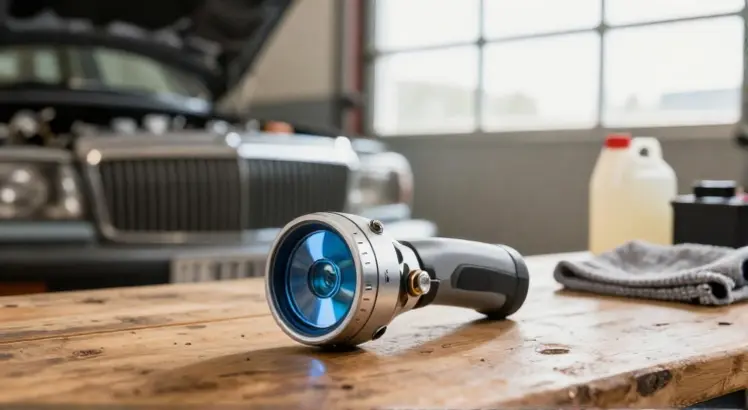
Ever started your car on a freezing morning and worried about what’s actually flowing through your engine block? A failed cooling system isn’t just an inconvenience, it can lead to a cracked block, a blown head gasket, and repair bills that total thousands of dollars. The coolant in your radiator might look fine to the naked eye, but its chemical composition degrades over time. You need a reliable way to instantly check the freeze point and concentration without guessing. This guide eliminates the confusion by ranking the sharpest diagnostic tools available, from analog hydrometers to digital laser precision, ensuring you get an accurate read in seconds.
Short Answer: For most home mechanics and professionals, the OEMTOOLS 24507 Professional Series Ethylene Glycol Antifreeze Tester strikes the perfect balance between rugged durability, effortless readability, and precise calibration. If you demand scientific accuracy across multiple fluid types and don’t mind spending more, the 4-in-1 DEF Antifreeze Coolant Refractometer is the undisputed champion because it uses light refraction instead of floating balls, eliminating common user error entirely.
Best Antifreeze Tester For Cars of 2026
Before picking a tester, it helps to understand the type of coolant your vehicle actually needs. Our guide on selecting the right antifreeze coolant for a Toyota walks you through the specific formulations that modern engines demand, saving you from costly misfills. For a deeper dive into how ethylene glycol and other inhibitors protect your engine, this Wikipedia overview of antifreeze chemistry is a solid starting point.
1. OEMTOOLS 24507 Professional Series Ethylene Glycol Antifreeze Tester – Best Overall Durability and Precision

OEMTOOLS 24507 Professional Series Ethylene Glycol Antifreeze Tester
Check PriceWhy it stands out
This is the tool you grab when you need accuracy without fragile electronics or complicated setups. The OEMTOOLS 24507 features a professional-grade rubber boot and a large, easy-to-read vertical display that shows specific temperature readings instead of vague color zones. It’s built with a heavy-duty glass tube and a leak-proof squeeze bulb that refuses to crack after repeated use in hot engine bays.
Key points
- Measures ethylene glycol concentration with high precision
- Robust glass tube encased in a protective rubberized sleeve
- Large, clearly marked scale avoids visual guesswork
- Non-slip grip remains stable even with wet, oily gloves
Pros
- Extremely durable construction for a long service life
- Readings are displayed as actual freezing points
- Calibrated specifically for standard ethylene glycol
- The rubber jacket prevents accidental glass breakage
- Simple one-hand operation via the squeeze siphon
Cons
- Not designed for propylene glycol or OAT coolants
- Requires vertical leveling for a perfect read
Best for
The committed DIY mechanic who wants a traditional, accurate hydrometer that will survive drops and heavy shop use without losing calibration.
2. 4-in-1 DEF Antifreeze Coolant Refractometer – Ultimate Scientific Accuracy
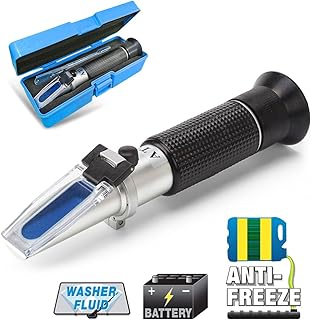
4-in-1 DEF Antifreeze Coolant Refractometer
Check PriceWhy it stands out
Forget floating needles and guesswork, this optical instrument uses the refractive index of light to give you a laboratory-grade measurement. This single tool replaces your coolant tester, DEF checker, battery acid hydrometer, and windshield washer fluid checker. It requires no batteries and the calibration is rock-solid once set. You simply place a few drops of fluid on the prism, point it at a light source, and read the crisp blue line in the eyepiece.
Key points
- Measures Propylene Glycol and Ethylene Glycol concentrations
- Includes a dedicated scale for Diesel Exhaust Fluid (DEF)
- Automatic Temperature Compensation (ATC) for outdoor use
- Comes with a hard case, transfer pipettes, and a mini screwdriver
Pros
- Unmatched accuracy regardless of fluid color or clarity
- Multifunctional, works with four distinct automotive fluids
- No moving parts to wear out or break
- ATC ensures accurate readings in hot or cold environments
- Heavy-duty aluminum construction feels premium
Cons
- Steeper learning curve than a simple dip-and-read tester
- Requires ambient light to see the scale clearly
Best for
Fleet mechanics or meticulous car owners who maintain diesel trucks alongside gas cars and demand the most precise chemical analysis possible.
3. Phoenix Systems 8006-B Double-Ended Brake Fluid + Coolant Test Strips – Best Disposable Diagnostic Tool

Phoenix Systems 8006-B Double-Ended Brake Fluid + Coolant Test Strips
Check PriceWhy it stands out
If you hate cleaning up liquid spills after testing, these chemical strips are a mess-free revelation. One end of the strip checks the freeze protection of coolant, while the other end tests the moisture content of your brake fluid. Each packet is foil-wrapped so there is zero risk of false readings due to aging or humidity exposure. It’s a quick spot-check tool that fits easily into a glovebox.
Key points
- 15 individually sealed foil packets for long shelf life
- Dual-purpose design, coolant and brake fluid diagnostics
- Immediate color-change reaction for fast results
- No liquid extraction tools required for brake fluid testing
Pros
- Extremely portable and requires zero maintenance
- No cross-contamination between different vehicles
- Combines a coolant check with a vital brake safety check
- Gold standard for quick pre-purchase vehicle inspections
- Foil wrap ensures strips remain chemically active for years
Cons
- Not reusable, the cost per test is higher over time
- Provides a range rather than a precise freezing degree
Best for
Mobile mechanics, roadside inspectors, or anyone checking a used car who doesn’t want to open a pressurized radiator cap on a hot engine.
4. ATD Tools 1106 Professional Antifreeze and Coolant Tester – Best Premium Dial-Type Hydrometer

ATD Tools 1106 Professional Antifreeze and Coolant Tester
Check PriceWhy it stands out
The ATD 1106 brings speed to the classic dial-style tester with a massive, color-coded face that is impossible to misread even in poor lighting. The rigid transparent body gives you a clear view of the internal needle mechanism so you know immediately if a recent drop has damaged the unit. It’s specifically tweaked for automotive shop use where checking multiple cars quickly is a priority. The solid brass fitting ensures a secure seal on the hose without stripping.
Key points
- High-contrast analog dial with color safety zones
- Transparent housing for internal inspection of components
- Sturdy brass inlet fitting resists cracking
- Suitable for standard ethylene glycol based antifreeze
Pros
- Very fast response time from the needle mechanism
- The large dial face is excellent for older eyes
- Professional build quality rivals expensive OEM tools
- Color segments give an instant pass or fail overview
- Brass threads provide a longer lifespan than plastic
Cons
- Does not work accurately with new OAT coolants
- Bulky design can be tricky to fit into tight overflow tanks
Best for
High-volume professional garages that prioritize rapid visual assessment and require a robust tool that withstands daily abuse.
5. FSTURIOS Coolant Tester Accurate Dial Type Hydrometer – Best Budget Dial with Voltage Check

FSTURIOS Coolant Tester Accurate Dial Type Hydrometer
Check PriceWhy it stands out
This model cleverly integrates a voltmeter probe alongside the coolant hydrometer, letting you diagnose two critical winter problems with one tool. The dial face is thoughtfully laid out to display the concentration percentage and the specific gravity scale simultaneously. It’s built with a wide, stable base so it won’t tip over easily when placed on a battery top or radiator support. The high-quality rubber bulb pulls a strong vacuum even when used with cold, thickened coolant.
Key points
- Dial displays both specific gravity and temperature protection
- Integrated battery voltage tester for 6V, 12V, and 24V systems
- Ergonomic standing base prevents rolling off engine bays
- Triple-scale density meter for comprehensive analysis
Pros
- Dual functionality saves space in a crowded toolbox
- Stable standing design allows for hands-free reading
- Wide range covers heavy-duty diesel truck batteries
- Marked with clear percentage values for mixing accuracy
- Soft, responsive bulb action for easy siphoning
Cons
- The voltmeter probe is relatively basic
- Plastic body can fog if exposed to harsh solvents
Best for
The practical home mechanic performing a full winterization service who wants to test the battery fluid and coolant with minimal gear swapping.
6. 3-in-1 Antifreeze Tester Fahrenheit Scale – Best for Traditional Green and Orange Coolant

3-in-1 Antifreeze Tester in Fahrenheit Scale
Check PriceWhy it stands out
Unlike generic testers that are calibrated for one chemistry, this float-based hydrometer specifically prints scales for both Ethylene Glycol and Propylene Glycol on the same tube. The Fahrenheit scale is boldly printed in a bright yellow housing, making the floating indicators extremely easy to track. It’s a favorite among classic car owners who frequently run the less toxic Propylene Glycol coolant in older systems and need a verified, safe chemical readout.
Key points
- Dual chemistry scales on a single glass tube
- Includes battery acid condition test functionality
- Bright yellow, leak-resistant chamber housing
- Measures freeze point down to -84 degrees Fahrenheit
Pros
- Works accurately with both green inorganic and orange organic acids
- High-contrast floating pointers are very easy to read
- Simple construction that rarely fails mechanically
- Specifically calibrated for American Fahrenheit readings
- Safe to use with Propylene Glycol RV antifreeze
Cons
- The floating balls can stick if not cleaned immediately
- Fragile if dropped onto concrete from a standing height
Best for
Owners of classic cars, hot rods, or RVs who use non-standard Propylene Glycol coolant and want a direct Fahrenheit readout without conversion charts.
7. KVAEY Antifreeze Densitometer Freezing Testing Tool (1PCS) – Best Lightweight Single-Tube Design

KVAEY Coolant Tester Accessory Automotive Professional Antifreeze Densitometer
Check PriceWhy it stands out
Stripping away all complexity, the KVAEY single pack is a no-frills densitometer that reads equally well on green, red, or blue coolants. The transparent chamber is crafted from a high-clarity plastic that resists scratching, ensuring the internal floating scale remains legible after years of use. It’s exceptionally light, and the compact profile slips easily into the tight side compartments of soft tool bags. This tool excels at giving you a quick, ballistic reading on a cold engine before a long road trip.
Key points
- Universal application across all common coolant colors
- Scratch-resistant transparent housing for long-term clarity
- Simple float-based needle mechanism, no calibration needed
- Soft, ergonomic siphon bulb with a tight one-way valve
Pros
- Extremely affordable entry point for basic maintenance
- Works instantly without any setup delays
- Lightweight and easy to store in a vehicle emergency kit
- The needle won’t stick due to the wide fluid channel
- Compatible with both summer coolant and winter antifreeze
Cons
- Lacks a protective rubber outer casing
- Plastic threading requires gentle handling to avoid stripping
Best for
The occasional user who needs a simple pass or fail tool for seasonal checks without spending money on professional features they won’t use.
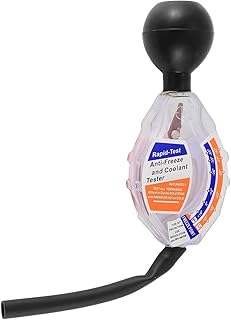
8. KVAEY 2PCS Coolant Tester Accessory – Best Value Duo Pack
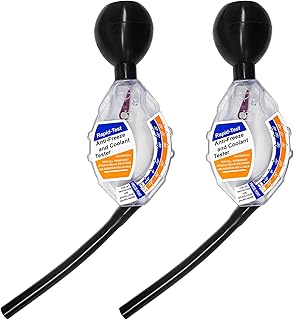
KVAEY Coolant Tester Accessory Automotive Professional Antifreeze Densitometer (2PCS)
Check PriceWhy it stands out
Owning two identical testers solves the biggest shop problem, cross-contamination between incompatible coolant types. This twin pack of KVAEY densitometers allows you to dedicate one unit to European pink or violet OAT coolants and the other to Asian blue or green PHOAT coolants. Each unit maintains the brand’s signature reliable needle float system. It’s the equivalent of purchasing peace of mind for very little additional cost.
Key points
- Includes two fully functional, identical coolant testers
- Prevents chemical cross-contamination between vehicles
- Clear display tube with a bright, visible indicator needle
- Designed for rapid fluid intake and drainage
Pros
- Best value, cost per unit is exceptionally low
- Perfect for multi-vehicle families with different brands
- Keep one in the garage and one in the trunk emergency kit
- Color-coded caps are not strictly enforced, allowing flexible use
- Same reliable vacuum action as the single unit
Cons
- Bulkier to carry two units if you prefer minimalism
- Still lacks the drop protection of a premium rubber boot
Best for
Households with a mix of German, Japanese, and American vehicles that require absolutely no fluid mixing to protect cooling system seals.
9. SHMZK Dial Type Antifreeze Coolant Car Battery Hydrometer Tester – Best Dual-Purpose Dial
SHMZK Coolant Tester Accessory Dial Type Antifreeze Coolant Car Battery Hydrometer Tester
Check PriceWhy it stands out
The SHMZK embraces the retro dial aesthetic while providing modern functionality with its integrated battery fluid checking capability. The needle sweep is smooth and damped, preventing the bouncy fluctuations that plague cheaper dials. A thick sealing ring around the pickup tube ensures you don’t drip corrosive coolant onto painted engine covers or sensitive electronics during the test. The package typically includes a spare pickup hose, anticipating long-term wear.
Key points
- Damped analog dial meter for stable, readable output
- Double function, coolant freeze point and battery electrolyte
- Extra-long flexible pickup hose for deep overflow tanks
- Anti-leak silicone sealing ring at the connection joint
Pros
- The damped needle makes it easier to lock in the exact value
- Long hose accesses radiators buried under plastic shrouds
- Replacement hose included extends the product’s life
- Dual-use capability adds value for battery maintenance
- Solid feeling construction in the palm of the hand
Cons
- Not compatible with modern low-conductivity coolants
- Instructions are sparse and heavily translated
Best for
Owners of older vehicles with both flooded lead-acid batteries and traditional ethylene glycol cooling systems who prefer a dial over a float.
10. Antifreeze Tester Automotive Hydrometer (B0G5PTP44H) – Best Ergonomic Siphon Grip

Antifreeze Tester Automotive Dial Type Antifreeze Coolant Tester Hydrometer
Check PriceWhy it stands out
This model prioritizes grip comfort with a rifle-style squeeze design that feels natural in the hand during a downward extraction. The scale is printed on a curved white plastic backing that mirrors the shape of the glass tube, reducing parallax error when reading from an angle. It includes a clever pressurized blow-back feature, after reading you can safely squirt the fluid back into the reservoir without removing the tool. This minimizes waste and mess significantly.
Key points
- Ergonomic squeeze grip designed for vertical extraction
- Curved anti-parallax backing plate behind the dial
- One-way return valve for clean fluid disposal
- Universal compatibility with standard glycol fluids
Pros
- Natural grip reduces hand fatigue on multiple checks
- Precise reading eliminates the down-angle viewing error
- Return valve promotes eco-friendly fluid conservation
- Rugged enough to keep in a mobile roadside kit
- Clean nozzle design prevents random dripping
Cons
- Return valve can clog if coolant is contaminated with sludge
- Plastic window can scratch if wiped with a dry rag
Best for
The environmentally conscious mechanic who wants to return fluid to the system cleanly and values a comfortable, modern grip design.
11. HuGuWdy Antifreeze Tester Inhalation Type – Best One-Handed Operation

HuGuWdy Antifreeze Tester Automotive Dial Type Coolant Tester (Inhalation)
Check PriceWhy it stands out
The HuGuWdy tool swaps the traditional bulb pump for a direct “inhalation” style siphon trigger, literally a pull-stroke mechanism that fills the chamber instantly. This design gives you total control over the fluid column level, preventing overfilling which often damages sensitive analog movements. The display pivots slightly, allowing you to keep your wrist in a neutral position while reading the dial overhead. It’s a specialized tool that solves specific ergonomic issues found in tight modern engine compartments.
Key points
- One-handed pull-to-fill inhalation mechanism
- Precise fluid level control to protect the measuring device
- Rotating, angled dial face for awkward viewing angles
- Dual scale for both freezing point and boiling point safety
Pros
- Eliminates the strain of squeezing a stiff rubber bulb
- No risk of sucking fluid into the mouth during operation
- Ideal for checking coolant in awkwardly located tanks
- Boiling point scale helps diagnose summer cooling issues
- Unique trigger grip feels intuitive immediately
Cons
- The sliding seal requires occasional silicone lubrication
- Unfamiliar operation may confuse someone expecting a bulb
Best for
Technicians working on transverse V6 engines where the radiator fill neck is buried under the cowl and only one hand can reach the opening.
12. Coolant Tester High Accuracy Dial Type (B07XGLF5D1) – Best Compact Digital-Like Display

Coolant Tester Antifreeze Tester High Accuracy Dial Type Anti-Freeze Coolant Tester
Check PriceWhy it stands out
This high-accuracy dial tester mimics the precision of a digital gauge using a finely graduated analog face and a highly responsive internal copper coil. The probe is remarkably thin, designed to fit into the narrowest overflow tank necks without binding. It provides readings for 6V, 12V, and 24V battery systems in addition to coolant density. The glass viewing window is treated with an anti-fog coating, which is a lifesaver when moving from a cold outdoor environment into a warm garage.
Key points
- Fine-resolution dial with high-sensitivity copper coil
- Ultra-slim extraction probe for tight modern reservoirs
- Anti-fog coated glass prevents condensation misreads
- Triple-voltage battery compatibility for broad use
Pros
- Anti-fog lens guarantees a clear view every time
- Thin probe is a must-have for late-model European cars
- High sensitivity catches minor density deviations
- Works as a reliable heavy-duty truck battery tester
- Solid brass counterweight ensures it stays upright
Cons
- Thin plastic probe may snap if forced against ice
- Dense scale can look cluttered if vision isn’t sharp
Best for
Owners of vehicles with electronically controlled thermostats who need to spot small coolant degradation trends before they trigger a check engine light.
13. Antifreeze Coolant Tester with °C and °F Display Dial – Best Dual-Scale Readability

Antifreeze Coolant Tester °C and °F Display Dial Type Antifreeze Tester Automotive
Check PriceWhy it stands out
If you swap between American service manuals and European factory specs, this dial ends the conversion headache instantly. It prints the Celsius and Fahrenheit scales on the exact same plane with distinct color coding, red for Celsius and blue for Fahrenheit. The kit includes a set of coolant test strips as a chemical backup, giving you two independent methods to verify a suspicious reading. The thick, shock-absorbing silicone bumper ring around the edge keeps the glass safe if the tool vibrates off a running engine.
Key points
- Simultaneous °C and °F display on a dual-color dial
- Includes chemical test strips for verification
- Silicone bumper ring absorbs vibration and mild impacts
- Specifically calibrated for ethylene glycol based mixtures
Pros
- Instantly readable in both metric and imperial units
- Backup strips confirm if the dial ever falls out of cal
- Silicone guard enhances durability significantly
- Zero math required when verifying imported vehicle specs
- Bold color blocking reduces the chance of a misread
Cons
- Strips are a consumable cost to replace eventually
- Heavier than a basic pen-style float tester
Best for
Technicians working on mixed fleets of European and domestic vehicles who refuse to compromise on measurement accuracy or convenience.
How to Choose the Best Antifreeze Tester
Choosing the right tool isn’t just about reading a temperature, it’s about matching the device’s chemistry to the fluid in your radiator. Automotive coolants are not one-size-fits-all, and using the wrong tester will give you a dangerously false sense of security. Understanding the core technology behind the tool is the first major step. Float-based hydrometers use specific gravity, meaning the weight of the floating balls is calibrated for either Ethylene Glycol or Propylene Glycol density, and they fail spectacularly if used on the wrong one.
Optical refractometers, on the other hand, measure how light bends through a liquid. They don’t care about the mechanical weight of a needle, so they deliver truthful readings on modern OAT, HOAT, and PHOAT coolants that confuse traditional testers. Next, consider whether you need a dedicated tool or a multi-function analyzer. If you also maintain flooded lead-acid batteries, a dial-type hydrometer with battery probes kills two birds with one stone. Build quality is equally critical, as a cracked housing or a leaky bulb can spill boiling hot or toxic fluid directly onto your hands. Always prioritize testers with rubber armor or protective cases if you work in a fast-paced environment.
Mistakes to Avoid When Testing Coolant
The first and most dangerous mistake is testing on a hot, pressurized system. Never open a radiator cap when the engine is at operating temperature, the steam and pressure release can cause third-degree burns instantly. Instead, always use the overflow reservoir as your extraction point or wait for the engine to cool completely. The second critical error is cross-contamination. If you dip a tester into a green European coolant and then immediately into a Japanese blue coolant, you can trigger a chemical reaction that gels the fluid inside the cooling passages. Always rinse your tester with distilled water between checks on different vehicles, or better yet, use the dedicated color-coded tool approach.
Another frequent oversight is ignoring the ambient temperature of the fluid. While many tools claim to have automatic temperature compensation, extreme cold or hot fluid can still skew a float reading by several degrees. Let the sample sit in the tool for thirty seconds to normalize before committing to a result. Finally, do not assume one reading lasts forever. Coolant degrades chemically over time, and the inhibitors wear out long before the freeze point drops. A “good” density reading doesn’t mean the anti-corrosive additives are still active, which is why pairing a physical tester with chemical test strips every other season is the gold standard for full system health.
Frequently Asked Questions
1. Can I use an ethylene glycol tester on Dex-Cool or modern OAT coolant?
Most mechanical float testers incorrectly estimate OAT coolant strength. A traditional hydrometer calibrated for standard green ethylene glycol will often read lower than the actual freeze protection of Dex-Cool or universal long-life coolants. For modern organic acid technology fluids, a refractometer is far more accurate because it measures optical density rather than specific gravity.
2. What is the ideal antifreeze to water ratio?
The sweet spot for nearly all climates is a 50/50 mixture of distilled water and concentrated antifreeze, which typically protects down to -34 degrees Fahrenheit. This ratio not only prevents freezing but also provides the highest heat transfer efficiency and adequate corrosion protection. A 70/30 ratio pushes the freeze point lower but actually reduces the coolant’s ability to carry heat away from the cylinder heads.
3. Are coolant test strips better than a hydrometer?
They serve different purposes. Hydrometers measure the freeze or boil protection and concentration density. Strips chemically test the pH level and the presence of nitrite or carboxylate inhibitors. For a complete picture of coolant health, you ideally need both a density reading and a chemical strip check, because the fluid can freeze at the right temperature but still be acidic enough to eat a head gasket.
4. Why does my tester show tiny bubbles stuck to the needle?
Air bubbles clinging to the indicator float cause inaccurate buoyancy and give a falsely high freeze protection reading. This typically happens if you pump the fluid too aggressively or if the coolant is aerated. Tap the side of the tester firmly with your finger to dislodge the bubbles before taking the final reading.
5. Can a refractometer check windshield washer fluid?
Yes, but only if the refractometer has a dedicated scale for that fluid. The 4-in-1 refractometers include a specific scale for windshield washer fluid, allowing you to check the freeze point of your spray fluid just as accurately as your engine coolant.
6. Is it safe to mix different colors of antifreeze?
Generally, no. Traditional green Inorganic Acid Technology coolant does not mix safely with orange or pink Organic Acid Technology fluids. Mixing them neutralizes the corrosion inhibitors and can create a thick gel that blocks narrow radiator tubes. Stick to the specific coolant type specified in your owner’s manual.
7. How do I clean a coolant tester after use?
Immediately flush the tool with clean, distilled water several times until the ejected water runs completely clear. Never use soap or solvents, as the residue can alter the surface tension of the glass tube and float, causing the indicator to drag or stick on the next test.
8. What does the boiling point scale mean on my dial?
Pressurized coolant has a higher boiling point than water. The boiling point scale on a dial hydrometer indicates how much protection the fluid provides against overheating. This is critical in summer traffic when a low boiling point leads to overheating even if the engine isn’t technically broken.
9. Do I need a tester that reads Propylene Glycol?
Most automobiles use Ethylene Glycol. However, if you drive a classic car, an RV, or a vehicle used near groundwater wells, you might use non-toxic Propylene Glycol. Check the label on the bottle because a standard ethylene glycol tester will read Propylene Glycol completely wrong, often off by over 10 degrees.
10. Can a refractometer replace a battery hydrometer?
Yes, a multi-scale refractometer can measure the sulfuric acid concentration in flooded lead-acid batteries. It does this with a much smaller sample size and provides a sharper line to read than a traditional floating ball battery hydrometer.
Final Verdict
Protecting your engine block from a deep freeze or an acidic boil is a quick task that doesn’t require expensive diagnostic hardware. For the vast majority of car owners reaching for a reliable shop-grade tool, the robust build and crystal-clear scale of the OEMTOOLS 24507 make it the standout daily driver. It’s a tool that won’t let you down when you need accuracy on a cold morning. However, the automotive world has shifted toward complex chemical formulations where optical precision trumps mechanical guesswork. If your garage houses a mix of diesel trucks, European sedans, and occasional battery maintenance, the investment in the 4-in-1 Refractometer pays for itself by eliminating diagnostic doubt entirely.
Start your winter prep confidently. Select the analyzer that matches your chemical profile, pull a clean sample, and verify your safety in thirty seconds flat. Your engine, and your wallet, will thank you for the small effort today when the temperature plummets overnight.
Once you know what coolant you’re running, a quality tester becomes your first line of defense against overheating. Our article on the best coolant choices for overheating engines explains how a weak or contaminated mixture can silently push temperatures into the danger zone, making a reliable tester not just handy but essential for early diagnosis.