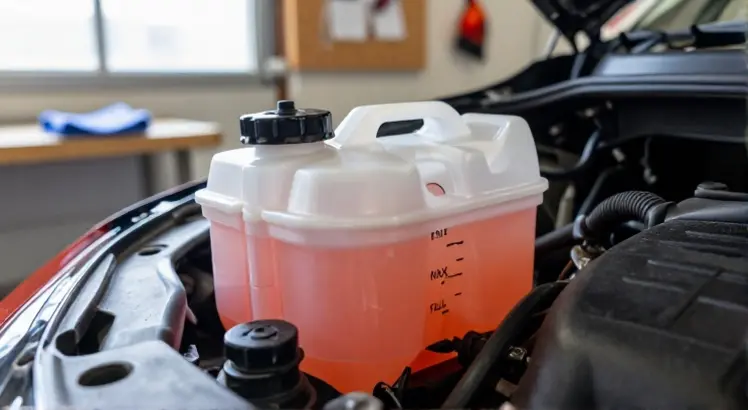
Keeping an eye on your Toyota Corolla coolant level is one of the simplest yet most effective ways to protect your engine from catastrophic damage. This small, translucent reservoir tucked inside the engine bay holds the lifeblood of your cooling system. If the level drops, even slightly, your engine can overheat within minutes, leaving you stranded with a costly repair bill. I have helped dozens of Corolla owners diagnose cooling issues in my workshop, and nine times out of ten, the problem begins with someone ignoring that little plastic tank.
You do not need a mechanic’s certification or a drawer full of specialty tools to check your Toyota Corolla coolant level. A clean rag, good lighting, and a few minutes of your time are all it takes. This guide walks you through every step, from locating the reservoir to understanding the difference between cold and hot readings so you can drive with confidence and avoid preventable engine damage.
Why Your Toyota Corolla Coolant Level Matters

PEAK OET Extended Life Red/Pink Concentrate Antifreeze/Coolant for Asian Vehicles, 1 Gal.
Check PriceYour Toyota Corolla’s engine produces tremendous heat during normal operation. The coolant, often called antifreeze, absorbs that heat from the engine block and cylinder head and carries it to the radiator where airflow dissipates it. If the fluid level falls too low, air pockets form inside the cooling passages, leading to uneven temperatures and hot spots. That is when head gaskets fail, cylinder heads warp, and your engine essentially cooks itself from the inside out.
Beyond preventing overheating, maintaining the correct Toyota Corolla coolant level also preserves the entire cooling system. Proper fluid coverage keeps the water pump lubricated, protects metal components from corrosion, and allows the thermostat to function accurately. Neglecting a low reservoir is like running with a slow leak in your tire, you may not notice until the damage is already done.
Coolant vs. Antifreeze: A Quick Clarification
You will hear the terms coolant and antifreeze used interchangeably, and for good reason. In a Toyota Corolla, the fluid is a 50/50 mixture of antifreeze concentrate and distilled water. This combination not only transfers heat efficiently but also prevents freezing in winter and raises the boiling point in summer. The factory fill in most Corolla models is a specialized hybrid organic acid technology fluid known as Toyota Super Long Life Coolant, easily recognized by its pink color.
Locating the Coolant Reservoir in a Toyota Corolla
Open the hood of your Corolla and look toward the passenger side of the engine bay. You will spot a translucent white plastic tank with a blue or black cap. This is the coolant overflow reservoir, sometimes called the expansion tank. On models from the early 2000s all the way through the current generation, the placement remains remarkably consistent, though the shape of the tank varies slightly between the 1.8L and 2.0L engines.
Do not confuse this reservoir with the windshield washer fluid tank, which usually has a blue cap and sits closer to the driver’s side. The coolant reservoir has thick hoses running from its bottom directly to the radiator neck. A quick glance at the sticker under the hood will also confirm you are looking at the right container.
Reading the Minimum and Maximum Marks
Every Toyota Corolla coolant reservoir has level markings molded into the side. You may see the words “F” for full and “L” for low, or simply two horizontal lines indicating max and min. When the engine is cold, the ideal coolant level sits right at or slightly above the midpoint between these two lines. A level touching the “L” mark is already dangerously low and demands immediate attention.
You should always view the tank straight on, not from above, because the curvature of the plastic can distort the reading. A small flashlight pressed against the tank wall makes the fluid line crisp and obvious, especially on older cars where the plastic has clouded with age.
How to Check the Toyota Corolla Coolant Level Safely (Cold Engine Method)
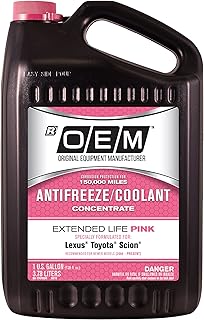
Recochem OEM 86-174POEM Pink Premium Antifreeze Concentrate Extended Life PINK, 1 gallon, 1 Pack, BROWN
Check PriceThe safest and most accurate way to inspect your coolant level is with a stone-cold engine, ideally after the car has sat overnight. When the engine is cold, the coolant contracts and settles in the reservoir, giving you a true resting volume. You also eliminate any risk of scalding from pressurised steam or hot fluid spraying out of an opened cap.
Achieving this check requires no disassembly. Simply raise the hood, locate the reservoir, and visually compare the fluid line to the marks. If the level is between F and L, your system is healthy. If it is below L, you have lost coolant somewhere in the system, either through a leak or gradual evaporation from an aging radiator cap.
- Park the car on a level surface so the fluid rests evenly inside the tank.
- Make sure the engine has been off for at least three to four hours, or preferably overnight.
- Wipe the exterior of the reservoir with a rag to remove dust that can obscure the marks.
- Shine a flashlight from the side of the tank, not the top, to see the exact fluid line.
- Note the reading and compare it against the recommendations in your owner’s manual.
Can You Check the Coolant Level When the Engine Is Hot?
I strongly advise checking the coolant level only when the engine is cold, but I understand that sometimes curiosity strikes while the hood is already warm. If you must inspect the level on a hot engine, never remove the radiator cap. The radiator cap holds the system under pressure, and loosening it can cause a violent eruption of boiling coolant that causes severe burns.
On a warm engine, the reservoir level will appear higher than normal because heat expands the fluid. A reading near the “F” line on a hot engine is typical, but a reading that pushes coolant out of the overflow tube indicates an overfilled system or a failing radiator cap that is not holding proper pressure. Use the hot check only as a rough indicator and always confirm with a cold reading later.
Safe Procedure for a Warm Check
- Keep the ignition off and wait at least 10 minutes after driving, but do not wait so long that the engine goes completely cold.
- Place a thick towel over the reservoir cap before opening, then turn it slowly, wearing protective gloves.
- Observe the level quickly without putting your face directly over the opening.
- If the fluid is steaming or bubbling violently, close the cap immediately and let the car cool further.
What to Do If Your Coolant Level Is Low

Zerex Fully Formulated Pink Heavy Duty 50/50 Ready-to-Use Antifreeze Coolant 1 Gallon
Check PriceDiscovering a low coolant level is not an emergency if you take the right steps immediately. First, top off the reservoir with the correct fluid to prevent the engine from running dry. Second, schedule time to find the root cause because coolant does not vanish on its own in a healthy closed system. Ignoring a slight drop now will almost certainly lead to a much larger repair later.
Never pour liquid into a blistering hot engine. Allow the car to cool completely before adding fluid. Cold coolant hitting a hot metal surface can cause thermal shock cracks in the block. Once the engine is cool, remove the cap, insert a clean funnel, and pour slowly until the level reaches the full mark.
Adding the Right Coolant: Toyota Super Long Life Pink Coolant
Toyota engineered its Corolla engines to work specifically with a hybrid organic acid technology pink coolant. Using generic green or yellow coolant can reduce the corrosion protection and even trigger chemical reactions that form sludge inside your radiator. When you need to top off or replace fluid, always reach for Toyota Super Long Life Coolant, or a high-quality aftermarket equivalent that explicitly states compatibility with Toyota pink coolant.
If you are unsure which product to buy, I have put together a detailed guide on selecting the best coolant for your Corolla. That resource compares factory and aftermarket fluids so you can make an informed decision without risking your warranty. And if you want a deep dive into the chemistry itself, read this explanation of understanding Toyota’s pink coolant and why it matters for long engine life.
What Causes Low Coolant in a Toyota Corolla?
Recochem OEM 86-174POEM Pink Premium Antifreeze Concentrate Extended Life PINK, 1 gallon, 1 Pack, BROWN
Check PriceYour coolant level can drop for several reasons, some benign and some quite serious. The most common culprit is an aging radiator cap that no longer seals properly, allowing tiny amounts of fluid to evaporate over thousands of miles. A slow leak from a hairline crack in the radiator end tanks or a weeping water pump gasket can also gradually drain the system without leaving a puddle on your garage floor.
On older Corolla models, the plastic coolant bypass hoses running from the throttle body area can become brittle and leak steam, which condenses and disappears before you ever see a drip. A more alarming cause is a leaking head gasket that allows coolant to enter the combustion chamber, where it is burned and exits the tailpipe as white smoke. If your level seems to drop consistently with no external sign, a pressure test at a repair shop is the next logical step.
Signs Your Corolla Is Losing Coolant
Catching coolant loss early saves you from watching the temperature gauge climb into the red zone while you sit in traffic. Your Corolla will often give you helpful clues long before the dashboard warning light illuminates.
- A sweet, maple-syrup-like smell inside the cabin or near the grill after parking.
- Visible puddles of pink, green, or watery fluid under the front of the car after it sits overnight.
- White exhaust smoke that lingers even after the engine is fully warmed up.
- A fluctuating temperature gauge that cannot hold a steady reading.
- Sloshing or gurgling sounds from behind the dashboard, indicating air trapped in the heater core.
How Often Should You Inspect the Toyota Corolla Coolant Level?
Make checking your Toyota Corolla coolant level a monthly habit. The task takes less than two minutes and can be done while you are already under the hood inspecting your oil and washer fluid. If you drive long highway miles, tow a small trailer, or live in a region with extreme summer temperatures, consider checking every two weeks. Consistent monitoring builds a baseline so you can spot a drop of half an inch and address it before it becomes an emergency.
At least once a year, or every 15,000 miles, have a qualified technician perform a cooling system pressure test and inspect all hoses, clamps, the water pump, and the radiator for hidden seepage. Many shops offer this as a complimentary service during an oil change if you ask. Spending a few minutes on prevention now can save you the cost of a new radiator, or worse, an engine rebuild.
Step by Step: Adding Coolant to a Cold Corolla Engine
If your Toyota Corolla coolant level has fallen just below the min line, here is the exact sequence I use in my own garage. For a more visual demonstration, you can follow this step-by-step guide on adding engine coolant from AutoZone. The process is universal but the details matter.
- Ensure the engine is cold. Pop the hood and secure it with the prop rod.
- Wipe the reservoir cap area clean to prevent debris from falling inside.
- Slowly open the cap. You should hear no hissing or pressure release.
- Insert a funnel into the reservoir opening.
- Pour Toyota pink coolant or a compatible aftermarket fluid slowly, stopping frequently to check the level.
- Fill until the fluid reaches exactly the “F” line, not above it.
- Replace the cap firmly and wipe up any spills immediately, as coolant is toxic to pets and wildlife.
- Start the engine, let it idle for a few minutes with the heater set to max hot, then shut it off and recheck the level after the engine has cooled again.
Toyota Corolla Coolant Level: Common Mistakes to Avoid
Even careful owners make missteps when dealing with their cooling system. Overfilling the reservoir is a frequent mistake. When the engine heats up, the coolant expands, and if there is no room in the tank, it will vent out of the overflow tube. This can create a false sense of security because you see a puddle and assume you have a leak when the system is simply expelling excess fluid.
Another error is mixing incompatible coolant types. Adding green silicate-based antifreeze to a Corolla that runs pink phosphate-enhanced organic acid technology coolant can create a gel that blocks narrow passages in the heater core. If your reservoir contents suddenly look murky or jelly-like, the mixing has already begun, and a complete cooling system flush is the only reliable fix. Stick with one chemistry for the life of the car.
When to Visit a Professional Mechanic
You can handle routine topping off yourself, but certain symptoms should always direct you to a trusted technician. If you smell coolant inside the cabin, your heater core may be leaking, and replacing it often requires removing the entire dashboard. If the engine overheats within minutes after adding coolant, you may have a stuck thermostat or a failed water pump impeller, both of which demand immediate diagnosis.
Any sign of coolant mixing with engine oil, visible as a milky residue on the dipstick or oil filler cap, points to a potential head gasket failure. That is not a driveway repair for most owners. A pressure test and a block test for combustion gases in the cooling system will give a definitive answer and help you plan the repair before the engine seizes entirely.
Frequently Asked Questions About Toyota Corolla Coolant Level
How do I know if my Toyota Corolla uses pink or green coolant?
Check the fluid in the reservoir. Pink indicates Toyota Super Long Life Coolant, which is the factory fill for most Corolla models from the mid-2000s onward. If you see green or blue, a previous owner may have substituted a non-Toyota formula. When in doubt, consult your owner’s manual or your vehicle’s VIN at a Toyota parts counter to confirm the specification.
Can I use water instead of coolant in an emergency?
In a genuine emergency, distilled water can temporarily bring the level up and get you off the side of the road. However, water lacks the anti-corrosion additives and lowers the boiling point significantly. As soon as possible, drain the temporary water mixture and refill with the correct pink coolant at a 50/50 ratio to restore full protection.
Why does my Corolla coolant level drop right after I fill it?
Air pockets trapped in the system after topping off can escape during a few drive cycles, causing the reservoir to appear low again. This is normal once or twice. If the level continues to fall after three top-offs, you have a leak that needs professional attention. Do not keep adding fluid without investigating, or you may mask a growing problem.
Is it safe to drive with the low coolant light on?
No. If the low coolant warning illuminates on your dashboard, pull over safely and let the engine cool while you assess the Toyota Corolla coolant level. Driving even a few miles with a critically low system can distort cylinder heads and cause a blown head gasket, a repair that often exceeds the value of an older Corolla. Treat the warning light as an immediate call to action.
Keeping Your Toyota Corolla Coolant Level in Check for the Long Haul
Monitoring your Toyota Corolla coolant level is one of those unglamorous tasks that separates a car that runs past 200,000 miles from one that leaves you stranded. It requires no special talent, just consistency and a willingness to open the hood once a month. The translucent reservoir sits there like a silent health gauge, telling you exactly what is happening inside the engine’s cooling passages.
Pair your monthly visual check with a full cooling system inspection every year, and always use the Toyota pink coolant the engineers designed for your engine. When the level stays steady between the marks, you can drive with the peace of mind that your Corolla will handle summer traffic, winter warm-ups, and every mile in between without breaking a sweat.
If you want to deepen your knowledge, explore our resources on finding the best coolant for a Toyota Corolla and the science behind Toyota pink coolant. Those guides will help you make the right purchase the next time your reservoir needs attention.