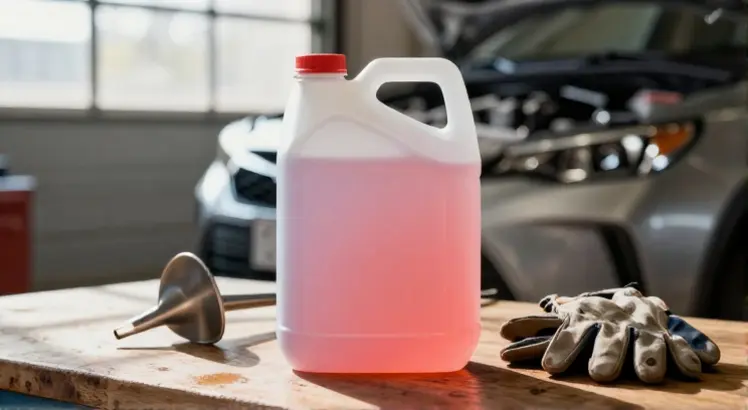
Keeping your Toyota engine running at the perfect temperature requires more than just any green fluid from the gas station shelf. If you drive a Toyota built after 2004, you have likely heard mechanics warn against mixing generic coolants with the specific factory fill. This naturally brings up the big question for any budget-conscious owner: what is the real Toyota antifreeze price, and is it worth the premium, often at the dealership? It’s a valid concern because the visual difference, a bright pink or red versus a standard green, often comes with a noticeable price gap. Let’s break down exactly what you should expect to pay, why the chemistry matters, and how to save money without destroying your water pump.
How Much Does Toyota Antifreeze Cost?

Zerex Asian Vehicle Red Silicate and Borate Free 50/50 Prediluted Ready-to-Use Antifreeze/Coolant 1 GA
Check PriceThe Toyota antifreeze price isn’t fixed, it dances around depending on whether you buy a pre-mixed jug, a concentrated bottle, or visit a service center. Generally, you are looking at two distinct pricing tiers. The first is the genuine OEM fluid you buy over the counter, and the second is the inflated price you pay when a mechanic pours it for you. Understanding this spread is the first step to keeping your cooling system healthy on a budget.
For a DIY owner walking into a Toyota parts department or shopping on a verified dealer website, a gallon of the genuine Toyota Super Long Life Coolant (SLLC) pre-mixed 50/50 typically falls between $25 and $38. This is the pink fluid ready to pour straight into your radiator or reservoir. If you opt for the concentrated version, which requires you to mix it yourself with distilled water, the price per gallon is usually slightly lower, hovering between $22 and $32, but remember, you are essentially getting two gallons of coolant once mixed. That makes the concentrate a much better value if you know how to measure correctly.
However, if you drive into a service bay, the parts charge on your invoice will likely reflect a marked-up list price. Dealers often charge between $35 and $50 per gallon for the same fluid during a coolant flush service, and sometimes even higher in premium urban markets. This doesn’t mean you are getting scammed, it’s simply the standard markup for inventory, storage, and disposal of the old waste fluid. Being aware of the over-the-counter baseline gives you leverage when negotiating a service package.
Why Does Genuine Toyota Antifreeze Seem Expensive?
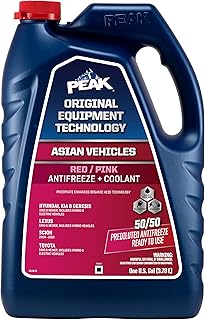
PEAK OET Extended Life Red/Pink 50/50 Prediluted Antifreeze/Coolant for Asian Vehicles, 1 Gal.
Check PriceWhen you stand in the aisle looking at a generic green $12 gallon next to the $30 Toyota pink gallon, the price shock is real. You might wonder if you are just paying for the logo on the bottle. The reality is that the chemistry inside the jug is fundamentally different, and that difference directly dictates the price. Toyota engines, specifically those with aluminum blocks and heads, require a specific corrosion inhibitor package that generic coolants simply do not offer reliably.
The Phosphated Hybrid Organic Acid (HOA) Technology
Toyota switched to a proprietary pink Super Long Life Coolant formula that relies on hybrid organic acid technology without silicates, but with added phosphates. This is a crucial chemical distinction. European coolants often rely on silicates for protection, but silicates can be abrasive and settle out over time, potentially damaging the thin seals in modern Toyota water pumps. Toyota’s phosphate-based HOA coolant coats the aluminum surfaces to prevent pitting and corrosion without the physical grit of silicates, leading to a cleaner-running, longer-lasting system.
This specific phosphate mix costs more to produce than the basic inorganic additive technology (IAT) found in cheap green antifreeze. The IAT coolants use additives that deplete quickly, hence the old 2-year replacement rule. The Toyota pink fluid is engineered to remain stable for up to 10 years or 100,000 miles on the initial factory fill. So while the Toyota antifreeze price is higher upfront, the cost per year of protection often balances out, and it saves you the labor of more frequent drain services.
The Risk of Using Incompatible Generic Coolants
You might try to dodge the price by buying a cheaper, universal or Asian vehicle compatible coolant. Several aftermarket brands do make suitable PHOAT formulations with a pink or red dye. However, you must be incredibly strict about reading the label. The risk lies in shops or owners topping off a Toyota system with green IAT coolant or a European-blue silicate coolant. When these mix, a chemical reaction occurs. The resulting gel can clog narrow coolant passages inside the radiator and the heater core, leading to an overheating nightmare and a significant repair bill that dwarfs the savings on the cheap antifreeze.
OEM Toyota Pink Coolant vs. Aftermarket Zerex Asian Vehicle

Toyota Genuine Parts – Antifreeze/Coolant (00272-1LLAC)
Check PriceIf you want to reduce the Toyota antifreeze price without rolling the dice on engine health, there is a popular middle ground. Valvoline’s Zerex brand makes a specific formula labeled Asian Vehicle or Asian Coolant, usually in a red or pink bottle. This is often the primary competitor to the dealer-bottled fluid. This creates a classic battle of OEM chemical purity versus aftermarket accessibility and slight cost savings.
- Chemical Match: Zerex Asian Vehicle is a PHOAT (Phosphated Hybrid Organic Acid Technology) coolant, specifically designed to mimic Toyota and Lexus fluid. It is silicate-free and designed for aluminum protection. From a chemical perspective, it’s a direct match.
- Price Point: You can typically find Zerex Asian Vehicle at retail stores like AutoZone or Walmart for $18 to $25 per gallon of pre-mix. This is a consistent $5 to $15 savings compared to the dealer parts counter. That margin increases if you are doing a full system flush requiring multiple gallons.
- Dye Color Variance: The OEM Toyota fluid is a deep cherry-blossom pink. The Zerex Asian formula tends to be a darker red, though some variants are explicitly pink now. The color difference doesn’t matter for chemistry, but it can cause confusion during a visual inspection. You should always label your overflow tank with the brand you used.
- The Concentrate Advantage: The best bang for your buck often comes from buying the concentrated form of these aftermarket fluids. A concentrated bottle of Zerex Asian might cost $22, but after mixing it with distilled water, you get two gallons for that price, effectively bringing your Toyota antifreeze price equivalent down to $11 per gallon. This is the secret weapon for the budget-conscious Toyota owner.

Zerex Asian Vehicle Red Antifreeze Coolant Concentrate 1 Gallon
Check PriceWhere to Find the Best Toyota Antifreeze Price
Smart Toyota owners know that walking blind into a dealership parts counter is rarely the cheapest path. The cost of OEM parts is highly fluid depending on the sales channel. To get a competitive Toyota antifreeze price, you need to shop like a dealer would, sourcing parts through wholesale channels or leveraging online price matching. The physical dealer isn’t your only option anymore, and the online marketplace has significantly leveled the playing field.
Major online Toyota wholesalers, often actual dealerships with a massive e-commerce presence, routinely sell the pink SLLC fluid for 20% to 30% below the walk-in counter price. A quick price scan often shows the 1-gallon OEM pre-mix hovering around $23 on these platforms, versus the $35 in-store sticker. You can also check Amazon, but be extremely cautious of counterfeit fluids in oddly shaped knock-off bottles. Stick to sellers who are verified Toyota franchises. Another strategic move is to bundle the coolant purchase with a filter or oil order to hit a free shipping threshold, effectively negating the shipping cost and bringing the net price down.
Breaking Down the Labor: Service Cost vs. DIY Price

Toyota Genuine Parts – Antifreeze Gallon W (00272-1LLAC-01)
Check PriceFor many, the sticker shock doesn’t come from the bottle itself, but from the coolant flush service package. When you see a $179 or $249 Coolant Exchange special, you are paying for much more than the fluid. Understanding the line items on that quote helps you decide if you should turn a wrench yourself. The value proposition of DIY isn’t just about saving money, it’s about controlling the quality of the flush, specifically the water used.
- Fluid Markup: The service center will charge the maximum retail price for coolant, often $40+ per gallon, and a V6 4Runner or Tundra can easily take 2.5 to 3 gallons. That means fluid alone on the invoice can hit $120 just for the SLLC.
- Machine Flush vs. Drain: Many shops use a forced cooling system flush machine. They charge a premium for this (usually 0.5 to 1.0 labor hours), but it gets everything out, including the block drains. A DIY drain at home often leaves a gallon of old fluid trapped in the engine block, which dilutes your new pink fluid.
- Hazardous Waste Fees: Almost every shop invoice will include a $5 to $15 environmental disposal or shop supplies fee. This is non-negotiable and covers the cost of legally getting rid of the toxic ethylene glycol. DIY saves this fee, but you legally must collect the fluid and bring it to a recycling center yourself.
- The DIY Bottom Line: Doing a simple drain-and-fill on a Toyota Corolla or Camry might take you an hour and cost $45 in fluids (aftermarket), compared to $130 at a shop. For complex trucks, the complexity of reaching block drains sometimes justifies the shop price for safety and completeness.
A Practical Guide to Buying and Mixing

Zerex Original Green Low Silicate Concentrate Antifreeze/Coolant 1 GA, 128 Fl Oz (Pack of 1)
Check PriceIf you decide to tackle this yourself to control the Toyota antifreeze price, doing it right is all about the water and the math. The most common mistake is buying a gallon of pre-mix and assuming it’s enough, or buying concentrate and mixing it with a garden hose. Tap water contains minerals, calcium, and chlorine that love to glom onto aluminum engine parts and accelerate the very corrosion you are trying to prevent. You absolutely must use distilled water, which costs about $1.50 per gallon at a grocery store.
If you buy the Toyota concentrated pink fluid, you need a clean mixing jug. Pour equal parts concentrate and distilled water in a 50/50 ratio. This brings your freezing point down to about -34 degrees Fahrenheit, which is perfect for almost any climate outside the Arctic. If you live in an exceptionally frigid area, you can push the mix to 60% coolant and 40% water for a -62 degree Fahrenheit protection rating. Never go above 70% coolant, as pure ethylene glycol freezes at a higher temperature than a water mixture and carries heat very poorly, risking an overheat condition even in winter.
Identifying How Much Fluid Your Specific Toyota Needs
The final variable in calculating your total spend is the system capacity. A compact sedan like a Yaris or Corolla has a small radiator and block capacity, often maxing out around 6 to 7 quarts. A big V8 Sequoia, however, can swallow nearly 16 quarts. Before you buy, check your owner’s manual, not the radiator cap level, to find the total system capacity. If you are doing a simple drain and fill, you usually only get about 40% to 50% of the total capacity out. This means you might only need one gallon of fresh fluid to replace what drained. But for a true flush, you will need to buy double the manual’s listed capacity to ensure you cycle enough clean fluid through to purge the old, dirty mix entirely.
Frequently Asked Questions About Toyota Antifreeze Price
Is it safe to mix Toyota pink coolant with a generic universal coolant in an emergency?
In a true emergency, where your engine is overheating and you are stranded, adding a small amount of water is far safer than adding an unknown chemical soup. Universal coolants claim compatibility, but many use a different chemistry that can degrade the phosphate layer in Toyota engines. If you must top off with a universal, minimize the amount and plan for a full cooling system flush immediately after you get home, checking the best Toyota antifreeze options to refill with the correct fluid. The price of a full flush is far less than a radiator replacement.
Why does the dealership charge so much more for a gallon of the same pink fluid?
Dealerships operate on a matrix pricing model for parts. The walk-in counter price for the Toyota Pink Super Long Life Coolant often includes a massive margin to cover the high overhead of the physical building, insurance, and parts department salaries. The wholesale price they pay Toyota corporate might be under $15 a gallon, but the retail mark-up to $35 or $40 is standard practice in the auto industry. That is why shopping at a dealer’s online wholesale store nets you the better Toyota antifreeze price.
Does the color of the coolant always dictate the price and quality?
No, color is just a dye and doesn’t legally standardize chemistry. But in practice, Toyota has locked the market by associating pink with their PHOAT fluid. The high Toyota antifreeze price is linked to the pink-dyed chemical standard, not the dye itself. Some cheap generic Asian coolants are also dyed pink but lack the robust phosphate pack. According to Valvoline’s technical product information, you should always match the chemistry specification (PHOAT), not just the visual color, to ensure you aren’t paying a premium just for red-tinted water.
Can I use the concentrated Toyota antifreeze to save more money?
Absolutely. Buying the concentrated bottle is the single most effective way to lower your cost per quart. But you must not pour it in straight. Mixing it 50/50 with distilled water in a separate clean container is mandatory. If you pour straight concentrate into the radiator, it can actually cause the water pump to cavitate and the engine to run hotter, defeating the purpose of the high-priced fluid purchase.
Conclusion: Smart Spending on Coolant Pays Off
The Toyota antifreeze price feels like a premium cash grab at first glance, but the engineering truth confirms it is a necessary investment in chemical compatibility. While a $12 jug of green generic coolant looks tempting, the internal damage from silicate fallout and aluminum pitting can wipe out years of savings in a single afternoon of mechanic labor. The winning strategy is not to avoid the pink fluid, but to buy it smarter.
Secure the lowest price by buying the concentrated form of a verified PHOAT aftermarket brand like Zerex Asian, or by ordering the OEM Toyota fluid from a wholesale online dealership. Mix it yourself with distilled water, and you will achieve the same level of premium engine protection for a fraction of the dealer service lane cost. Your Toyota’s water pump and heater core will reward that discipline with a lifespan measured in decades, not repair bills.