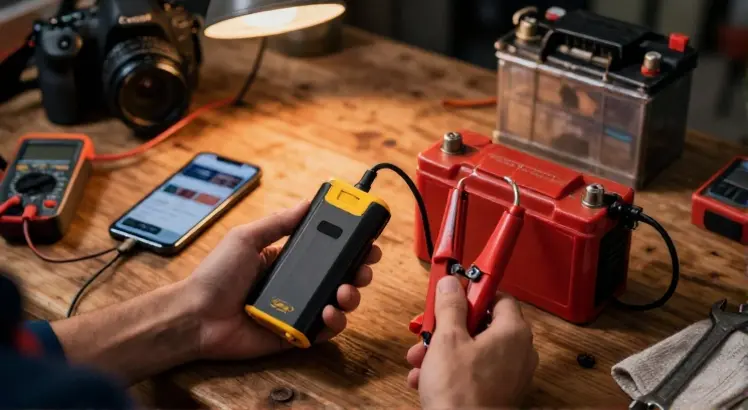
A dead car battery never gives a convenient warning. One minute your vehicle runs fine, the next you turn the key and hear nothing but a sad click. This is exactly when a portable jump starter proves its worth. Knowing how to choose jump starter that matches your engine size and lifestyle saves you from waiting on strangers or tow trucks.
Modern jump starters pack huge cranking power into handheld devices. Yet not every unit on the shelf works for a V8 truck or a diesel SUV. Amp ratings, battery chemistry, and safety features differ widely. Our guide breaks down everything you need to make a confident purchase.
Understanding Jump Starter Types

NOCO Boost GB40 12V 1000A
Check PriceJump starters fall into two main categories based on the internal battery. The lithium-ion models dominate today, while traditional lead-acid units still exist. Recognizing the strengths and weaknesses of each helps you narrow down what you need.
Lithium-Ion Jump Starters
Lithium-ion jump starters are small, lightweight, and hold a charge for months. You can toss one in a glove box without adding noticeable bulk. Many double as power banks with USB ports for phones and laptops. These units deliver high peak amps in a compact frame, making them perfect for sedans, crossovers, and even full-size trucks.
The downside is sensitivity to extreme heat or cold. Storing a lithium unit in a sweltering car can degrade the battery faster. Still, their convenience and declining prices make them the go-to choice for most drivers today.
Lead-Acid Jump Starters
Lead-acid jump starters use sealed AGM batteries similar to what you find under the hood. They are heavier and bulkier, often resembling a small toolbox. Their main advantage is durability in harsh environments. A lead-acid unit can sit in a freezing garage and still perform reliably.
For occasional use on a farm or job site, a lead-acid model might still make sense. However, they need more frequent recharging and lose capacity over time if left unmaintained. Most everyday drivers will find lithium-ion a better match.
Jump Starter vs. Battery Charger
It is easy to confuse a jump starter with a battery charger, but they serve opposite purposes. A jump starter delivers a quick blast of energy to crank the engine. A battery charger slowly replenishes a drained battery over several hours. For roadside emergencies, you need a jump starter, not a trickle charger.
Key Factors to Consider When Choosing a Jump Starter

JOLTEKON 4500A with Air Compressor
Check PriceOnce you settle on the battery chemistry, you must dig into the numbers and features. Picking the wrong amp rating or ignoring safety protections can leave you stranded or damage your vehicle’s electronics.
Peak Amps vs. Cranking Amps
Manufacturers love to highlight a big peak amps number on the box. Peak amps measure the maximum burst of current the unit can deliver for a very short moment, often under ideal lab conditions. Cranking amps (CA) or cold cranking amps (CCA) tell a more honest story. These ratings reflect sustained power under real-world conditions.
Always look for the cranking amps specification. A jump starter with 1000 peak amps but only 300 cranking amps may struggle on a cold morning. Trust the engine size recommendations rather than flashy peak numbers.
Battery Capacity and Engine Size
Matching the jump starter to your engine is critical. A compact 4-cylinder engine needs far less current than a big diesel V8. Here is a simple breakdown to guide you.
- Small gas engines (4-cylinder, 2.0L and under): 200-400 cranking amps
- Mid-size gas engines (V6, 2.5L to 4.0L): 400-600 cranking amps
- Large gas engines (V8, 5.0L and over): 600-800 cranking amps
- Diesel engines: At least 800 cranking amps, often 1000+ for big trucks
If you drive a full-size pickup or SUV, check the owner’s manual for battery CCA requirement and add a 20-percent safety margin. For more on battery specs, see our post on how to choose the right car battery.
Safety Features You Need
Connecting jumper cables backwards can cause sparks, battery damage, or injury. Quality jump starters include multiple layers of protection. Look for these non-negotiable safety features.
- Reverse polarity alarm: Alerts you immediately if clamps are reversed
- Spark-proof technology: Prevents arcing at the terminals
- Overheat protection: Shuts off the unit if internal temperature spikes
- Short-circuit protection: Safeguards against accidental cross-contact
Never buy a budget jump starter that skips these protections. Your vehicle’s onboard computers are expensive to replace. A few extra dollars for robust safety circuits is always worth it.
Portability and Extra Features
If the jump starter is too bulky, you will leave it at home. Lithium models often fit in a glove compartment or under a seat. Check the weight and dimensions before clicking buy.
Many modern units include built-in LED flashlights, USB-C charging, and even air compressors. While these add-ons are nice, do not let them distract from core performance. A bright flashlight with strobe mode is genuinely useful for nighttime roadside emergencies.
Build Quality and Brand Reputation
Clamps and cables tell you a lot about overall quality. Thick, copper-coated clamps with sturdy teeth grip the battery terminals securely. Flimsy plastic clamps often fail under high current.
Stick with brands that stand behind their products with solid warranties and responsive customer support. Checking an independent jump starter buying guide adds an extra layer of confidence in your choice.
How to Match a Jump Starter to Your Vehicle

GOOLOO A3 Jump Starter with Air Compressor
Check PriceStart with your engine’s displacement and fuel type. For a Honda Civic or Toyota Corolla, a compact unit with 300 to 500 peak amps (200-300 cranking amps) does the job. A Chevrolet Tahoe or Ford F-150 calls for at least 1000 peak amps and 600+ cranking amps.
Diesel engines require extra attention. They rely on glow plugs and higher compression, demanding a serious burst of current. Always verify that the jump starter explicitly states diesel compatibility and provides enough rated cranking amps.
If you own multiple vehicles, buy for the largest engine in your fleet. A heavy-duty jump starter will start a small car without any issue, but the reverse is not true. An undersized unit simply will not turn over a big V8.
Once you have the right tool, learn the correct connection sequence. Check our article on how to use a battery jump starter safely to avoid common errors and get back on the road quickly.
Common Mistakes to Avoid

OXILAM Jump Starter 6000A
Check PriceEven with the best equipment, a few bad habits can leave you stuck. Avoid these frequent pitfalls when selecting and using a jump starter.
- Buying based on peak amps alone. Always confirm cranking amps and real-world reviews.
- Ignoring the recharge cycle. Lithium units need topping up every 3 to 6 months.
- Storing the unit fully drained. Lithium batteries degrade when left empty.
- Choosing a no-name brand to save ten dollars. Unreliable circuits can fry your car.
- Forgetting that a jump starter is not a battery repair tool. If your battery dies repeatedly, it’s time for a replacement.
A jump starter is emergency gear, not a substitute for regular battery maintenance. Treat it like a fire extinguisher: always charged and ready.
Frequently Asked Questions

S ZEVZO ET03 4000A
Check PriceHow many amps do I need to jump start a V8?
For most gas V8 engines, you will want at least 600 to 800 cranking amps. A unit rated at 1000 peak amps or higher usually delivers enough sustained current. Check the manufacturer’s recommendation for engine displacement to be safe.
Can a lithium jump starter start a diesel truck?
Yes, but you need a high-output model designed for diesel. Look for a jump starter that explicitly claims diesel compatibility and provides at least 800 cranking amps for light-duty diesels, or 2000+ peak amps for heavy-duty trucks. Always double-check the engine size table from the maker.
How long does a jump starter hold its charge?
Lithium-ion jump starters typically retain around 80 percent of their charge after 6 to 12 months of sitting idle. Lead-acid units lose charge faster and may need a top-up every 1 to 2 months. It is wise to recharge any jump starter every 3 months to keep it in peak condition.
Are cheap jump starters safe?
Not always. Many low-cost units skip critical safety features like reverse polarity protection and spark-proof circuits. Spending a little more on a well-reviewed brand with proper safeguards protects both you and your vehicle’s electronics.
Can I use a jump starter to charge my phone?
Most modern lithium jump starters include USB ports and double as portable power banks. This is a handy feature, but do not drain the entire charge on your phone if you might need it for a dead battery later. Keep at least 50 percent capacity reserved for emergency starts.
Conclusion

NOCO Boost GB70 2000A
Check PriceChoosing the right jump starter is about balancing power, safety, and portability. Match the cranking amps to your engine size, prioritize safety protections, and stick with a reputable brand. A quality lithium-ion jump starter will start your car, charge your devices, and give you peace of mind for years.
Take a moment to check your battery group size and CCA rating. Then select a jump starter that exceeds your vehicle’s requirements by a small margin. If you ever forget the connection steps, revisit our guide on how to use a battery jump starter for a quick refresher.
Invest in the right tool now. Your future self, stranded in a dark parking lot, will thank you.