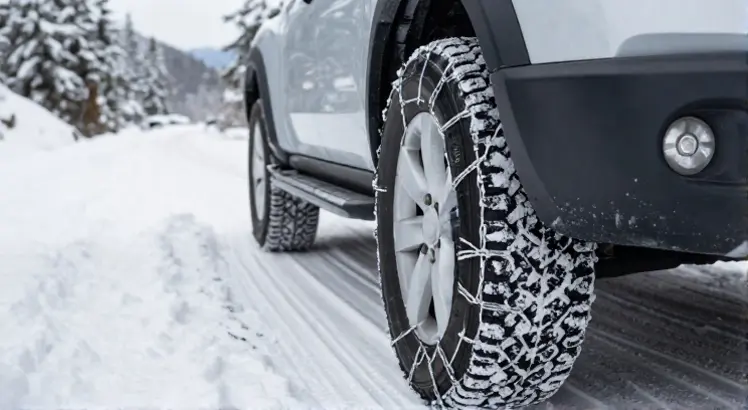
Driving in snow and ice can test anyone’s nerve. The moment the flakes start falling, drivers face a crucial question about safety. If you are planning a trip to the mountains or living in a heavy snow belt, you have likely asked yourself, do you need snow chains on all 4 tires? The answer is not as simple as a yes or no. It hinges on your specific vehicle’s drivetrain, the severity of the conditions, and the local laws that govern winter driving.
Making the wrong choice can damage your vehicle or leave you stranded. Many drivers assume throwing a set of chains on one axle is sufficient. However, modern vehicles, especially those with all-wheel drive (AWD), have very particular requirements regarding traction devices. The owner’s manual often holds hidden warnings that, if ignored, could lead to costly transmission repairs.
In this comprehensive guide, we will dive deep into the physics of winter traction. We will explore the differences between front-wheel drive, rear-wheel drive, and all-wheel drive setups. You will learn exactly where to install chains to maximize safety and prevent mechanical failure, ensuring you stay safe without breaking the bank or your car.
Understanding the Basics of Snow Chains

SCC 0232805 Auto-Trac Light Truck/SUV Tire Traction Chain – Set of 2
Check PriceSnow chains are not just accessories, they are vital safety tools designed to bite into packed snow and ice. When temperatures drop and roads freeze, even the best winter tires can struggle to find grip on a sheer ice patch. Snow chains provide mechanical traction by digging into the frozen surface, drastically reducing stopping distances and preventing wheel spin. They transform a slick, impassable road into a drivable path.
However, chains are abrasive and rigid. They change the footprint of your tire and alter the vehicle’s handling dynamics. This is why the placement of the chains matters so much. If you put them on the wrong tires, you can create a dangerous imbalance. The car might accelerate but refuse to steer, or it might turn while the rear end slides out uncontrollably.
There is also a common misconception that chains are only for deep snow. In reality, they are most crucial on icy, compacted surfaces where standard rubber fails. States like California have specific chain control levels, ranging from R1 to R3, dictating whether chains are recommended or absolutely mandatory for passing through mountain passes. Understanding these requirements is essential before you hit the road.
Do You Need Snow Chains on All 4 Tires? The Definitive Answer

SCC Peerless 0232105 Auto-Trac Light Truck/SUV Tire Traction Chain – 2 Count (Pack of 1)
Check PriceTo answer the question, do you need snow chains on all 4 tires, we must first look at your drivetrain. The general rule of thumb is to put chains on the drive wheels. These are the wheels that receive power from the engine. However, for vehicles that drive all four wheels, the logic changes. Let’s break this down by vehicle type to understand the specific requirements.
Front-Wheel Drive (FWD) Vehicles
If you drive a sedan, minivan, or a standard crossover, you likely have front-wheel drive. In these vehicles, the front tires handle both acceleration and steering. Because the front axle does double duty, you definitely need chains on the front two tires. This setup allows you to pull the car forward and maintain directional control.
Generally, putting chains only on the front of a FWD is acceptable and safe for standard driving. You do not need chains on all 4 tires for a front-wheel drive car. However, adding chains to the rear can provide extra stability, particularly when braking hard on a steep descent. The rear chains help prevent the back end of the car from fishtailing when you hit the brakes. While not mandatory, it is a safe practice if you are dealing with extreme glare ice.
Rear-Wheel Drive (RWD) Vehicles
Rear-wheel drive is common in trucks, large SUVs, and performance cars. In these vehicles, the rear wheels push the car, while the front wheels only steer. If you only install chains on the rear, the back end will dig in and try to push forward. However, without chains on the front, the steering tires have zero lateral grip. The car will go straight, even if you turn the steering wheel.
This is the most dangerous misapplication of chains. You must install chains on the rear tires for propulsion. But you should also strongly consider, or in some cases legally require, chains on the front tires to maintain steering control. While you might not need chains on all 4 tires by law, it is a critical safety measure for RWD vehicles to prevent understeer directly into a snowbank or oncoming traffic.
All-Wheel Drive (AWD) and 4-Wheel Drive (4WD)
This is where the question becomes most critical. Most manufacturers explicitly state that if you use chains on an AWD or 4WD vehicle, you must put them on all four tires. The reason lies in the complex drivetrain mechanics. In an AWD system, the computer or differentials constantly monitor wheel speed. If the front tires have chains, they have a larger effective diameter than the rear tires. This means they spin slightly slower than the unchained rear tires.
The vehicle’s computer interprets this difference in rotation speed as wheel slip or a catastrophic system fault. To protect itself, the car may overheat the transfer case or viscous coupling by constantly trying to distribute power to the wheels it thinks are slipping. This can lead to transmission failure, which is a repair bill costing thousands of dollars.
Therefore, to answer definitively, you absolutely need snow chains on all 4 tires for mechanical safety on modern AWD vehicles. Even if your AWD system is part-time, engaging it means the front and rear axles are locked together. A mismatch in tire diameter creates driveline wind-up, or binding, that can destroy differentials and gears instantly on hard, dry sections of pavement found between snow patches.
The Physics of Drivetrain Binding and Safety

Snow Chains for Car Tires Manual Tightening, Universal Adjustable Emergency Portable Tire Chains, Suitable for Commuter Car and SUV, Set of 2
Check PriceDrivetrain binding is a silent killer for AWD cars in winter. Imagine tying a rope tightly between the front and rear axles and then forcing them to spin at different speeds. Something must break. This is exactly what happens when two tires have chains and two do not. The chains effectively create a taller gear ratio, forcing the unchained axle to skip and hop to keep up.
Safety goes beyond just mechanics. A vehicle with chains only on the front will have tremendous bite under acceleration, but the rear is practically on ice skates. If you lift off the throttle mid-corner, the weight shifts forward, and the light, unchained rear end can snap into a spin. This is called lift-off oversteer. By putting chains on all 4 tires, you balance the vehicle. The car grips uniformly, brakes evenly, and turns neutrally.
Another point often missed is braking stability. Even in a FWD car, hard braking on a slippery decline plants weight on the front nose. The rear brakes can lock up easily without traction. Chains on the rear tires prevent this premature lock-up and keep the vehicle tracking straight. For ultimate safety in severe mountain pass conditions, symmetrical traction is the gold standard.
Tire Chains and Common Drivetrain Myths

Snow Chains for Car Tires, 35s Quick Fit & Auto-Tightening, Universal Emergency Anti-Slip Tire Traction Chains for Cars, SUVs & Trucks, Reusable Portable Set of 2 (HKN-120)
Check PriceOne persistent myth is that 4WD trucks do not need chains at all. This is a dangerous assumption often heard from overconfident drivers. While 4WD helps you go, it does not help you stop. Ice does not discriminate between a compact car and a lifted truck. In fact, many states that enforce chain laws have specific clauses for 4WD vehicles, allowing them to proceed without chains only if they have dedicated snow-rated tires. If conditions worsen to a Level 3 chain requirement, everyone must chain up, regardless of 4WD status.
Another myth suggests that using just two chains on a basic automatic AWD crossover is fine because it’s only powering the front wheels mostly. This is a gamble. Modern systems like Honda’s Real Time AWD or Toyota’s Dynamic Torque Control can instantly send 50% or more of the power to the rear. If that power surge hits the rear axle while it has zero grip, the stability control goes haywire. The system may cut power entirely, leaving you with no momentum to climb a hill. Always default to four chains for these systems.
Alternative Traction Devices for 4-Wheel Installation

Snow-Chains Auto Fixing 1 Min Quick Fit Easy Installation Tire-Chains, Portable Reusable Universal Emergency Tire Traction Chain for Passenger Car, Pickup Trucks and SUV – Set of 2 (HKN-150)
Check PriceIf the thought of installing heavy, greasy metal chains on all four wheels sounds daunting, you are in luck. The market has evolved rapidly with alternative traction devices. Textile snow socks are now widely approved in regions like the Alps and many US states. These fabric covers wrap around the tire and generate grip through friction rather than brute digging force.
Snow socks are particularly friendly to modern AWD systems. Because they are thin, they do not significantly alter the rolling circumference of the tire. This means they are much less likely to trigger drivetrain binding or ABS sensor faults, making them a safer choice for computer-controlled ABS braking systems with delicate sensors.
There are also hybrid chain systems, like the Michelin Easy Grip, which use a spider-like net of cables instead of heavy links. These also offer a much smoother ride and are tolerant of tight clearances. Crucially, for those asking, do you need snow chains on all 4 tires, these modern low profile solutions make it affordable and less physically demanding to buy and carry a full set of four. Investing in a full set of these lightweight alternatives is a wise move.
Tire Alternatives: Winter Tires and Studs
Perhaps you are wondering if you can sidestep the chain question entirely. In many regions, the legal chain requirement can be bypassed if your vehicle is equipped with true winter tires. Winter tires use a soft rubber compound and specialized tread patterns to stay flexible and grip in freezing temperatures. They are denoted by the Three-Peak Mountain Snowflake symbol, which indicates a qualified winter traction standard.
Studded tires take it a step further by embedding metal studs in the rubber. These studs dig into ice similar to chains, but they are always installed on all four tires by standard practice. In fact, shops will refuse to install only two studded tires due to the severe handling imbalance it creates. This reinforces the physics we discussed: mixing radical traction with low traction on an axle is a recipe for a spin. If you prefer tires over chains, browse top winter tire selections like the best winter tires for cars. This allows you to drive unaffected through light chain control zones.
Proper Installation and Tightening Techniques
Installing chains on all four tires requires patience and the right technique. Start by laying the chains flat on the ground to untangle them. Drape them over the top of the tire, ensuring the hooks face outward, away from the rubber brake lines and ABS sensors. A snagged brake line from a loose chain hook can cause instant brake failure.
Drive forward about a foot to expose the unchained portion, and then connect the inside fastener first. Always connect the inside link because it is harder to reach. Then move to the outside. Tighten the tensioners so the chains are snug, but be prepared. After driving 50 to 100 feet, the chains settle and stretch. You must stop, get out, and re-tighten them. Loose chains slap against the wheel well, causing body damage and tearing up the tire sidewall.
State Laws and Regulations on Chain Requirements
You cannot make a decision based purely on mechanics, you must also follow the law. Chain control checkpoints are common on major mountain highways. Failing to carry chains when required can result in heavy fines, and more importantly, being turned around. In California, violations during chain control can cost over a thousand dollars if you cause a blockage.
The general hierarchy requires chains on the drive axle for passenger vehicles in moderate conditions. However, specific signs will state Chains Required on All Vehicles, which includes 4WD with snow tires. This is the moment when answering yes to the question, do you need snow chains on all 4 tires, becomes a legal necessity, not just a mechanical preference. Always check the specific DOT website for your state before traveling.
Frequently Asked Questions (FAQ)
Can I put snow chains on just the front of my AWD car?
No. While the car will move, it can destroy the transfer case. The difference in rotation speed between the un-chained rear and chained front causes drivetrain binding. This can result in a burned-out center differential or a snapped drive shaft. Always put identical traction devices on all four AWD wheels.
How fast can I drive with snow chains?
Generally, you should not exceed 30 miles per hour with traditional chains. High speeds cause the chains to balloon outward due to centrifugal force. This strips the chains, shreds the splash guards, and can cause a serious accident. If you hear a loud banging, stop immediately and check the tension.
Do cables work better than chains?
For modern cars with limited wheel well clearance, cables are often the only option specified by the manufacturer. They provide slightly less traction in deep snow than heavy V-bar chains, but they ride smoother. They are excellent on packed highway ice, making them a balanced choice for crossover SUVs.
Why does my traction control light stay on with chains?
The chains cause minor, rapid speed variations that the ABS sensor detects as wheel slip. This can confuse the computer briefly. As long as the chains are tight and you have a full set of four on an AWD, the system usually adapts. If the light flashes constantly, pull over and double-check that the chains have not loosened significantly.
Conclusion
Ultimately, safety in the snow comes down to respecting the physics of your vehicle. If you drive a FWD or RWD car, you generally mount chains to the drive wheels, but adding them to the steering axle grants a massive safety buffer. However, the automotive consensus is crystal clear: if you own an AWD or 4WD vehicle, you do need snow chains on all 4 tires. The risk of totaling your drivetrain is not worth the convenience of fitting just one pair.
Always consult your owner’s manual for clearance issues before purchasing any chains or cables. The best setup is the one that matches your exact tire size and keeps all four corners of the car synchronized in grip. Be prepared, practice installing them in dry weather, and consider high-quality tire traction equipment as cheap insurance. For the most extreme climates, pairing quality dedicated winter tires with a full matching set of chains will get you home safely when the blizzard hits.
The conditions on a mountain pass can turn deadly in minutes. Being weighed down with the wrong traction gear is a gamble you should never take. Spend the extra money on a full set, match them to your drivetrain, and enjoy the peace of mind that comes with total control when the road turns white.