Taking care of your car might feel like a big responsibility, especially if you are just starting out. Learning the basics of car maintenance for beginners not only saves you money, it also keeps you safe on the road. You do not need to be a mechanic to handle simple checks and small tasks. A little attention each month goes a long way in preventing costly breakdowns.
Neglecting routine care can lead to engine wear, flat tires, and dead batteries when you least expect it. The good news is many essential maintenance steps are quick and easy. This guide walks you through the most important tasks every new driver or car owner should know. By the end, you will have a clear plan to keep your vehicle running smoothly for years.
Why Car Maintenance Matters for Beginners
Regular upkeep is the single best way to extend the life of your vehicle. Simple habits, like checking your oil and tire pressure, protect the engine and improve fuel efficiency. When you stay on top of these small jobs, you avoid larger problems that often come with expensive repair bills. It is much easier to spend ten minutes checking fluids than to replace a seized engine.
Safety is another big reason to learn basic car care. Worn brakes, low tire tread, and cloudy headlights reduce your ability to react quickly on the road. Routine inspections help you catch these issues early. You also gain confidence when you understand how your car works and what it needs to perform at its best.
The Basic Car Maintenance Checklist
When you are new to vehicle care, having a simple checklist removes the guesswork. You can group these tasks by how often they need attention. Some items require a quick look every month, while others follow a seasonal schedule. This plan will keep you organized without feeling overwhelmed.
Monthly Tasks
- Check engine oil level and color
- Inspect tire pressure and tread depth
- Test all exterior lights and signals
- Look under the car for fresh fluid leaks
Every 3 to 6 Months
- Inspect windshield wiper blades for cracks or streaks
- Check coolant level and coolant condition
- Clean battery terminals and check for corrosion
- Examine serpentine belts for cracks or fraying
Seasonal or Annual Checks
- Flush and replace coolant if needed
- Rotate tires to promote even wear
- Replace cabin air filter and engine air filter
- Inspect brake pads and rotors for wear
Sticking to this rhythm helps you catch minor issues before they turn into roadside emergencies. You will also notice your car runs smoother and responds better when all these systems are in good shape.
How to Check Essential Fluids
Fluids are the lifeblood of any vehicle. They lubricate moving parts, cool the engine, and help you brake safely. Checking them only takes a few minutes and requires no special skills. Once you learn the location of each reservoir, the process becomes second nature.
Engine Oil
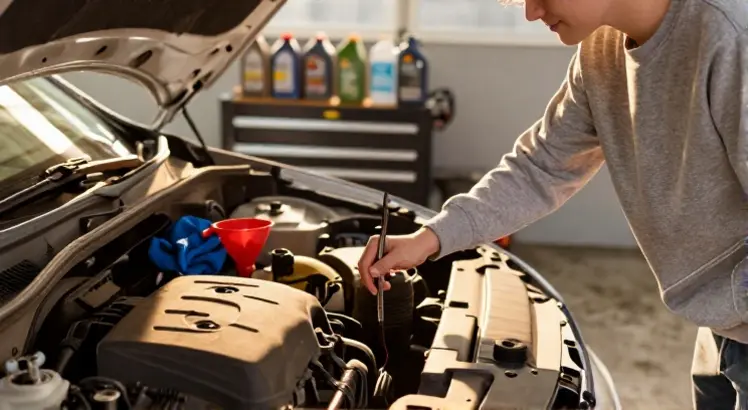
Park on level ground and wait for the engine to cool down. Pull out the dipstick, wipe it clean with a rag, then reinsert it fully. Remove it again and check the oil level against the marks on the stick. The oil should fall between the low and full indicators. Also note the color, dark, gritty oil means it is time for a change. If you are unsure about which oil to use, learning about synthetic versus conventional oil can help you make a confident choice.
Coolant and Brake Fluid
The coolant reservoir usually has a translucent tank with minimum and maximum lines. Never open the radiator cap when the engine is hot, as pressurized steam can cause severe burns. Brake fluid is typically in a smaller container near the driver’s side rear of the engine bay. Its level drops slightly as brake pads wear, but a sudden drop often points to a leak that needs immediate attention.
Tire Care Tips for Beginners
Tires influence handling, braking distance, and fuel economy. Neglecting them leads to blowouts and poor wet-weather performance. Fortunately, basic tire care is straightforward and does not require fancy tools. A reliable pressure gauge and a tread depth indicator are all you need.
Check tire pressure at least once a month, preferably when the tires are cold. The recommended pressure is listed on a sticker inside the driver’s door jamb, not on the tire sidewall. Underinflated tires wear out faster along the edges and hurt gas mileage. Overinflated tires give a harsh ride and reduce grip, especially in rain.
Tread depth can be measured with a penny. Insert the coin with Lincoln’s head facing down. If you can see the top of his head, your tread is too worn and the tires need replacing. Rotating your tires every 5,000 to 7,000 miles evens out wear and extends their life significantly.
Battery Basics Every Owner Should Know
A dead battery is one of the most common reasons drivers get stranded. Knowing a few simple battery care tips prevents that frustration. Most car batteries last between three and five years, but extreme temperatures can shorten that lifespan. Regular inspections help you spot trouble before you turn the key and get nothing.
Start by looking for a white or bluish powdery substance around the terminals. This corrosion disrupts the electrical connection and can be cleaned with a wire brush and a baking soda solution. Ensure the battery is securely mounted so vibration does not damage internal components. If your battery is older or you notice slow cranking, it is wise to replace it proactively. For detailed guidance, read about how to choose the right car battery that fits your vehicle and driving needs.
Many auto parts stores offer free battery testing. Take advantage of this service before winter or summer extremes hit. A weak battery may still start the engine on a mild day, but it will likely fail when the temperature drops.
Oil Changes and Air Filters
Regular oil changes remain the most critical service for engine health. Oil lubricates internal parts, reduces friction, and helps carry away heat. Over time, oil breaks down and becomes contaminated, losing its ability to protect. Follow the interval recommended in your owner’s manual, many modern cars can go 5,000 to 7,500 miles between changes with the right synthetic oil.
Along with fresh oil, replace the engine air filter about once a year or every 12,000 to 15,000 miles. A clogged filter restricts airflow, which hurts performance and fuel economy. The cabin air filter is another often-forgotten item. It cleans the air coming into the interior and should be replaced annually for clear airflow and reduced allergens.
When to See a Professional Mechanic
While DIY car maintenance for beginners builds confidence, some repairs require expert help. Warning lights on the dashboard, such as the check engine light or ABS light, should be diagnosed with professional scan tools. Unusual noises, vibrations, or smells also signal problems that are best handled by a trained technician. Ignoring these signs often leads to more expensive damage.
Brake work beyond pad and rotor inspections demands experience and special tools. If you are not fully comfortable disassembling brake components, let a shop handle it. The same goes for suspension repairs and anything involving airbag systems. A trustworthy mechanic will explain what needs fixing and give you a clear estimate before starting work.
According to the AAA car maintenance guide, building a relationship with a certified repair facility helps you stay on top of scheduled services and avoid surprise breakdowns. Their technicians can spot problems you might overlook during a routine home inspection.
Frequently Asked Questions
How often should a beginner check car fluids?
Check engine oil every month or before long road trips. Coolant and brake fluid can be inspected every three months under normal driving conditions. If you notice any fluid on the ground or see warning lights, check levels immediately.
What tools do I need for basic car maintenance at home?
A tire pressure gauge, a basic socket set, screwdrivers, and a funnel are a great start. A multimeter helps with electrical checks, and a jack with jack stands is needed for lifting the car safely. Gloves and safety glasses protect you during inspections.
Is it safe to mix different brands of motor oil?
Mixing brands is generally safe as long as the viscosity and specifications match what your car requires. However, it is better to stick with one high-quality oil for consistent protection. Always use the grade recommended by the manufacturer.
How do I know if my tires need replacing?
Check tread depth with a tread gauge or the penny test. Look for uneven wear patterns, cracks in the sidewall, or bulges. If the tread is worn to 2/32 of an inch or less, replace the tires immediately for safety.
Can I jump-start a car by myself?
Yes, many portable jump starters make solo jump-starts easy. Follow the instructions carefully, connecting positive to positive and negative to a grounded metal surface. If using jumper cables and another vehicle, ensure both cars are off before connecting clamps.
Conclusion
Starting a car maintenance routine does not need to be complicated or stressful. Focus on a few simple monthly checks and build your skills over time. Checking fluids, monitoring tire pressure, and caring for your battery go a long way toward reliable, safe driving. These small acts of prevention save you money and give you peace of mind.
Remember, every experienced car owner was once a beginner. Use the checklist in this guide to create your own schedule. Keep a small notebook or use a phone app to log your maintenance tasks. When you stay consistent, you will enjoy a smoother ride and fewer unexpected repairs.