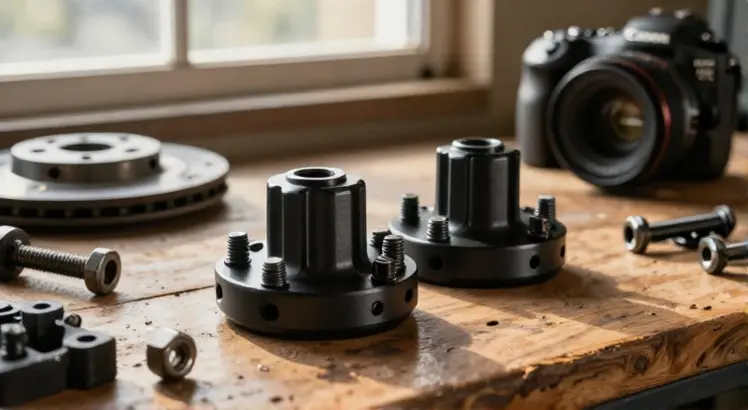
Getting the right stance for your truck, SUV, or even your tractor is about more than just looks, it’s about stability and clearance. Unfortunately, many off-the-shelf spacers are cast aluminum junk that fail under stress, causing vibrations or even catastrophic wheel separation. You don’t want to trust your heavy-duty rig or weekend warrior to low-quality imported parts.
You need a solution that is precision-engineered, hub-centric to eliminate shakes, and made from materials strong enough to handle serious torque. That is where BORA comes in. Known for their aerospace-grade billet aluminum and strict manufacturing in the USA, they are the gold standard in the spacing industry.
Short Answer: The best overall spacer for most light truck owners is the BORA 2.0″ for Chevy/GMC 1500. It offers the perfect blend of aggressive width, flawless hub-centric fitment for a massive range of model years, and legendary Made-in-USA durability that beats any imported brand, hands down.
Best Bora Wheel Spacers of 2026
When upgrading your vehicle’s stance with Bora wheel spacers, you’ll also want to consider the tires that will complete the setup. Understanding how spacers affect your wheel offset is crucial, which is why reading a detailed explanation of how wheel spacers work and their safety considerations can help you avoid common mistakes. Meanwhile, if you’re still deciding on the right rubber, our guide on comparing two leading tire brands for your vehicle’s needs can point you toward a match that complements the new wider track.
1. BORA 2.0″ for Chevy/GMC 1500 (1999-2025) – The Ultimate Stance Upgrade

BORA Wheel Spacers for CHEVY/GMC 1500 (1999-2025) | 6X5.5 | CB: 77.8 | Thread: 14X1.5 | BILLET | QTY 2 | Made in USA (2.0″)
Check PriceWhy it stands out
This 2.0-inch kit is the benchmark for GM trucks. It covers an incredible 26-year span of Silverado and Sierra models, ensuring a perfect fit for both classic body styles and the latest 2025 redesigns. The massive 77.8mm hub bore guarantees a vibration-free, hub-centric connection right out of the box.
Key points
- Compatibility spans 1999 to 2025 model years
- Machined from solid 6061 T6 billet aluminum
- Perfect 77.8mm centerbore eliminates the chance of shimmy
- Includes pre-installed 14×1.5 grade 10.9 studs
Pros
- Fits nearly three decades of GM 1500 trucks
- Hub-centric design requires no centering rings
- American made with strict quality control
- Provides a wide, aggressive track width
- Black anodized finish resists road salt corrosion
Cons
- Premium pricing compared to generic cast brands
- May require trimming the factory studs on some stock wheels
Best for
Daily drivers and lifted trucks looking for that perfect flush fitment with zero tolerance for steering wheel vibrations. It is the definitive choice for the serious Silverado or Sierra enthusiast.
2. BORA 2.5″ for Ram 2500/3500 SRW (2012-2026) – Heavy-Duty Towing Stability

BORA Wheel Spacers for RAM 2500/3500 SRW (2012-2026) | 8X6.5 | CB: 121.3 | Thread: 14X1.5 | BILLET | QTY 2 | Made in USA (2.5″)
Check PriceWhy it stands out
When you are piloting a 3/4 or 1-ton truck, cast spacers are a liability. This 2.5-inch kit is engineered for the massive payload and trailer tongue weights of the Ram Heavy Duty line. It features a towering 121.3mm centerbore to match the factory hub exactly, transferring weight directly to the axle rather than the studs.
Key points
- Designed for single rear wheel (SRW) heavy-duty models
- 8×6.5 bolt pattern with massive hub-centric lip
- Includes a 2.5″ width to correct deep dish wheel offsets
- Manufactured to withstand extreme diesel torque
Pros
- Safe for maximum GCWR towing applications
- Prevents inner tire rub on Thuren and Carli suspension kits
- 6061 T6 aluminum ensures zero corrosion seizing on steel hubs
- Width ideal for clearing wide trailer mirrors dynamically
- Rock-solid highway manners even with slide-in campers
Cons
- Compatibility limited to 2012 and newer body styles
- Adds significant scrub radius, potentially impacting tight parking
Best for
Hot-shot drivers and fifth-wheel owners who need to widen the rear track for perfect dually-mimicking stability without sacrificing the safety of their hauling setup.
3. BORA 3.0″ John Deere 2025R (Rear) – Maximum Orchard Stability

BORA Wheel Spacers for JOHN DEERE 2025R (REAR) | 6X6 | Thread: 12X1.25 | BILLET | QTY 2 | Made in USA | (3.0)
Check PriceWhy it stands out
Compact tractors are notorious for tipping on uneven terrain, and the 2025R is no exception. Adding 3 inches per side transforms the rear footprint from a narrow, tippy stance into a planted, confidence-inspiring width. This is pure American billet making your PTO work safer on slopes.
Key points
- Substantial 3.0″ push-out for severe slope mowing
- Bolt-on design with specific 12×1.25 hardware
- Clears the loader frame on the 2025R compact tractor
- Prevents tire chains from contacting the inner fender
Pros
- Vastly improves lateral stability with a heavy loader
- Allows fitment of wider R4 industrial tires
- Anodized finish sheds mud better than painted steel
- Reduces soil compaction by spreading weight footprint
- Precision CNC fit eliminates tractor “wobble” at road speed
Cons
- Increases overall width, potentially too wide for 60″ implements
- Requires checking lug nut torque more frequently in heavy tillage use
Best for
The rural property owner running a belly mower or front loader on hilly terrain who feels that white-knuckle sensation every time one tire dips into a rut.
4. BORA 2.0″ John Deere 2025R (Rear) – The Balanced Tractor Footprint

BORA Wheel Spacers for JOHN DEERE 2025R (REAR) | 6X6 | Thread: 12X1.25 | BILLET | QTY 2 | Made in USA | (2.0)
Check PriceWhy it stands out
Sometimes you do not need an extreme 3-inch push, you just need to stop the tire chains from chewing up your hydraulic lines. This 2-inch spacer offers the sweet spot for the 2025R, keeping the tire coverage aligned properly with your mower deck while adding essential inner clearance. It is the practical choice for the working tractor.
Key points
- Same 6×6 bolt pattern as the factory axle
- Direct bolt-on with no modifications needed
- Optimized width for standard Category 1 hitches
- Weighs less than the 3.0″ version for easier handling
Pros
- Provides necessary clearance for 2-link ladder chains
- Maintains a factory-ish look without sticking out past fenders
- Excellent entry-level upgrade for safety-minded operators
- Made in USA quality with a lifetime structural warranty
- Does not require swapping to longer wheel studs
Cons
- Not a significant cosmetic change if looking for a beefy stance
- Sold as a quantity of 2, ensure you order correctly for front vs rear
Best for
John Deere owners who use their 2025R for both fine-finish mowing and winter snow blowing, requiring a slight width increase that does not interfere with standard attachment tracking.
5. KSP 1.5″ for Silverado/Sierra – Budget-Friendly Forged Alternative

KSP 6X5.5 Wheel Spacers for Silverado Sierra,1.5″(38mm) Real Forged Spacers with 78.1mm Hub Bore M14x1.5 Studs
Check PriceWhy it stands out
While we focus on BORA, the KSP brand offers a legitimate forged alternative for the budget-conscious GM owner. With a 78.1mm bore, it bridges the gap between generic cast spacers and the premium BORA billet units. It features real forged 6061 T6 construction, a step above the typical soft aluminum found at this replica price point.
Key points
- 1.5-inch (38mm) width is ideal for leveled trucks
- Forged 6061 T6 aluminum with heat-treated studs
- 78.1mm hub bore is a direct match for GM 1500 hubs
- Includes pre-applied thread locker on studs
Pros
- Competitive price point for a forged spacer
- Provides a subtle flush look without poking tires out
- 10.9 grade studs offer solid clamping force
- Works great for clearing the upper control arm on lifts
- Lightweight compared to steel hub-centric options
Cons
- Import quality control does not match BORA’s US production
- Some users report minor vibration issues if not perfectly torqued
Best for
DIY mechanics looking for a safe, moderate spacer upgrade under a tight budget, but who cannot quite stretch to the premium US-made BORA price for their older truck.
6. BORA 2.5″ John Deere 2025R (Rear) – Heavy Load Spacing for Implements
BORA Wheel Spacers for JOHN DEERE 2025R (REAR) | 6X6 | Thread: 12X1.25 | BILLET | QTY 2 | Made in USA | (2.5)
Check PriceWhy it stands out
Right in the middle of the 2025R lineup, this 2.5-inch kit solves the specific problem of counterweight clearance. When a backhoe or heavy box blade is attached, the rear tires can squat and scrub, adding danger. This size provides the structural gap needed without looking like a puller tractor.
Key points
- Precision 2.5″ billet design for intermediate clearance
- Retains the factory 6×6 PCD accuracy
- Black anodized for chemical and corrosion resistance
- Distributes backhoe stress across the axle flange face
Pros
- Perfect middle ground for stability versus turn radius
- Strong enough for loaded R4 tires and liquid ballast
- Billet finish resists chipping from gravel roads
- Helps aligned 3-point hitches avoid tire interference
- No spacer-centric vibrations, even at transport speed
Cons
- Price jump from 2.0″ is noticeable but reflects extra material
- Will likely stick out past standard turf tires slightly
Best for
Landscapers and small acreage farmers using the John Deere 2025R for ground engagement tasks like plowing or box blading, where the extra half-inch makes all the difference in tire scrubbing.
7. BORA .75″ Toyota Tacoma 4WD (1999-2023) – OEM+ Fitment Flush

BORA Wheel Spacers for TOYOTA TACOMA 4WD (1999-2023) | 6X5.5 BP | 106 CB | Thread: 12X1.5 | BILLET | QTY 2 | Made in USA (.75″)
Check PriceWhy it stands out
Running oversized tires on a Tacoma often leads to nasty rubbing on the frame at full lock. This slim .75-inch BORA is a problem-solver, not a stance queen. It pushes the wheel out just enough to clear the upper control arms and frame rails without trashing your scrub radius or flinging rocks down the side of your truck.
Key points
- Ultra-thin .75-inch design retains factory studs
- 106mm hub-centric ring specific to Toyota trucks
- Fixes tire rubbing on SPC and JBA upper control arms
- Compatible with 1999 first-gen through 2023 third-gen
Pros
- Preserves near-stock suspension geometry
- Hub-centric precision ensures no high-speed shake
- Essential for 285/70R17 tire clearance on stock rims
- Security of genuine American billet on a critical component
- Does not require trimming the factory studs
Cons
- The slim profile renders visual impact negligible
- Not compatible with wheel designs that lack relief pockets
Best for
The off-road Tacoma enthusiast who is unwilling to compromise ride quality or bearing life just to stop the annoying “buzz” of mud tire lugs against the frame during tight trail turns.
8. BORA 2.0″ John Deere 1025/1025R – Sub-Compact Safety King

BORA Wheel Spacers for JOHN DEERE 1025/1025R | 5X4.5 BP | 3.15 TO 3.12 CB | BOLTS | TAP | HW: 12X1.25 | BILLET | QTY 2 | Made in USA (2.0″)
Check PriceWhy it stands out
The John Deere 1025R is incredibly capable, but it is also incredibly narrow. This 2.0-inch spacer addresses the tippy nature of this sub-compact tractor without destroying the manicured lawn. The unique 5×4.5 pattern and specific step-down centerbore make this a niche, must-have upgrade for 1025R safety.
Key points
- Transforms side-hill mowing stability
- 5×4.5 bolt pattern specific to the 1-series Deere
- Bolt-on design using factory lug bolts
- Black billet matches the Deere axle housing perfectly
Pros
- Dramatically lowers the center of gravity feel
- Prevents the common “pucker factor” on ditches
- Allows for tire chain installation without spacers rubbing
- Simple installation requiring only a torque wrench
- Aluminum material does not add excessive unsprung weight
Cons
- A bit aggressive for operators who only flat-mow
- Requires retorquing after the first 5 hours of operation
Best for
The weekend warrior with a hilly property who needs the 1025R to behave like a much larger, wider tractor when maneuvering over uneven ground or around pond banks.
9. BORA 1.75″ Colorado/Canyon (2015-2022) – Mid-Size Muscle Stance
BORA Wheel Spacers for CHEVY/GMC – COLORADO/CANYON (2015-2022) | 6X120 | 66.9 | Thread: 14X1.5 | BILLET | QTY 2 | Made in USA (1.75″)
Check PriceWhy it stands out
The Colorado and Canyon twins have a weird OEM wheel offset that sucks the tires way inside the flares, especially the ZR2 and AT4 trims. This 1.75-inch BORA spacer, with its unique 6×120 pattern, pushes the factory 31-inch tires exactly to the edge of the fender, giving that aggressive, wider-than-stock look without any plastic trimming.
Key points
- Specific 6×120 bolt pattern for GM mid-sizers
- 66.9mm hub-centric bore for perfect balance
- Corrects the “skipped leg day” factory offset
- Thick enough to clear the finned ZR2 brake calipers
Pros
- Matches the aggressive Multimatic DSSV suspension width
- Eliminates the sunken-in look of stock Z71 wheels
- Perfect track-widening for overlanding roof-top tent stability
- Premium billet resists gouging during trailside repairs
- Dead quiet at 75mph with zero balance issues
Cons
- Pushes tires out enough to possibly sling mud onto the body
- Not compatible with the 2023+ generation without re-verifying specs
Best for
Chevy Colorado ZR2 or GMC Canyon AT4 owners looking to perfect that square, bulldog stance with the stock wheels before they inevitably jump to a bigger tire setup.
10. BORA 1.75″ Ford F150 (2015+) – Aluminum King of the Road
BORA Wheel Spacers for FORD F150 (2015+) | 6X135 | 87.1 | Thread: 14X1.5 | BILLET | QTY 2 | Made in USA (1.75″)
Check PriceWhy it stands out
Ford’s 6×135 pattern is a beast of its own, and generic spacers often ignore the critical 87.1mm hub bore. This BORA kit is dialed for the aluminum-bodied F150 generation. It eliminates the interference common with the steering knuckle when running Raptor take-off wheels and tires on a standard XLT or Lariat.
Key points
- 87.1mm hub bore guarantees hub-centricity
- 6×135 bolt pattern specific to Ford and Lincoln
- Clears the electric parking brake module wiring
- 1.75″ pushes 34″ tires past the crash bar protrusion
Pros
- Fixes the notorious “crash bar rub” on 2015-2020 F150s
- Billet strength supports the heavy Ecoboost powertrain torque
- Black anodizing contrasts well with Ford’s sport package rims
- True American workmanship for a truck built in Dearborn
- Maintains factory ride quality, no harshness introduced
Cons
- Torque-to-yield lug nuts must be used carefully to avoid snapping
- Price is premium when buying all 4 corners compared to imports
Best for
The F150 owner upgrading to light off-road tires who refuses to hack up their crash bars but needs the immediate clearance to turn lock-to-lock without that terrible metal-on-rubber grinding sound.
11. BORA 1.5″ Toyota Tundra (2000-2006) – First Generation Restoration Fit
BORA Wheel Spacers for TOYOTA TUNDRA (2000-2006) | 6X5.5 | 106 | Thread: 12X1.5 | BILLET | QTY 2 | Made in USA (1.5″)
Check PriceWhy it stands out
The “first-gen” Tundra is a bulletproof classic, but finding modern wheel fitments for its older 6×5.5 hub is prone to rubbing issues. This 1.5-inch hub-centric spacer breathes new life into the aging platform. It allows the installation of modern five-spoke take-offs while perfectly centering on the 106mm Toyota lip.
Key points
- Fits the entire first-generation run from 2000-2006
- 106mm centerbore specific to Toyota trucks and Sequoia
- 12×1.5 studs match factory torque specs
- Anodized finish prevents galvanic corrosion on aging steel hubs
Pros
- Revives wheel options for a discontinued platform
- Removes the “tucked” look of the narrow rear axle
- 6061-T6 billet is stronger than the truck’s original steel rims
- Solves upper ball joint clearance issues on lifted trucks
- Simple bolt-on process for the weekend driveway mechanic
Cons
- Limited to a specific 7-year window of older trucks
- May expose rust on the original axle hub flange
Best for
Restoration enthusiasts and high-mileage heroes who want to keep their reliable first-gen Tundra on the road with fresh wheels and zero interference with the notoriously tight steering knuckles.
12. BORA 2.5″ John Deere 1025/1025R – Ultimate Slope Warrior
BORA Wheel Spacers for JOHN DEERE 1025/1025R | 5X4.5 BP | 3.15 TO 3.12 CB | BOLTS | TAP | HW: 12X1.25 | BILLET | QTY 2 | Made in USA (2.5″)
Check PriceWhy it stands out
For 1025R operators who absolutely push the limits of side-hill operation, the 2.5-inch spacer is the maximum width you can safely add without over-stressing the front axle pivots. It takes the narrow 1025R footprint and turns it into a rock-solid platform that takes the terror out of operating a loader high on a bank.
Key points
- Adds a full 5 inches of overall rear track width
- Perfectly machined dual-thread bolt pattern
- Works seamlessly with the 60D auto-connect mower deck
- No cheap stamped steel inserts, only solid billet
Pros
- Maximum safe width for Deere’s 1-series frame
- Effectively reduces the risk of a side roll-over dramatically
- Allows for snow chains without touching the fender bracket
- Visual stance looks aggressive and purposeful
- Anodizing holds up better to winter salt than wheel paint
Cons
- Wheels will stick out beyond the factory fenders
- Requires checking wheel bolt torque religiously for the first 10 hours
Best for
Those operating on severe inclines, such as roadside ditch mowing or vineyard work, where the 1025R’s standard track width feels dangerously top-heavy with a full bucket of gravel.
13. BORA 2.0″ Kubota BX2680 (2023+ Rear) – Orange Stability Upgrade
BORA Wheel Spacers for (2023+) KUBOTA BX2680 (REAR) | 5X4.5 BP | 3.15 TO 3.12 CB | N&B | S&T | HW: 1/2X20 | BILLET | QTY 2 | Made in USA (2.0″)
Check PriceWhy it stands out
John Deere is not the only sub-compact with a stability issue; the 2023+ Kubota BX2680 greatly benefits from a wider hind end. Unlike universal spacers, this BORA kit addresses the inch-sized 1/2×20 hardware and the stepped 3.15 to 3.12 hub design unique to Kubota. It fills the wheel well properly and keeps the tire lugs away from the mower deck linkage.
Key points
- Vehicle-specific fitment for the updated BX2680
- Utilizes SAE 1/2×20 studs in the hardware kit
- 2.0-inch width corrects the too-narrow rear stance
- CNC machined to clear Kubota’s proprietary hub profile
Pros
- Dials in the stance to match the front axle width
- Reduces turf scrubbing when turning tightly with a belly mower
- Massive safety improvement for loader work on soft ground
- No binding or vibration, direct bolt-on to the axle flange
- Designed for the specific center bore step geometry of Kubota
Cons
- Kubota-specific sizing means you cannot swap it to another brand
- Premium niche product price for a small tractor part
Best for
The Kubota owner experiencing that distinct back-end hop on uneven terrain, looking to match the stability of the FEL (Front End Loader) with an equally confident rear axle footprint.
How to Choose the Right Spacer Size
Selecting the right millimeter thickness is the hardest part, and it is a balance between looks and mechanical sympathy. The most common mistake is choosing a spacer solely for the “poke” look without measuring your available inner clearance. You need to physically measure the gap between your tire’s sidewall and the nearest suspension component, like a coilover or upper control arm.
For trucks, the game revolves around the hub bore, a spec BORA masters but others ignore. A hub-centric spacer is not optional, it is mandatory. If the center hole of the spacer does not match your axle flange exactly, the weight of the truck rests entirely on the lug studs. This causes high-speed shimmy and eventual stud shear. Always verify the Center Bore (CB) matches your rig, like the 106mm for older Tacomas or 121.3mm for Ram HDs.
For tractors, the priority shifts from aesthetics to center of gravity. You must decide if you are clearing tire chains (often needing a slim 2.0-inch) or counteracting a top-heavy front loader (leaning toward a 2.5 or 3.0-inch). Remember that widening the tractor too much can cause the front axle to dig in during turns, so match the rear width to match the front loader’s track width for the safest operation on slopes.
Common Installation Mistakes to Avoid
The number one cause of spacer failure is bad torque procedure. You cannot simply rattle the nuts on with a heavy-duty impact gun and call it a day, this warps the billet and stretches the studs. You must hand-thread every nut, physically clean the hub mating surface of rust and debris with a wire brush, and tighten in a star pattern using a calibrated torque wrench. Lazy installs create gaps, which create vibrations.
Another critical error is ignoring the factory stud length. On shallow spacers, like a .75-inch slide-on, the factory studs often poke through the back of the spacer. If your factory wheels do not have deep relief pockets cast into the backpad, the lug nuts will not seat, holding the wheel off the spacer face. This will snap your studs within miles. You must check for pocket clearance or be willing to trim the factory studs slightly.
Finally, never use anti-seize on the studs unless the manufacturer explicitly demands it, and BORA does not. Anti-seize acts as a lubricant, and your torque wrench reading will be completely false. You will be massively over-torquing the hardware, risking cracking the spacer or snapping the stud. Stick to dry threads, and always re-torque all nuts after the first 50 miles of driving on a vehicle, or the first 5 hours of operation on a tractor.
Frequently Asked Questions
1. Do BORA spacers cause vibration?
No, genuine BORA spacers are designed to be hub-centric, meaning they fit snugly over the vehicle’s axle hub with zero gap. As long as the mounting surfaces are rust-free and the hardware is torqued correctly in a star pattern, they eliminate the vibration common with universal “lug-centric” plates.
2. Are wheel spacers legal?
Legality varies by state and country, but generally, good quality spacers that do not cause the tire to protrude dangerously far beyond the fender are tolerated. Many states require fender flares to cover the exposed tread. Always check local vehicle lighting and fender coverage laws.
3. Can I use BORA spacers on a lifted truck?
Absolutely. In fact, they are often required on lifted trucks. Lifting changes the geometry of the upper control arm, often pushing it closer to the tire sidewall. A BORA spacer pushes the wheel out to clear the arm, preventing dangerous loss of control due to rubbing during articulation.
4. Will spacers wear out my wheel bearings faster?
Technically, any negative offset change increases the lever arm and can accelerate bearing wear slightly. However, on heavy-duty trucks with robust bearings, like the RAM 2500, adding 2 inches is negligible. On lighter IFS systems, a modest 1.5-inch change is generally safe for the lifespan of the bearing.
5. Do I need to trim my factory studs?
It depends on the spacer thickness and your wheel design. Spacers thinner than 1.5 inches often require the factory studs to protrude. If your specific wheel does not have a cavity between the bolt holes, the lug nuts will not seat flush. In that scenario, you must trim the studs flush with the spacer face.
6. Why are BORA spacers more expensive than KSP?
BORA spacers are 100% manufactured in the USA under strict quality control, using aerospace-grade 6061 T6 billet aluminum. They are machined to exacting tolerances that import brands often miss. The cost reflects the domestic labor, material integrity, and the guarantee that they will not fail under severe loads.
7. Can I install these on my tractor myself?
Yes, it is a straightforward driveway job. Jack up the rear of the tractor safely, remove the existing lug bolts, slide the spacer onto the flange, torque it down, and then mount the wheel to the new studs. You just need a heavy-duty jack and a proper torque wrench.
8. What is the center bore (CB) and why does it matter?
The center bore is the large hole in the middle of the spacer that matches the raised lip on your vehicle’s axle. If these two surfaces do not touch perfectly, the weight of the vehicle hangs on just the wheel studs, not the hub. A matching CB is essential for structural safety.
9. Does the John Deere 2025R need spacers on the front too?
Generally, no. The front axle of the 2025R is naturally wider than the rear to accommodate the steering knuckles, landing almost flush with the loader frame. Adding front spacers can create a massive scrub radius that fights the steering, potentially damaging the power steering system.
10. How do I clean anodized billet spacers?
Use mild car soap and water. Do not use acidic aluminum brighteners or wire brushes, as these will scrape off the protective anodized coating. The anodized layer prevents the aluminum from oxidizing white and fusing itself to your steel brake rotor hat.
Conclusion
Investing in high-quality wheel spacers is a non-negotiable safety upgrade if you care about your truck or tractor’s stability. While the market is flooded with cheap, dangerous cast imitations, choosing a forged or billet option keeps your wheels attached when it counts. BORA spacers consistently prove that American engineering prevents the death wobble and structural failures others suffer from.
From the heavy-hauling RAM 2500 to the nimble John Deere 1025R, there is a precise application for every vehicle on this list. Whether you need to clear off-road tires on a Tacoma or stop your Kubota from tipping on a ditch bank, the right spacer makes the job safer. Pay close attention to the hub-centric bore specs, and you will enjoy a smooth, vibration-free ride.
Do not cheap out on the part that holds your wheels on. Upgrade to a set of BORA spacers today, expand your stance, and tackle those steep slopes or muddy trails with total confidence in your machine’s footprint and your family’s safety.
Beyond the spacer itself, the tire brand you pair with it can impact ride quality and clearance. If you’re leaning toward a reliable all-season option, our article on whether Cooper tires deliver the performance and durability you expect will help you decide if they are a smart pairing with your new wheel spacers.