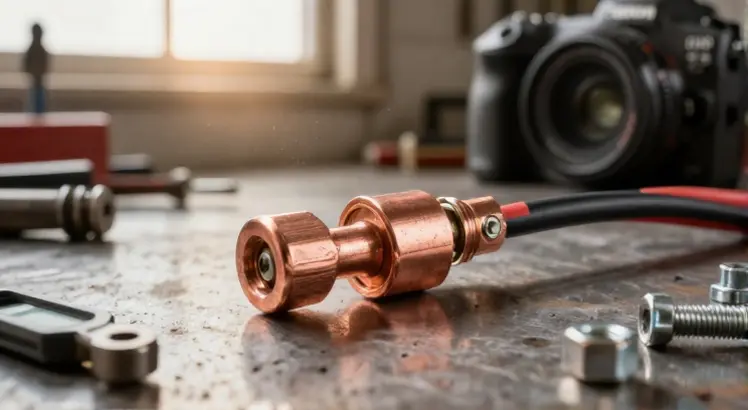
Corroded or loose battery cable ends can leave you stranded with a no-start situation, intermittent electrical gremlins, or even a dangerous fire hazard. You need a secure, low-resistance connection that stands up to heat, vibration, and moisture. The market is flooded with flimsy aluminum lugs that crack under torque, so finding the right copper lugs and crimping tools is critical.
The short answer: For a versatile, all-in-one starter kit that covers the most common gauge sizes, the TKDMR 160Pcs Copper Wire Lugs Assortment Kit with heat shrink is the best overall pick. It delivers solid copper construction, a wide range of sizes, and the insulation you need for a durable, professional-grade repair in one box.
Best Battery Cable Lug of 2026
1. TKDMR 160Pcs Copper Wire Lugs Assortment Kit – The Ultimate All-in-One Starter Pack

TKDMR 160Pcs Copper Wire Lugs AWG2 4 6 8 10 12 with Heat Shrink Set, 80Pcs Battery Cable Ends Ring Terminals Connectors Tubing Assortment Kit
Check PriceWhy it stands out
This kit bundles 80 heavy-duty copper ring terminals with 80 matching heat shrink tubes, covering AWG 2 through 12. The pure copper construction ensures maximum conductivity and corrosion resistance, while the adhesive-lined heat shrink seals out moisture completely.
Key points
- 80 copper lugs in 5 different stud hole sizes from 1/4″ to 3/8″
- 80 heat shrink tubes with adhesive lining for a watertight seal
- Wire gauge range: AWG 12, 10, 8, 6, 4, 2
- Tin-plated copper for extra oxidation resistance
Pros
- Complete DIY solution with terminals and tubing
- Pure copper, not aluminum
- Clear size markings on lugs
- Thick barrel walls crimp evenly without cracking
- Sturdy plastic organizer case included
Cons
- Does not include larger 1/0 or 2/0 gauge lugs
- Heat shrink assortment may not have every color needed
Best for
DIYers and mobile technicians who need a compact, carry-along kit for automotive, marine, solar, and general electrical projects where smaller gauge wires are the norm.
2. TKDMR 10 PCS 1/0 AWG 3/8″ Battery Cable Lugs – Heavy-Duty Single Gauge Reliability

TKDMR 10 PCS 1/0 AWG – 3/8″ Battery Cable Lugs Copper Wire Ring Terminals | UL,Heat Shrink Cable Ends,Wiring Connector Terminal End,Electrical Crimp Connectors,Lug for 1/0 Gauge Wires
Check PriceWhy it stands out
When you only work with thick 1/0 gauge wire, a dedicated 10-pack of UL-listed lugs saves time and money. The 3/8″ stud hole fits most battery terminals and high-amp distribution blocks, and the enclosed heat shrink ends make weather sealing effortless.
Key points
- 10 identical 1/0 AWG lugs with 3/8″ ring
- UL recognized and 100% pure copper
- Includes adhesive heat shrink tubing for each lug
- Closed-end design prevents moisture wicking
Pros
- Perfect for high-current inverter and winch wiring
- Thick barrel wall holds up to hydraulic crimping
- No mixed sizes to sort, grab and go
- UL listing guarantees consistent quality
- Adhesive tubing bonds permanently to cable jacket
Cons
- Only one gauge and stud size, not a kit
- Requires a heavy-duty crimper, not included
Best for
Professional installers and fleet maintenance crews who regularly terminate 1/0 battery cables on trucks, RVs, and large solar arrays.
3. TKDMR 264 PCS Heavy-Duty Copper Battery Cable Ends Kit – Mega Assortment for Pro Shops

264 PCS AWG 8-2/0 Copper Battery Cable Ends & Heat Shrink Tubing | 120Pcs Heavy Duty Ring Terminals, 144Pcs 3:1 Shrink Tubing, AWG 8 6 4 2 1/0 2/0 Awg, Auto Marine Wire Connectors
Check PriceWhy it stands out
This monster kit serves the entire AWG 8 to 2/0 range with 120 copper ring terminals and a massive 144 piece heat shrink selection. It is the one-box solution for shops that service everything from small ATV batteries to large diesel truck cables.
Key points
- 120 heavy-duty copper lugs in 6 gauge sizes
- 144 pieces of 3:1 ratio adhesive heat shrink tubing
- Stud hole sizes: 1/4″, 5/16″, 3/8″, 1/2″
- Includes 1/0 and 2/0 AWG lugs for big builds
Pros
- Widest gauge coverage in a single tray
- Deep crimp barrels grip oversized fine strand wire
- 3:1 shrink ratio seals even step-down connections
- Marked with wire gauge and stud size on each lug
- Solid metal tray keeps bins organized
Cons
- Higher upfront cost than small kits
- Some very thin walled heat shrink may split if overheated
Best for
Auto electric shops, marine riggers, and serious enthusiasts who demand a full bench stock of lugs and tubing for fast, no-wait repairs.
4. AIRIC 10pcs 1/0 AWG 3/8″ Battery Cable Lugs – Precision and UL Certification

1/0 AWG/Gauge – 3/8″ Battery Cable Lug Copper Connector Wire Ring Terminal | AIRIC,UL,1/0 AWG 3/8″,10Pcs,Heat Shrink Cable End,Electrical Wiring Crimp Connectors,Copper Battery Lugs,Wire Ring Terminals
Check PriceWhy it stands out
AIRIC focuses on a single heavy size with tight tolerances. Each terminal is stamped with the gauge and stud dimensions, which eliminates guesswork when you are building a harness from scratch. The included adhesive-lined heat shrink creates a factory-like sealed connection.
Key points
- 10 pure copper terminals, 1/0 AWG, 3/8″ ring
- UL listed with clearly engraved markings
- Pre-cut adhesive heat shrink tubes in red and black
- Seamless barrel design eliminates splitting
Pros
- Consistent hole size fits tight on studs
- Thick flange prevents deformation under high torque
- Dual-wall heat shrink provides strain relief
- Works with hydraulic or hammer crimpers
- Packing tube doubles as storage
Cons
- Only red and black heat shrink colors
- No smaller gauge options in the pack
Best for
Boat owners and RV solar setups where a 3/8″ stud is standard and a UL mark gives insurance peace of mind.
5. Crimping Tool Kit with 74pcs Copper Wire Lugs – The Turnkey Starter Solution

Cable Lug Crimping Tool with Cable Cutter for AWG 10 to AWG 1/0 | with 74pcs Copper Wire Lugs
Check PriceWhy it stands out
This bundle pairs a ratcheting crimper with 74 copper lugs and adhesive heat shrink, so you can crimp from AWG 10 down to 1/0 right out of the box. The included cable cutter trims fine strand wire without smashing it, which is a big time saver.
Key points
- Ratcheting crimper with interchangeable dies
- 74 tin-plated copper lugs in AWG 10, 8, 6, 4, 2, 1/0
- Cable cutter handles up to 1/0 gauge
- Adhesive heat shrink in assorted sizes
Pros
- Everything you need in one purchase
- Crimper jaws align perfectly for hexagonal crimps
- Comfortable non-slip handles
- Lugs nest perfectly in die sizes
- Compact storage case included
Cons
- Ratcheting mechanism may need occasional lubrication
- Dies are not marked for AWG, only cross-section
Best for
First-time DIYers who lack a dedicated lug crimper and want a guided system to produce solid battery and inverter connections.
6. 6 AWG Battery Cable 3FT Pure Copper with Lugs – Ready-Made Replacement Pair

6 AWG Battery Cable 3FT 6 Gauge Pure Copper Battery Inverter Cables with 5/16 in Lugs Both Ends Power Inverter Wire Set for Automotive Solar Power Inverter Marine Boat RV Car Motorcycle (3FT)
Check PriceWhy it stands out
Skip the crimping entirely, this 6 AWG pure copper cable arrives with 5/16″ lugs already professionally crimped and sealed on both ends. The fine strand count keeps it flexible for tight routing in engine bays or battery compartments.
Key points
- 3-foot length, 6 AWG pure copper conductor
- 5/16″ ring terminals both ends, heat shrink applied
- Flexible PVC jacket resists oil and abrasion
- Rated for high temperature and high current
Pros
- No tools required, just bolt on
- Pre-tinned lugs resist corrosion
- Super flexible for tight bends
- Excellent for battery to fuse block runs
- Consistent factory crimp pressure
Cons
- Fixed length, cannot be trimmed without re-terminating
- Only one gauge option in listing
Best for
Quick inverter installations and auxiliary battery wiring on boats, cars, or RVs where you need a drop-in cable with no fabrication.
7. Solsop Battery Cable Crimper Tool with 62PCS Lugs and Heat Shrink – Compact Crimping Power

Solsop Battery Cable Crimper Tool for AWG 10, 8, 6, 4, 2, 1/0 Gauge Electrical Lug, Battery Lug Crimping Tool with 62PCS Copper Wire Lugs and Heat Shrink Tubing, Cable Cutter
Check PriceWhy it stands out
Solsop packs a heavy-duty crimper, 62 copper lugs, heat shrink, and a cable cutter into a portable carry case. The tool features a quick-release lever and compound gearing that reduces hand fatigue when crimping thick 1/0 lugs.
Key points
- 62 tin-plated copper lugs AWG 10 to 1/0
- Adhesive heat shrink assortment included
- Ratcheting crimper with diamond-shaped dies
- Side cable cutter for clean cuts
Pros
- Excellent mechanical advantage for larger lugs
- Die set changes quickly without tools
- Ergonomic grip reduces palm strain
- Lugs are clearly deburred and polished
- Comprehensive user manual with gauge chart
Cons
- Case is a bit bulky for a mobile tool bag
- Heat shrink quantity may be low for heavy users
Best for
Weekend warriors and mobile marine techs who want a single case that contains the crimper, lugs, and cutter for on-site battery cable repairs.
8. Twidec 130PCS Copper Wire Lugs Kit with Heat Shrink – Broad Gauge Versatility

Twidec/130PCS Copper Wire Lugs AWG 2 4 6 8 10 12 14 16 Gauge Battery Cable Ends,Ring Terminals Connectors,Copper Ring Terminals,Battery Terminals Connectors Kits with Heat Shrink N-067-130PCS
Check PriceWhy it stands out
This kit reaches down to AWG 16 and 14, covering the thin accessory wiring that other kits skip. It gives you 130 pieces of copper ring terminals plus color-coded heat shrink to tackle everything from sensor grounds to heavy battery leads.
Key points
- 130 copper lugs from AWG 16 up to 2
- Stud hole sizes: #8, #10, 1/4″, 5/16″, 3/8″
- Color-coded heat shrink tubes for easy identification
- Tin-plated to prevent oxidation
Pros
- Only kit with AWG 16 and 14 terminals
- Color heat shrink simplifies polarity marking
- Good mix of small and medium ring sizes
- Thick walls, no deforming when crimping
- Sturdy plastic box with labeled compartments
Cons
- No heavy 1/0 or 2/0 gauge terminals
- Some heat shrink tubes are thin-walled
Best for
Auto electronics hobbyists and motorcycle builders who need small gauge terminals for sensors, lighting, and auxiliary circuits.
9. AMZCNC Hammer Lug Crimper Tool – Heavy Gauge Cable Workhorse

AMZCNC Hammer Lug Crimper Tool – 0000 AWG Battery and Welding Cables( 8 AWG TO 4/0 Wire Gauge)
Check PriceWhy it stands out
For massive 4/0 and 2/0 welding cables, a hand crimper cannot deliver enough force. This hammer crimper uses a flat anvil surface, just lay the lug in the die, hit with a mallet, and you get a deep hexagonal crimp that rivals hydraulic presses.
Key points
- Accepts wire from 8 AWG all the way to 4/0
- Induction hardened steel dies
- Works with any standard sledge or dead blow hammer
- Compact size, no hydraulic fluid or maintenance
Pros
- Unbeatable force for thick lugs
- No muscle strain from long handles
- Dies marked with wire size
- Lifetime durability, no moving parts to fail
- Easy to align and reposition
Cons
- Requires a solid striking surface and mallet
- Not ideal for tight engine bays, bench use only
Best for
Fabricators building battery banks, off-grid solar systems, and welding truck setups with 2/0 and larger cable.
10. Tivorex Battery Cable Lug Crimping Tool with 64pcs Terminals – Mid-Range Precision Kit

Battery Cable Lug Crimping Tool for AWG 10-1/0 Electrical Lug, with Cable Cutter 64pcs Ring Terminals and 70pcs Heat Shrink Tubing
Check PriceWhy it stands out
Tivorex combines a 10-to-1/0 AWG crimper with 64 copper lugs and 70 pieces of 4:1 ratio heat shrink. The high shrink ratio ensures a watertight seal even over irregularly shaped wire insulation, which is critical in marine environments.
Key points
- Ratcheting crimper with hexagonal dies
- 64 copper ring terminals in 5 sizes
- 70 pcs of 4:1 dual-wall adhesive heat shrink
- Cable cutter and zippered storage bag included
Pros
- 4:1 shrink tubing is top quality
- Dies indexed to wire gauge, no confusion
- Tool has a smooth ratchet release
- All lugs are tin-plated
- Soft carry bag is better than hard case for tight storage
Cons
- Bag does not hold lugs securely, they mix
- Crimper handle span is wide, may be tough for small hands
Best for
Marine and RV owners who need a corrosion-proof crimp and the highest shrink ratio for underwater or damp location wiring.
11. 150pcs Battery Cable Ends Copper Wire Lugs Assortment Kit – Balanced Mid-Size Selection

150pcs Battery Cable Ends, Copper Wire Lugs Assortment Kit AWG 2 4 6 8 10 Gauge – 70Pcs Battery Cable Lugs Ring Wire Terminal Connectors and 80Pcs Heat Shrink Tubing Kit for Marine Electrical Supplies
Check PriceWhy it stands out
This kit focuses on the sweet spot, AWG 2 through 10, with 70 heavy copper lugs and 80 heat shrink tubes. It is a no-fluff assortment that gives you more pieces in the sizes you actually use for battery, winch, and inverter connections.
Key points
- 70 copper lugs in AWG 2, 4, 6, 8, 10
- 80 heat shrink tubes with adhesive
- Stud sizes: 1/4″, 5/16″, 3/8″
- Flared barrel opening for easy wire insertion
Pros
- Excellent quantity for the price
- Thick copper wall handles hammer or hydraulic crimping
- Flared entry prevents strand bunching
- Glue-lined shrink grips insulation firmly
- Clear gauge stamp on each lug
Cons
- No 1/0 or heavier lugs
- Shrink tubing is mostly black, limited colors
Best for
General automotive and solar users who primarily work with 4 to 8 gauge wire and need a reliable batch of lugs and seals at a budget-friendly price.
12. 2 AWG Battery Cable 2FT Pure Copper with Lugs – Plug-and-Play Heavy Cable

2 AWG Battery Cable 2 AWG Gauge Pure Copper Battery Inverter Cables with 5/16 in Lugs Both Ends Power Inverter Wire Set for Automotive Solar Marine Boat RV Car Motorcycle Red and Black (2FT)
Check PriceWhy it stands out
These 2 AWG cables come as a red and black pair with heavy 5/16″ lugs factory crimped and sealed. The high strand count oxygen-free copper carries big inverter loads without voltage drop, and the flexible jacket snakes through tight RV compartments easily.
Key points
- 2 AWG pure copper, 2-foot length
- 5/16″ ring terminals on both ends
- Red for positive, black for negative
- Heat shrink adhesive strain relief
Pros
- Zero fabrication time, install immediately
- True 2 AWG, not undersized
- Flexible even in cold weather
- Tinned lugs resist salt air corrosion
- Pair includes both positive and negative
Cons
- Only available in a 2-foot length
- Lugs cannot be changed without cutting
Best for
Inverter connections up to 2000 watts in RVs and boats, where a short 2 AWG run is needed and you want a no-tool upgrade.
13. PEASUG 130Pcs Copper Wire Lugs Kit with Heat Shrink – Reliable Mid-Gauge Refill Pack

PEASUG Copper Wire Lugs 130Pcs, AWG 2 4 6 8 10 12 Gauge Battery Cable Ends with 66Pcs Heat Shrink Tubing Set, 64Pcs Ring Terminals Connectors Assortment Kit for Marine, Automotive, Cables, Appliances
Check PriceWhy it stands out
PEASUG gives you 64 large gauge copper ring terminals and 66 heat shrink tubes, hitting the most common sizes for car audio and solar battery banks. The seamless barrel design and thick flange provide high pull-out strength once crimped.
Key points
- 64 copper lugs AWG 12, 10, 8, 6, 4, 2
- 66 black and red heat shrink tubes
- Stud holes: 1/4″, 5/16″, 3/8″
- Tin-plating for long-term corrosion protection
Pros
- High copper purity, low resistance
- Clean, smooth interior prevents strand cutting
- Box compartments are labeled
- Heat shrink adhesive flows evenly with heat gun
- Good value for a refill after a big project
Cons
- Only a few pieces in the largest 2 AWG size
- No 1/0 or 2/0 sizes included
Best for
Car audio installers and solar DIYers who frequently use 4 and 6 AWG cable and need a dependable, economical refill pack.
How to Choose the Best Battery Cable Lugs
First, verify the material is pure copper, not copper-clad aluminum. CCA lugs look similar but have higher resistance, heat up under load, and corrode quickly. Look for terms like “100% copper” or “tin-plated copper” in the listing. The tin plating adds a protective barrier without sacrificing conductivity.
Match the lug stud hole size to your battery terminal, solenoid, or bus bar. Automotive batteries typically use 5/16” or 3/8” studs for main cables, while smaller accessory studs might be 1/4” or #10. A loose fit creates arcing, so measure your studs before ordering. If you are unsure, buy a kit that includes multiple hole sizes.
Wire gauge range is critical. A lug marked for AWG 2 will not crimp securely onto a 6 AWG wire. Choose a kit or single-size pack that covers the exact cable sizes you use regularly. If your projects involve dual battery systems, winches, or inverters, you likely need 2, 1/0, or even 2/0 lugs. For smaller accessory wiring, AWG 16 to 10 sizes become important.
Sealing is the difference between a connection that lasts two years and one that fails in six months. Adhesive-lined heat shrink tubing melts and bonds to the cable jacket, locking out moisture, salt, and road spray. Always select lugs that either include matching heat shrink or buy a separate tubing kit. High ratio tubing, like 3:1 or 4:1, shrinks more tightly over irregular shapes.
Finally, consider your crimping tool. Ratcheting crimpers with indexed dies produce repeatable, gas-tight hex crimps for medium gauges. For large 2/0 and 4/0 cables, a hammer crimper or hydraulic tool is necessary. Purchasing a bundled tool and lug kit often saves money and ensures die compatibility.
Common Mistakes to Avoid
Mistake one is using the wrong gauge lug for the wire. A lug that is too large will not compress fully, leaving air gaps that cause hot spots and oxidation. Conversely, forcing a too-small lug can cut strands and reduce current capacity. Always check the stamped AWG marking on the lug barrel and test-fit a scrap piece of wire before committing.
Another serious error is skipping the heat shrink or using plain tubing without adhesive. Even a tight crimp can wick moisture along the copper strands if left unsealed. Within weeks, green corrosion creeps under the insulation and creates hidden resistance. Glue-lined heat shrink is not optional for marine, underhood, or outdoor wiring, it is mandatory.
People often overtighten the nut on the stud, crushing the lug flange. A deformed flange loses contact area and eventually cracks. Use a torque wrench and follow the battery or device manufacturer’s specification. If no spec is given, a good rule of thumb for 5/16” hardware is around 10-12 ft-lbs, never impact it on.
Avoid crimping with pliers or a hammer alone, without a proper die. This creates a flat, cold weld that can slip under vibration. Invest in a correct crimper. If you only need two lugs, consider pre-made cables. The extra cost is tiny compared to a melted fuse block or electrical fire.
Finally, do not ignore the barrel length. Short barrel lugs cannot capture enough wire and may pull out. Look for a barrel length that is at least the diameter of the wire. This gives the crimp enough surface area to hold firmly.
Frequently Asked Questions
1. Are copper-clad aluminum lugs safe for battery cables?
They are not recommended. CCA has higher resistance and expands at a different rate, which can loosen connections. Stick with pure copper or tin-plated copper lugs for critical starting and charging circuits.
2. Do I need a special crimper for battery cable lugs?
Yes. Standard electrical pliers cannot generate enough force. Use a ratcheting hexagonal crimper for AWG 10 to 1/0, and a hammer or hydraulic crimper for larger sizes.
3. How do I know the correct stud hole size?
Measure the diameter of the bolt or terminal post where the lug will connect. Common battery top post adapters use 3/8”, while fuse blocks may use 1/4” or 5/16”.
4. Can I crimp a lug without a heat gun for the shrink tubing?
A heat gun is ideal, but a butane lighter or mini torch can work if you keep the flame moving and avoid scorching. Do not use a match; it deposits soot that can affect adhesion.
5. What is the difference between 2:1 and 3:1 heat shrink?
The ratio refers to how much the tubing shrinks. 2:1 shrinks to half its original diameter, 3:1 to a third. Higher ratio tubing seals better over connectors and irregular wire transitions.
6. Is it okay to solder a lug instead of crimping?
Soldering alone can wick under insulation and create a brittle point. In mobile applications, a proper mechanical crimp followed by adhesive heat shrink is far more reliable and resistant to vibration.
7. How many times can I reuse a battery cable lug?
Once crimped, a lug should not be reused because the barrel is permanently deformed. If you need to remove it, cut the wire behind the lug and start fresh with a new terminal.
8. Will these lugs work for welding cable?
Yes, as long as the gauge is matched. Welding cable is very fine stranded, so the lug barrel must be deep enough to compress all strands into a tight gas-free crimp.
9. Can I use these lugs on a solar panel system?
Absolutely. Copper lugs are standard in solar installations. Pair them with UV-rated adhesive heat shrink if the connection is exposed to sunlight.
10. Why do some lugs have a closed end?
Closed-end lugs prevent moisture from entering the wire through the barrel bottom and are preferred in marine and corrosive environments. Open barrels are fine for indoor or protected areas.
Final Thoughts
Quality battery cable lugs are the foundation of a safe and efficient electrical system, whether you are wiring a car audio amplifier, a solar charge controller, or replacing corroded factory battery terminals. The upfront cost of pure copper lugs and proper crimping tools pays for itself by eliminating voltage drop, preventing intermittent failures, and keeping you safe from overheated connections.
The TKDMR 160Pcs kit remains the best overall because it balances cost, gauge coverage, and complete sealing in one box. For those who regularly work with thick 1/0 cable, the dedicated 10-pack from TKDMR or AIRIC provides the exact lug you need without paying for smaller sizes you will never use.
If you are building a mobile toolkit, consider a combo like the Solsop or Tivorex crimper kits that bundle lugs, heat shrink, and a cutter. And when time is tight, pre-made cables with factory-crimped lugs, like the 6 AWG and 2 AWG pairs, get the job done in minutes with zero guesswork.
Remember to match the lug to your wire gauge, seal every termination with adhesive heat shrink, and torque fasteners to spec. With the right components from this list, you will have reliable, worry-free battery connections that last for years.