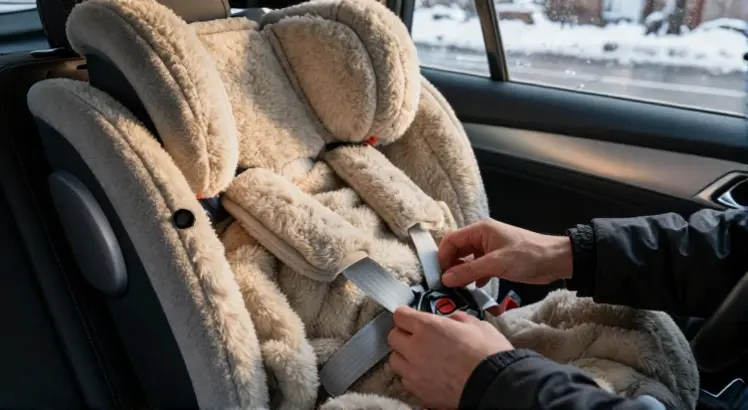
Keeping your child warm during cold weather drives often leads parents to look for extra layers and accessories. A common question that pops up every winter is, are winter car seat covers safe? While the intention is to protect your little one from freezing temperatures, the wrong type of cover can introduce serious safety risks you might not see.
Bulky, thick covers sold in baby stores may look cozy, but safety experts warn they change how your child fits in the harness. Understanding the difference between a dangerous product and a safe solution is critical for anyone driving in cold climates. This guide explains exactly what makes a cover unsafe and shows you the approved alternatives that keep your child both warm and secure.
How Aftermarket Car Seat Covers Affect Safety

Tinecio Waterproof Towel Seat Cover
Check PriceNot all car seat accessories are created equal. The primary concern centers on the structural integrity of the restraint system. A standard car seat is crash-tested with just the child and the original padding inside the seat. As soon as you add a thick layer behind the child or between the child and the harness, the dynamics of a crash change completely.
The Harness Fit Problem
Car seat harnesses must lie flat against the child’s chest to distribute crash forces across the strongest parts of the body. Winter covers that go underneath the baby create excess space. This space compresses during a sudden stop, causing slack in the straps. Even an inch of slack can allow the child to slide out of the harness or slam into the seat with excessive force.
The pinch test is the gold standard for checking harness fit, and thick fabric ruins it. If you can pinch a horizontal fold in the webbing at the shoulder after tightening, the harness is too loose. Extra padding fools you into thinking the harness is tight, but the fluff compresses on impact, leaving a dangerous gap.
Crash Test Standards and Aftermarket Products
Manufacturers design and crash-test car seats with only the original components. They do not evaluate random bunting bags or padded inserts that slide under the child. No federal regulation requires aftermarket cover makers to crash-test their products with every seat model. This lack of testing means you become the test dummy if you use an unapproved accessory.
Many car seat manuals explicitly state that you should not use any inserts or pads that did not come in the box. Going against this instruction technically voids proper use and compromises the seat’s ability to protect. When in doubt, following the manual is the safest bet.
Material Thickness and Compression
Faux fur, thick fleece, or pillowy nylon can compress up to 70 percent under crash forces, according to child passenger safety technicians. The harness might feel snug in the parking lot, but when the vehicle rapidly decelerates, the cushioning flattens instantly. That sudden compression releases all tension on the harness, leaving your child vulnerable to ejection or severe motion inside the seat.
Airbag Interference
Some winter covers wrap around the entire seat, including the sides where side-impact airbags deploy. Adding material over the airbag deployment zone can delay or redirect the protective airbag curtain. Although side-impact airbags are designed to interact with the car seat shell, an external cover adds a variable that hasn’t been tested. A clean, unobstructed seat allows safety systems to work as engineered.
What the Experts Say
The National Highway Traffic Safety Administration and the American Academy of Pediatrics both strongly advise against bulky clothing or thick padding under the harness. They recommend dressing the child in thin layers and then using a cover that goes over the top of the harness, not underneath it. You can always review the official car seat safety guidelines from the NHTSA for the most current recommendations.
When Winter Car Seat Covers Can Be Safe

LoyaGour Car Seat Cover Protector Front Seats
Check PriceAbandoning a cover entirely is not necessary. The key is choosing a design that does not interfere with the harness path. Safe options exist, and they work by insulating the outside of the seat while leaving the internal restraint untouched. These alternatives have saved many parents from cold-weather panic without risking safety.
Shower-Cap Style Covers
A shower-cap cover stretches over the top of the infant carrier like a fitted sheet. It does not go behind the baby’s back or under the straps. The elastic edge stays outside the seat shell, protecting the baby from wind and light snow without adding a single millimeter of material between the child and the harness. Parents widely trust this style because it cannot loosen the straps.
These covers usually feature a flap that flips open for carrying the seat, and they leave the harness buckle fully accessible. The design allows you to perform a proper harness check every time you place the baby inside. This consistent access is why child passenger safety technicians almost universally recommend the shower-cap type.
Car Seat Ponchos and Blankets
A car seat poncho fits over the child’s head after they are buckled, with the harness resting underneath directly against the child’s thin clothing. Many parents sew or buy fleece ponchos with a slit in the back to pull the harness through the garment, but the harness still lies flat against the body. A properly designed poncho does not interfere with the crotch buckle or chest clip.
Layering a blanket over the top of the harness once the child is secured is another zero-risk method. Just tuck the blanket around the baby’s sides and avoid placing it behind their back. This approach costs nothing extra and works perfectly with convertible seats where a shower-cap cover won’t fit.
Choosing a Safe Cover
If you prefer a purpose-made cover, look for labels that specifically say the product is crash-tested or compliant with federal motor vehicle safety standards. Even then, verify that the cover installs only on the outside of the shell. Avoid any insert that has a back panel that slides behind the child’s body. A safe cover never adds padding between the child and the seat.
For families who want to protect the upholstery of the car seat itself from wet boots and snow, consider a different category entirely. A washable car seat cover for the vehicle’s back seat does not affect child safety, because it attaches to the adult seat, not the child restraint.
Practical Tips for Winter Car Seat Safety

DECKALY Waterproof Car Cover Protector
Check PriceSmall changes in your routine can eliminate the temptation to use a puffy jacket or a thick bunting bag. Start with a thin base layer like a onesie, add snug leggings, and finish with a form-fitting fleece jacket. This layering system traps heat without adding bulk under the harness.
Always remove the child’s winter coat before buckling the harness. A coat can compress just like a thick cover. Store the coat in the front seat during the ride, then put it back on the child when you reach your destination. This may sound inconvenient, but it prevents a hidden danger that even careful parents miss.
Pre-warm the vehicle a few minutes before loading up. A warm cabin means you can safely use just a thin fleece layer. If you use an infant carrier, keep the carrier indoors overnight so the plastic shell isn’t freezing cold when you click it into the base.
If you have a toddler in a convertible seat, practice the flip trick. After buckling the harness over thin clothes, flip the child’s coat backward over their arms. This puts the coat on top of the harness and keeps them warm without adding bulk underneath.
For extra seat protection from slush and road salt, a quality waterproof seat cover on the vehicle seat can catch melting snow without impacting the child’s safety harness. Just remember that this cover goes on the adult seat, not the car seat.
Frequently Asked Questions

Leader Accessories Waterproof Sweat Bucket Seat Cover
Check PriceCan I use a thin fleece suit inside the car seat?
Yes, as long as the suit is snug-fitting and does not compress under the harness. After buckling, do the pinch test to confirm the webbing cannot be folded. If you need to loosen the harness to accommodate the fleece, the suit is too thick.
Are car seat bunting bags safe?
Traditional bunting bags that go between the child and the seat are not safe. They act as a thick barrier that prevents a tight harness fit. Only use bunting bags that install like a shower-cap cover over the outside of the carrier.
What about aftermarket head supports with winter lining?
Do not add any padded head supports that did not come with the car seat. Winter lining around the head can push the chin toward the chest in a newborn, creating a positional asphyxiation risk. Stick with the thin, original insert from the manufacturer.
Do I need to buy a special winter car seat?
No. A standard car seat used correctly with a safe cover or poncho performs perfectly in winter. The seat itself does not need to change. Focus your effort on how the child is dressed and what goes over the harness, not under it.
How do I know if a cover is crash-tested?
Look for a statement from the manufacturer that the product was dynamically crash-tested with specific car seat models. If no such statement exists, assume it has not been tested. A lack of testing means you cannot trust the cover in a collision.
Conclusion
So, are winter car seat covers safe? They are safe only when they install over the harness and seat shell without any material between the child and the straps. Bulky padded inserts and thick bunting bags that go underneath the baby dramatically increase the risk of injury by compressing in a crash and loosening the harness.
The safest path is simple: dress your child in thin, warm layers, buckle the harness tightly, and then add warmth on top. Use a shower-cap cover, a fleece poncho, or a blanket tucked over the secured harness. These methods protect your child from the cold without making the journey unsafe. A few extra seconds of preparation can make a world of difference, keeping your little one cozy and secure all winter long.