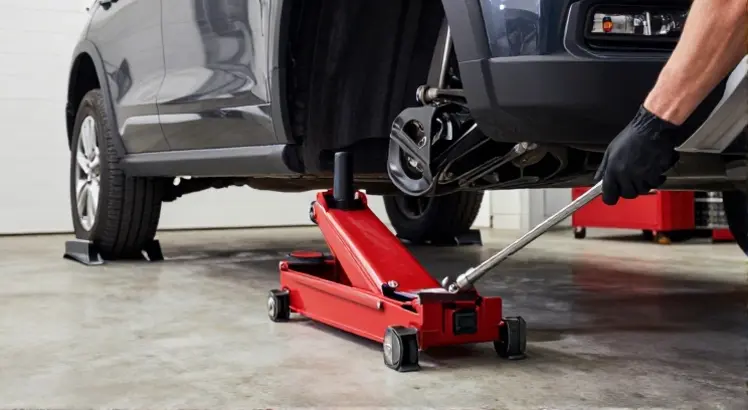
Every time you slide under a vehicle to change a tire or inspect a brake line, you are placing a massive amount of trust in a single piece of equipment. You might trust a factory scissor jack without thinking twice, but the moment you pull out a compact hydraulic bottle jack, a nagging doubt often creeps in. You start wondering about the internal seals, the stability of the base, and whether that high-pressure hydraulic fluid is going to give out right when you least expect it. Understanding the risks and safety protocols is non-negotiable before you put any weight on these tools.
We will walk through exactly how these mechanisms work, where they excel, and the specific scenarios where they become genuinely dangerous. By the end of this guide, you will possess a clear, expert-backed framework for purchasing, inspecting, and operating a bottle jack without compromising your safety. This information applies whether you are a weekend DIY mechanic or someone simply looking to upgrade their roadside emergency kit.
Let’s settle the question definitively: are bottle jacks safe when compared to other lifting hardware? The short answer is yes, but only when strict operational boundaries are respected. Unlike a floor jack with a wide stance, a bottle jack features a narrow vertical piston housed in a cylindrical body. This design provides immense lifting power in a small package, often up to 20 tons or more. However, that massive power becomes a hazard if the load shifts sideways, because the compact base is not naturally stable against lateral force.
Understanding the Mechanics of Hydraulic Lifting

Torin T90413 Big Red Hydraulic Bottle Jack with Carrying Case, 4 Ton (8,000 lb) Capacity
Check PriceTo use a tool safely, you must first understand why it behaves the way it does. A bottle jack relies on Pascal’s principle to multiply force. When you pump the handle, a small plunger pushes hydraulic oil through a check valve and into the main cylinder. This pressure forces the large lifting ram upward, allowing a relatively low human effort to hoist several tons of steel. The simplicity of this design means there are very few moving parts that can fail, which is a point in favor of reliability and long-term safety.
The danger lies in the sealing ring. If the O-ring seal or the valve threads degrade due to age, rust, or overloading, the pressurized fluid can bypass the seal. This failure mode usually does not cause a catastrophic, instant drop. Instead, you will notice a slow, creeping descent of the load. This is why safety standards dictate that a hydraulic jack is a lifting device, never a holding device. You must always pair it with correctly rated jack stands before you put your body in the danger zone.
Comparing Stability: Bottle Jacks vs. Floor Jacks vs. Scissor Jacks

Jack Boss 3 Ton Low Profile Aluminum and Steel Racing Floor Jack
Check PriceThe geometry of the base determines most of the safety profile. A floor jack has a long, wide frame with four wheels, giving it a low center of gravity and excellent resistance to tipping. The factory scissor jack that comes in your trunk, while sometimes wobbly, typically features a pinched slot that locks onto your car’s pinch weld, creating a mechanical connection. A bottle jack simply sits on a flat base. If the ground is not perfectly level and hard, or if the vehicle shifts, the tall, narrow bottle can lean and shoot out like a projectile.
However, bottle jacks possess a distinct safety advantage in weight capacity per square inch of storage space. A compact 12-ton bottle jack fits behind a truck seat, while a 12-ton floor jack might require a trailer to move. If you need to lift a heavy truck axle or a piece of farm equipment in a remote location, the bottle jack is often the only practical option. The key is ensuring the jack’s load cap is strictly vertical and centered on the lifting saddle.
- Stability Factor: Floor jacks resist sway; bottle jacks resist compression. You need to supply the sway resistance.
- Clearance Height: Bottle jacks often have a higher maximum lift range than low-profile floor jacks, making them safer for lifted trucks if stabilized.
- Leak Visibility: It is easier to spot a hydraulic fluid leak on a shiny chrome ram than on a painted floor jack cylinder.
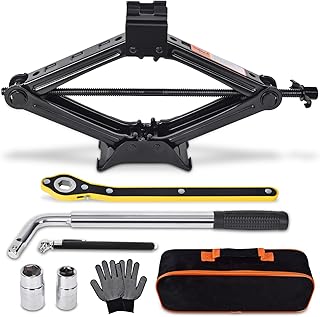
Scissor Car Jack 2 Ton (4409 lbs) Tire Changing Kit with Lug Wrench
Check PriceThe Critical Pre-Use Safety Checklist
Treating a bottle jack as a piece of life-safety equipment changes how you inspect it. Before you even set the jack on the pavement, you need to run a quick functional test. A five-minute visual and operational inspection can reveal the difference between a safe lift and a trip to the emergency room. Hydraulic fluid degradation, invisible hairline cracks in the welds, and rust on the ram are all silent killers in the lifting world.
Follow this checklist every single time you plan to use your jack. Do not skip the ground assessment step. Asphalt that gets hot in the sun can soften significantly, allowing the narrow metal base of a bottle jack to sink in and tilt, which is a primary cause of collapse. Similarly, gravel driveways offer no stable foundation without a thick steel plate or a heavy-duty wooden block placed underneath the jack base.
- Check the Ram Condition: Look for pitting, rust, or scoring on the chrome piston. Any imperfection will shred the seal.
- Test the Load Valve: Tighten the release valve firmly and pump the jack to half height. Wait 60 seconds. If it drops, do not use it.
- Verify Oil Level: Air in the cylinder causes spongy lifting. Bleed the jack by opening the valve and pumping rapidly if the action feels soft.
- Assess the Ground: Use a 3/4-inch plywood square or a steel plate under the jack on any surface that is not solid concrete.
Why Jack Stands Are Mandatory, Not Optional
If you take one piece of advice from this guide, let it be this: a bottle jack holds, jack stands secure. A hydraulic seal can fail without any audible warning. A subtle trickle of fluid past the O-ring is invisible to the eye until the vehicle has already settled onto the axle or the ground. You must not rely on physics and rubber seals to keep a three-ton vehicle suspended above your chest or head. It is a gamble that is entirely unnecessary given the affordability of modern jack stands.
Position the stands at the vehicle’s designated lift points immediately after the load reaches working height. Lower the bottle jack’s release valve slowly until the vehicle’s weight transfers fully to the stands. Give the vehicle a firm, controlled shake with both hands before you go underneath. This shake test verifies the stability of the setup. If the vehicle rocks or shifts, reset the stands. If you need high-quality hardware, looking at a list of the best bottle jacks currently rated for safety can ensure your primary lifting device is not a weak link in the chain.
Identifying the Biggest Operating Hazards
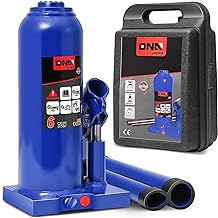
DNA Motoring 6 tons / 13228 lbs Lifting Automotive Welded Hydraulic Bottle Jack
Check PriceMost accidents do not happen because a well-maintained jack suddenly explodes. Accidents happen because of improper loading, off-center hoisting, or exceeding the marked weight limit. The manufacturer stamps the maximum tonnage on the side of the jack for a reason. If you use a 2-ton jack to lift a corner of a heavy-duty diesel truck that weighs far more than 4,000 pounds on that single axle, the internal pressure will exceed the safety margin of the casting. This is called dead-ending, and it can cause the cast iron body to rupture.
Another frequent mistake is using the jack at its maximum extension for extended periods. The ram is least stable when fully extended because the internal guide bearings have minimal contact with the cylinder wall. Keep at least 25% of the ram inside the cylinder body. If you need more height, do not stack concrete blocks or bricks under the jack. Concrete blocks crumble catastrophically under concentrated point loads. You must use solid, hardwood blocking or rated steel jack stands to achieve a safe platform height.
Lateral force is the great enemy of any bottle jack. A vehicle suspended on a jack is always under some tension, especially if you are loosening stubborn lug nuts or pulling on a stuck brake rotor. Those twisting forces transmit directly to the jack head. If the saddle does not allow for articulation, the vehicle’s natural shift while working can drag the jack sideways, collapsing the stack. This is precisely why you should compare safety features before buying, similar to how you would research the differences between a standard trolley jack and a bottle jack for specific repair jobs.
Hydraulic Fluid Maintenance and Longevity
Are bottle jacks safe over the long term? They are only as safe as their last fluid change. Like any hydraulic system, contaminants in the oil cause internal wear. If you hear a grinding or screeching noise while pumping, particles have likely scored the cylinder wall. You can often restore a sluggish jack by draining the old, milky fluid and replacing it with a clean, high-grade hydraulic jack oil. Avoid using brake fluid or motor oil, as these will destroy the internal seals and cause sudden failure under load.
Storage position also affects safety. Storing a bottle jack on its side can introduce air bubbles into the reservoir. An air pocket compresses under load, causing a springy, unpredictable bounce in the lift. Always store the jack upright with the ram retracted fully. This protects the polished chrome surface from atmospheric moisture and accidental nicks that accelerate seal failure.
Proper Lifting Points for Different Vehicles

BIG RED T91003B Torin Hydraulic Welded Bottle Jack, 10 Ton (20,000 lb) Capacity
Check PriceKnowing where to place the saddle is the most critical decision you will make. Even a perfectly functional, 20-ton jack is dangerous if you place it under the floorboard, the oil pan, or a suspension component that can slip off the cup. The vehicle owner’s manual always lists the designated jacking points. These points are usually reinforced ribs in the frame or a dedicated crossmember on the subframe. A flat, wide surface is ideal for a bottle jack because it resists the tendency of the saddle to dig in and tilt.
For trucks with solid axles, placing the jack saddle directly under the axle tube, close to the wheel, is often the safest method. This minimizes the amount of travel needed on the suspension and keeps the weight centered. If you are lifting by the differential, ensure the jack cup mates securely to the curved surface. A rubber jack pad insert is a valuable addition here, as it molds around the metal geometry, preventing the slick metal-on-metal contact that can lead to a sudden slip. The Occupational Safety and Health Administration provides clear guidelines on lifting heavy equipment that reinforce these mechanical concepts, and the CDC’s research on hydraulic safety in the workplace highlights why fluid dynamics demand strict respect in everyday consumer tools.
Frequently Asked Questions About Bottle Jack Safety

YELLOW JACKET 4 Ton Muti-Directional Welded Bottle Jack with Carrying Case
Check PriceCan I use a bottle jack to change a tire on a highway?
You can, but it is riskier than using the designated scissor jack specifically designed for your car’s pinch weld. Highway shoulders are rarely level. The narrow base of a bottle jack is extremely sensitive to uneven ground. If a passing truck creates a wind gust or the ground is soft dirt, the jack can tip over faster than a wide-base scissor jack would. If you must use one, ensure you have a thick wooden base plate and that the vehicle is fully secured.
What is the lifespan of a typical bottle jack?
A well-maintained hydraulic bottle jack can last decades. The lifespan depends entirely on the integrity of the hydraulic seals and the absence of rust on the ram. The rubber O-rings tend to dry out and crack with age, usually within 5 to 8 years for heavy-use jacks. If the jack begins to drift down slowly under a static load, the seals have failed, and it is time to rebuild the internal cylinder or replace the unit entirely for safety reasons.
Is it safe to leave a car on a bottle jack overnight?
Absolutely not. A hydraulic jack is not a storage stand. Thermal expansion and contraction of the hydraulic fluid during temperature changes overnight can cause the pressure to drop, lowering the vehicle. The seals can also weep fluid very slowly without any obvious sign of a leak. Always lower the vehicle onto rigid, mechanical jack stands if you are leaving a project unfinished or need to store the car in the air.
Why does my bottle jack stop lifting halfway up?
This usually indicates low hydraulic fluid. When the fluid volume is insufficient, the pump cannot displace enough oil to push the ram further, regardless of how much you pump the handle. It can also be a sign of air trapped in the cylinder. You should check the fill plug, add the manufacturer-recommended oil, and bleed the air by opening the release valve and pumping rapidly to cycle the oil back into the reservoir.
Are double-ram bottle jacks safer than single-ram?
Double-ram jacks are not inherently safer regarding stability, but they are safer regarding load distribution. The two pistons spread the weight across a wider hydraulic volume, reducing the pressure per square inch inside the cylinder. However, a double-ram jack is usually taller and has a higher center of gravity, which makes it more prone to tipping if the base is not sufficiently wide. The safety improvement is primarily in the reduced risk of hydraulic overload, not in tip resistance.
Conclusion: Respect the Load, Use the Stands
Hydraulic mechanics are a blessing for the DIY enthusiast because they democratize the ability to lift heavy objects with minimal effort. A bottle jack is a safe, powerful, and reliable tool when you respect its limitations. It was designed for straight-line, vertical lifting with a rigid base. Any deviation from that specific scenario introduces a vector of risk that you must manually control with blocking, jack stands, and common sense.
Never let the compact size fool you into treating it casually. The pressure inside that cylinder is immense, and the load above it is unforgiving. By incorporating the pre-use checklist into your routine, rejecting the temptation to work under an unsupported load, and storing the jack properly, you completely eliminate the statistical likelihood of a failure. The real safety feature is not the steel in the jack, it is the methodical, patient approach of the person operating it.