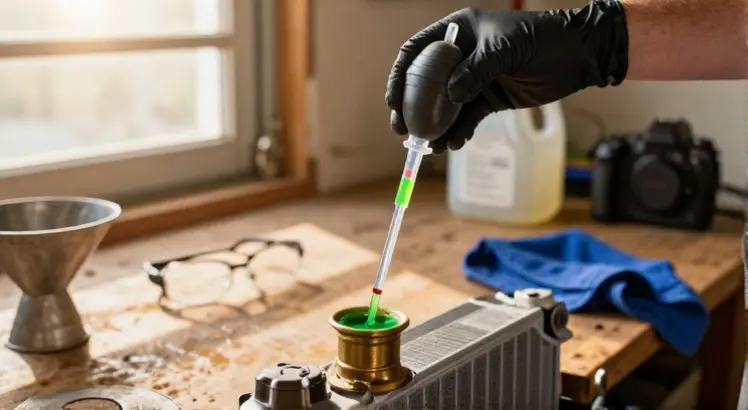
Your engine relies on antifreeze, often called coolant, to handle extreme temperatures. Neglected coolant loses its protective qualities and can lead to frozen radiator fluid or dangerous overheating. Using a simple diagnostic tool helps you catch these issues before they strand you on the roadside. This guide will show you exactly how to use antifreeze tester so you can protect your engine year-round.
Testing your coolant is one of the easiest maintenance tasks you can perform at home. It takes only a few minutes and gives you concrete numbers instead of guesswork. Whether you use a floating ball hydrometer, a precise refractometer, or a digital electronic unit, you will get peace of mind. Follow along as we break down each method and explain what the readings mean.
Why You Should Regularly Test Your Antifreeze

OEMTOOLS 24507 Professional Series Ethylene Glycol Antifreeze Tester
Check PriceCoolant does more than prevent freezing in winter. It raises the boiling point in summer, fights corrosion inside the radiator and engine block, and lubricates the water pump. Over time, the chemical additives that do all this heavy lifting break down. When that happens, you start seeing rust, scale buildup, and eventually a damaging hot spot inside the engine.
Many drivers assume their coolant is fine because the reservoir is full. That is a risky assumption. A full system with worn-out fluid is just as dangerous as a low one. A few dollars spent on a tester will save you from a cracked block or a blown head gasket. This is also the kind of inspection you can do while you wait for your oil to drain or between tire rotations.
Before you shop for a tool, check out our guide to picking a quality antifreeze tester. It covers the different styles and price points so you can find one that fits your garage. Once you have the right device, you can move forward with confidence.
Types of Antifreeze Testers and How They Work
Not all testers operate the same way, and understanding your tool is half the battle. The three main categories you will run into are the traditional hydrometer, the optical refractometer, and the digital electronic tester. Each one measures the concentration of glycol, the active ingredient in antifreeze, to determine the freeze and boil protection levels.
Hydrometer Antifreeze Testers

ATD Tools 1106 Professional Antifreeze and Coolant Tester
Check PriceThis is the classic bulb-style tool with a clear tube, floating balls, or a pivoting needle. You draw coolant into the chamber, and the floating elements tell you the specific gravity of the mixture. The scale often reads directly in degrees of freeze protection. These testers are affordable and widely available, but they require careful temperature compensation to be accurate.
Refractometer Antifreeze Testers
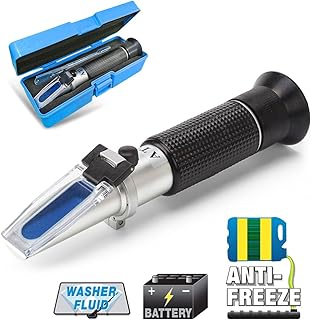
4-in-1 DEF Antifreeze Coolant Refractometer
Check PriceA refractometer uses a prism and light to measure how the coolant bends light. You place a single drop of fluid on the daylight plate, close the cover, and look through the eyepiece. A crisp line appears on a scale that shows the freeze point of the coolant and the concentration of glycol. Professionals love this type because it is extremely precise and only needs a tiny sample.
Electronic Digital Testers

Coolant Tester Antifreeze Tester High Accuracy Dial Type Anti-Freeze Coolant Tester
Check PriceDigital testers are the easiest to read and interpret. You immerse a probe directly into the coolant tank or a drawn sample, and a small LCD screen instantly displays the freeze point. Some models also check the pH level and overall health of the fluid. This takes the guesswork out of interpreting cloudy fluids and floating balls.
How to Use a Hydrometer Antifreeze Tester
ATD Tools 1106 Professional Antifreeze and Coolant Tester
Check PriceThe floating ball or needle hydrometer is still the go-to for many weekend mechanics. It is compact, requires no batteries, and works fast once you understand the process. You must always test the coolant when the engine is cold to avoid burns and get a consistent reading. Hot, pressurized fluid can give you a dangerously false reading and a painful injury.
Start by removing the radiator cap slowly if your vehicle has a cap on the radiator itself. Many modern cars only have a pressurized overflow reservoir, and you can test directly from there. Never open a hot cooling system. Squeeze the rubber bulb of the tester and insert the hard plastic tube into the coolant.
Release the bulb slowly to draw fluid into the tester until the chamber is full. Make sure no air bubbles cling to the floating balls or the needle. Gently tap the body of the tester to dislodge any tiny bubbles. With the tester held vertically, read the freeze protection scale directly from the position of the floating indicators.
- Draw coolant into the hydrometer only from a cold, settled system.
- Hold the tester upright and at eye level for the most accurate reading.
- Compare the result to the chart on your bottle of concentrated coolant.
- Dispose of or properly store the sample, as ethylene glycol is toxic to animals.
For most passenger cars, a reading of negative 34 degrees Fahrenheit or lower is considered excellent protection. If you live in an extremely cold climate, you want that number closer to negative 50 degrees Fahrenheit. A reading that is too weak means you need to either drain some fluid and add concentrate or perform a full system flush. Weak coolant also signals that the corrosion inhibitors are depleted.
How to Use a Refractometer to Test Coolant
Optical refractometers are the choice for anyone who wants laboratory-level accuracy. These tools automatically compensate for ambient temperature, so you do not need a separate thermometer. The process is simple, but cleanliness matters. Any dirt or dried coolant on the prism can ruin the reading.
Begin by carefully cleaning the daylight plate and the cover flap with a soft microfiber cloth. Place a few drops of distilled water onto the prism as a calibration check and close the cover. Look through the eyepiece while pointing the refractometer toward a bright light source. The blue and white dividing line should sit exactly on the zero line. Adjust the calibration screw if needed.
Once you are certain the unit is calibrated, wipe away the water and place two or three drops of your engine coolant on the prism. Close the plastic cover gently to spread the liquid evenly without trapping bubbles. Hold the refractometer toward the light again and read the scale where the sharp shadow line falls. You will see readings for both the freeze point and the glycol percentage.
- Always calibrate with distilled water before the first test of the day.
- Use only a single drop to avoid flooding the prism and getting a blurred line.
- Clean the prism immediately after use to prevent sticky residue buildup.
- Store the refractometer in its padded case away from direct sunlight.
A healthy mixture in a refractometer typically shows a 50/50 ratio of coolant to distilled water, translating to freeze protection around negative 34 degrees Fahrenheit. If your sample reads positive on the freeze scale, your mixture is dangerously diluted and you must act fast. This method also helps you spot contaminated fluid, as cloudy or dirty samples will produce a fuzzy dividing line.
How to Use Electronic Antifreeze Tester
Digital testers are increasingly popular because they deliver a number without any interpretation. A small probe does all the work, and the screen shows exactly how cold your coolant can go. Some advanced models also beep or flash a warning light if the protection level has dropped into a danger zone.
Check that the probe tip is clean and dry before you dip it. Any old residue on the sensor will throw off the measurement. Turn the tester on and select the correct coolant type if your model offers different profiles, because some testers have modes for ethylene glycol and propylene glycol. Dip the probe directly into the overflow tank or a clean sample cup and hold it steady until the reading stabilizes.
Read the freeze point and, if available, the boiling point protection and pH level. The whole process takes less than ten seconds. A digital tester like this from a trusted manufacturer can also help you monitor the health of your coolant over time. Just record your numbers each season and watch for slow drops that signal additive breakdown.
- Rinse the probe with distilled water and dry it between different vehicles.
- Use a clean sample container to avoid cross-contamination from other fluids.
- Replace the probe cap after use to protect the sensor from physical damage.
- Refer to the owner’s manual if the reading seems inconsistent with engine behavior.
Because these testers often rely on electrical conductivity, be aware that heavily contaminated coolant may produce erratic results. If your fluid is rusty or full of sediment, a digital reading is still helpful but a full flush should be your priority. The reliability of these tools makes them a favorite in professional shops as well.
Interpreting Your Results Accurately
Getting a number is only useful if you know what to do with it. A reading of negative 30 degrees Fahrenheit means the coolant will not freeze until the actual temperature drops below that point. On the flip side, the same healthy mixture raises the boiling point to around 265 degrees Fahrenheit when under pressure. This dual protection is why keeping the ratio correct matters so much.
If your tester shows protection weaker than negative 20 degrees Fahrenheit for a traditional ethylene glycol coolant, plan a correction soon. You can carefully add a small amount of concentrated antifreeze to the system to boost the numbers. Be cautious not to exceed a 70 percent concentration, as overly rich coolant can actually reduce heat transfer and damage seals.
When your coolant is only a few years old yet reading weak, suspect a leak that has been topped off with plain water. This is a common scenario after a cooling system repair. In that case, flushing the system and filling it with a fresh 50/50 mix will restore everything. Monitoring your antifreeze also ties directly into preventing engine overheating, because weak fluid often triggers temperature spikes before winter even arrives.
Safety Tips and Best Practices
Coolant is a toxic chemical, and testing requires opening a cooling system that can be under pressure. Always wait until the engine has cooled completely before removing any cap. Even if the upper radiator hose feels cool, residual pressure can still spray hot liquid. A thick shop rag placed over the cap while you twist it is a simple insurance policy against burns.
Ethylene glycol has a sweet taste that attracts pets and wildlife. Even a small puddle on the garage floor can be fatal. Keep a spray bottle of water and some rags handy to immediately clean up any spills. Never use your mouth to siphon coolant or tester contents. A squeeze bulb or a plastic baster is cheap and eliminates that risk.
Store your testing equipment in a dry toolbox drawer. Refractometers and digital testers, in particular, suffer when left in a damp or freezing garage. Check the calibration of your tool every season using distilled water or a known test solution. A high-quality resource like checking coolant condition with a step-by-step walkthrough can confirm your method.
Frequently Asked Questions
Can I test my antifreeze without a specialty tool?
There are crude methods like using a multimeter or a strip test, but they cannot give you an accurate freeze point. A dedicated tester is the only reliable way to know your coolant’s condition. Even an inexpensive floating-ball hydrometer is far better than guessing. Considering how affordable testers are, skipping the tool puts your engine at unnecessary risk.
How often should I use my antifreeze tester?
Test your coolant twice a year, ideally in the fall before freezing temperatures arrive and in the spring before towing season. This gives you a clear picture of seasonal protection levels. If you drive an older vehicle, test it every oil change since older systems tend to degrade additives faster. Consistent testing also reveals slow leaks that get masked by occasional top-offs.
Does a hydrometer work with all coolant colors?
Most traditional hydrometers are calibrated for ethylene glycol-based coolants, regardless of color. However, the floating ball testers can be less precise with modern OAT or HOAT extended-life formulas. A refractometer or a digital tester set to the correct coolant type is more universal. Always check the tool packaging to confirm compatibility with your specific fluid.
What is the ideal coolant mixture ratio?
A 50/50 mix of antifreeze concentrate and distilled water is the industry standard for most climates. This provides freeze protection down to about negative 34 degrees Fahrenheit and boil-over protection well above 260 degrees Fahrenheit. In extreme cold, a 60/40 ratio with a bit more concentrate may be used, but never exceed 70 percent glycol. Pure coolant freezes at a higher temperature and transfers heat poorly.
Keep Your Cooling System Healthy with Regular Testing
Learning how to use antifreeze tester is a small investment of time that pays back in a huge way. You gain the ability to spot deteriorating coolant before it eats away at your head gasket. You also prevent the nightmare of a frozen engine block during a cold snap. Make testing part of your seasonal auto care routine alongside checking tire pressures and wiper blades.
Whichever type of tester you own, the key is to use it regularly and trust the numbers. A clean, calibrated tool and a cool engine are all you need to get started. Keep a small logbook in your glovebox with your test dates and readings, and you will have a clear history of your cooling system health. Your engine will run cooler, last longer, and stay reliable through every season.