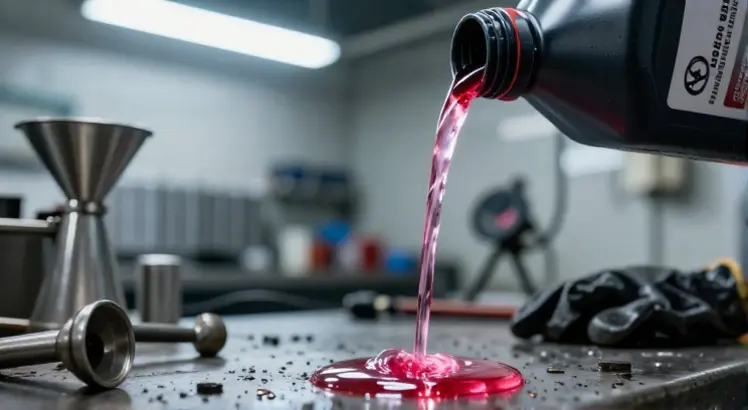
You pop the hood of your Toyota and notice the coolant reservoir is running low. The liquid inside is a bright pink, not the green you expected. Instantly, a question pops into your head: is this the right Toyota antifreeze color for my car?
Mixing up coolant colors can lead to expensive repairs, clogged radiators, and even engine failure. Toyota uses a very specific chemistry in its cooling systems, and the color is your first clue to finding the right fluid. Understanding the visual cue helps you avoid a costly mistake at the parts store.
This article breaks down exactly what the different Toyota antifreeze colors mean, from the classic red to the modern pink and even the older green. You will learn which one your vehicle needs and how to keep your cooling system in peak condition.
Why Toyota Antifreeze Color Matters

Zerex Asian Vehicle Red Silicate and Borate Free 50/50 Prediluted Ready-to-Use Antifreeze/Coolant 1 GA
Check PriceAntifreeze color is not just a branding gimmick. It signals the chemical makeup of the coolant inside the bottle. In a Toyota, using the wrong color often means you are pouring a completely different inhibitor technology into the system.
Traditional green coolant relies on Inorganic Additive Technology (IAT). Toyota’s modern red and pink coolants use Organic Acid Technology (OAT) or a hybrid of the two. These chemicals are not friendly with each other, and mixing them can turn your coolant into a gel-like sludge.
Sticking to the exact Toyota antifreeze color specified in your owner’s manual guarantees the aluminum engine parts, water pump, and radiator seals stay protected. It prevents corrosion and maintains the heat transfer efficiency your engine needs to run smoothly.
Common Toyota Coolant Colors and Their Meanings
Toyota has transitioned through three primary coolant colors over the decades. Each one represents a leap in longevity and protection. Here is a breakdown of what you will likely see under the hood.
Pink Coolant: Toyota Super Long Life
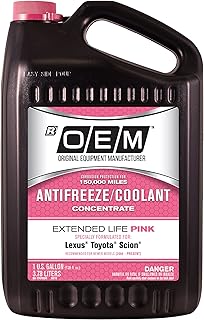
Recochem OEM 86-174POEM Pink Premium Antifreeze Concentrate Extended Life PINK, 1 gallon, 1 Pack, BROWN
Check PriceIf you see a bright pink fluid, you are looking at Toyota Super Long Life Coolant (SLLC). This is the factory fill for most modern Toyota vehicles built after 2004. It is a pre-mixed, ready-to-use formula that requires no dilution with water.
The pink color indicates a pure OAT-based chemistry. It is designed to last much longer than older formulas. When you need to top up or flush, you want to look for the specific formulation of Toyota pink coolant to maintain the system’s integrity.
- Service interval: Up to 10 years or 100,000 miles at first change, then every 5 years/50,000 miles.
- Found in: Camry, Corolla, RAV4, Highlander, Tacoma, Tundra (model years typically 2004+).
- Never mix with red or green coolant.
Red Coolant: Toyota Long Life
Zerex Asian Vehicle Red Silicate and Borate Free 50/50 Prediluted Ready-to-Use Antifreeze/Coolant 1 GA
Check PriceBefore the pink era, Toyota used red Long Life Coolant (LLC). This is also an OAT-based fluid but with a slightly different chemical blend. It is often sold as a concentrate that you must mix with distilled water in a 50/50 ratio.
Many mid-1990s to early 2000s models came with red coolant from the factory. While the bottle may look similar to pink, the performance is not identical. Red coolant has a shorter lifespan and is not interchangeable with the Super Long Life pink fluid without a full system flush.
- Service interval: 5 years or 50,000 miles.
- Found in: Older Camry, older Corolla, 4Runner, and first-generation Tundra.
- Must be diluted properly if purchased as concentrate.
Green Coolant: Older Toyota Vehicles

Zerex Original Green Low Silicate Concentrate Antifreeze/Coolant 1 GA, 128 Fl Oz (Pack of 1)
Check PriceIf you own a vintage Toyota from the 1980s or early 1990s, you might spot the familiar green antifreeze. This is the standard IAT formula that was the industry norm for decades. It uses silicates and phosphates to protect metal surfaces.
This green coolant requires frequent changes. It is much more reactive than the modern OAT coolants, and it should never be introduced into a system designed for red or pink. Doing so will drastically reduce the corrosion protection and can eat away at head gaskets over time.
- Service interval: 2 to 3 years or 30,000 miles.
- Found in: Pre-1995 models like the older Corolla, Cressida, and pickup trucks.
- Not suitable for any modern Toyota engine.
Can You Mix Different Toyota Antifreeze Colors?

Toyota Genuine Parts – Antifreeze Gallon W (00272-1LLAC-01)
Check PriceThis is the most dangerous gamble you can make with your cooling system. The simple answer is no, you should never mix Toyota antifreeze colors unless it is a true emergency and you are completely out of options.
Mixing pink and red is a common mistake. Even though both are OAT-based, the additive packages are different. The mixture can cause the protective layer inside the radiator to drop out of suspension, creating a muddy brown sludge that blocks the heater core and radiator channels.
If you mix green IAT coolant with Toyota’s pink OAT, a chemical reaction happens almost immediately. The inhibitors battle each other, and the result is a gel-like substance that kills water pumps. If you are stranded and must add a different color, drive directly to a shop for a complete flush.
How to Check Your Toyota’s Coolant Condition
You don’t need to be a mechanic to monitor your coolant health. The color of the fluid is a fantastic diagnostic tool. Start by looking at the translucent reservoir tank, never open a hot radiator cap.
Healthy pink coolant should look like cherry blossom or neon pink. If it has turned a dark, rusty orange or has lost its vibrancy, it is old and acidic. This means it is doing more harm than good, and you need a flush.
Red coolant should be clear and bright. A muddy brown or black tint signals internal rust or oil contamination, often from a failing head gasket. When you are selecting a replacement, you can research selecting the best antifreeze coolant for your Toyota to ensure you get the right chemical match.
What Happens If You Use the Wrong Coolant?

Honda Genuine Extended Life Antifreeze/Coolant Type 2, 50/50 Pre-Diluted, 1 Gallon
Check PriceUsing a generic green coolant in a modern Toyota because it was on sale is a recipe for disaster. The silicate inhibitors in green coolant are abrasive to the water pump seals Toyota uses in their OAT systems. You will likely see a slow weep of coolant from the water pump weep hole within a few thousand miles.
Furthermore, the wrong coolant can cause electrolysis. This is a process where the coolant becomes a conductor of electricity, eating away at the aluminum cylinder heads and radiator. You might notice pinhole leaks in the thin radiator fins that are impossible to patch.
Always match the Toyota antifreeze color to the original factory fill. The cost of a gallon of the correct pink or red fluid is negligible compared to a $1,500 radiator replacement or an overheated engine repair bill.
Toyota Antifreeze Replacement Interval
Knowing the interval helps you plan your maintenance. Toyota’s timelines are generous because the chemistry is so advanced, but they are not infinite.
- Pink (SLLC): First replacement at 10 years/100,000 miles. After that, replace every 5 years/50,000 miles.
- Red (LLC): Replace every 5 years/50,000 miles.
- Green (IAT): Replace every 2 years/30,000 miles.
These intervals assume you are not mixing colors. If you buy a used Toyota and the fluid looks like a dark, unrecognizable mess, ignore the timeline. Flush the system immediately and refill it with the correct, fresh Toyota antifreeze color.
How to Choose the Right Toyota Antifreeze
When you stand in the auto parts aisle, you will see aftermarket brands claiming to be “Toyota compatible.” While some universal OAT coolants are safe, the safest path is always to buy the genuine Toyota fluid from a dealership or online.
Look for the exact part number. Toyota Pink is typically part number 00272-SLLC2. The red concentrate is 00272-1LLC. Using the genuine fluid guarantees you are maintaining the correct Toyota antifreeze color chemistry and staying within warranty guidelines.
If you must use an aftermarket brand, ensure the bottle explicitly states it is phosphate-free and silicate-free, meeting the Toyota specification. Always check your owner’s manual, and when in doubt, you can follow Toyota’s maintenance guidelines for the final word on fluid specifications.
Frequently Asked Questions
Is Toyota pink coolant the same as Dex-Cool?
No, they are chemically different. Dex-Cool uses 2-EHA, a plasticizer that can degrade certain Japanese gasket materials. Toyota pink coolant is a different, phosphate-added OAT that is safe for Toyota seals. Never use Dex-Cool in a Toyota unless it is a dire emergency.
Can I use water instead of pink coolant?
Only in a temporary emergency. Water has no corrosion inhibitors, boils at a lower temperature, and freezes at 32°F. Running pure water will quickly rust internal engine parts and overheat. Top up with the correct Toyota antifreeze color as soon as possible.
Why did my Toyota coolant turn brown?
Brown coolant usually indicates extreme age or mixing of incompatible colors. It can also be a sign of a blown head gasket, where engine oil is pushing into the cooling system. If you see a milkshake-like brown substance, stop driving the car immediately.
Does coolant color affect performance?
The dye itself does not affect performance, but it identifies the chemical makeup. The inhibitor technology behind the dye is what matters. Using the wrong color is a warning sign that the chemistry inside the bottle does not match what your engine needs.
Conclusion
Your Toyota is designed to run for hundreds of thousands of miles, but only if you treat the cooling system with respect. The Toyota antifreeze color is a clear roadmap left by the engineers to prevent corrosion and overheating. Whether it is the modern pink, the classic red, or the vintage green, matching the color is a non-negotiable part of routine maintenance.
Take a moment to look at your reservoir today. If the fluid is still bright and clean, you are in good shape. If it is dark, low, or unrecognizable, schedule a drain and fill. Sticking to the factory-approved fluid keeps your heater core hot in the winter and your engine cool on the highway.
Keep a gallon of the correct Toyota antifreeze color in your garage, and you will always be ready for a top-up. It is a simple habit that keeps your vehicle out of the shop and on the road where it belongs.