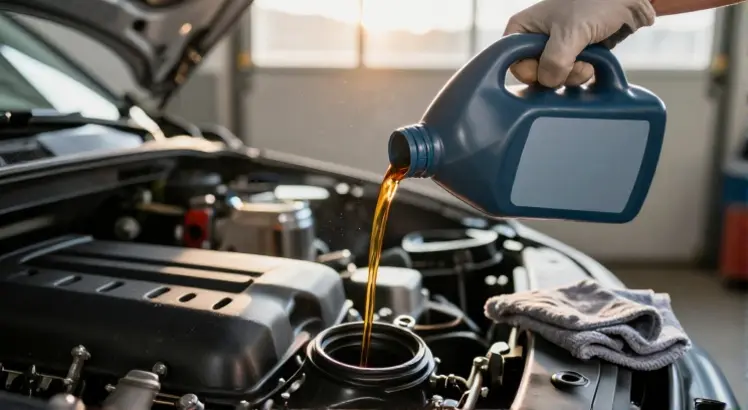
You have likely heard the debates in truck forums or at the local diesel pump, but what happens when you consider pouring diesel oil into a gasoline engine? Specifically, is Rotella T6 good oil for the average driver, or is it strictly a heavy-duty product? It is a valid question, especially if you are looking to manage wear on a high-mileage engine or a high-performance build. The short answer is that Shell Rotella T6 is an exceptional oil, but its suitability for a gas engine depends entirely on your specific vehicle, its age, and whether it has an advanced emissions system.
Many car enthusiasts swear by diesel-rated oils like T6 in their gasoline motorcycles, classic cars, and muscle cars. However, dropping it into a modern direct-injection turbocharged car with a sensitive catalytic converter might create problems you did not anticipate. This guide will break down the specific chemical differences, the risks involved, and the scenarios where Shell Rotella T6 might actually be the best protection your gas engine can get.
What Exactly Is Shell Rotella T6?

Shell Rotella T6 MV Multi-Vehicle Full Synthetic 5W-30 Diesel Engine Oil, 1 Gallon (3 Pack)
Check PriceBefore analyzing if it works for gas engines, you need to understand what you are dealing with. Shell Rotella T6 is a full synthetic heavy-duty diesel engine oil. It was formulated primarily for over-the-road trucks, construction equipment, and agricultural machinery. The oil is famous for its ability to handle extreme heat, soot contamination, and brutal operating cycles without losing viscosity.
Rotella T6 comes in various weights, with the 5W-40 and 15W-40 variants being the most popular in the consumer market. The T6 designation specifically refers to the flagship full synthetic line, which is distinct from the Rotella T4 (conventional) and T5 (synthetic blend) products. The core chemistry of T6 relies on advanced additive technology to neutralize acids and prevent sludge in engines that run for hundreds of thousands of miles.
Is Rotella T6 Good Oil for Gas Engines? The Chemical Breakdown
Shell Rotella T6 MV Multi-Vehicle Full Synthetic 5W-30 Diesel Engine Oil, 1 Gallon (3 Pack)
Check PriceTo answer the question, Is Rotella T6 good oil for gas engines?, you must look at the additives. Diesel engine oil and gasoline engine oil serve different masters. Diesel fuel produces a significant amount of soot and sulfur-based acids. To combat this, Rotella T6 contains a robust detergent package (calcium-based) and a much higher concentration of anti-wear additives like Zinc Dialkyldithiophosphate (ZDDP).
This is where the conversation splits down the middle. In an older flat-tappet gas engine, a company like Shell Rotella is good oil precisely because of that high zinc content. In a modern engine with a catalytic converter, that same zinc can become a poison if combustion blow-by occurs. It is a trade-off: cavitation resistance and sheer strength versus emissions system longevity.
The ZDDP Factor: Protecting Flat Tappets vs. Damaging Catalysts
ZDDP acts as a sacrificial layer on metal components, preventing metal-to-metal contact during start-up and high-stress events. Older gasoline engines with flat-tappet cams need zinc levels around 1,200 to 1,400 parts per million (ppm) to survive. Modern passenger car motor oils (PCMO) are often limited to around 800 ppm due to API SN and SP regulations, designed to protect catalytic converters for 100,000 miles or more.
Rotella T6 retains a high phosphorus/zinc concentration because heavy-duty diesel certifications (CJ-4/CK-4) prioritize engine longevity over emissions equipment lifespan, although they do have limits for Diesel Particulate Filters (DPFs). If you run T6 in a modern gas truck with a sensitive catalytic converter, you risk coating the catalyst matrix with zinc phosphate ash over time, which increases back pressure and reduces efficiency.
When You Should Use Rotella T6 in a Gas Engine
Shell Rotella T6 MV Multi-Vehicle Full Synthetic 5W-30 Diesel Engine Oil, 1 Gallon (3 Pack)
Check PriceWhile it is not an oil for every vehicle, there are specific scenarios where T6 outperforms standard passenger car oil. If your vehicle falls into one of these categories, you might have found the perfect lubricant.
- Shared Sump Motorcycles (Wet Clutch): Many riders use Rotella T6 in motorcycles because it lacks the Energy Conserving friction modifiers that cause wet clutches to slip. It provides smooth shifting and excellent gearbox protection.
- Classic American Muscle Cars: If you own a 1960s or 1970s V8 with a flat-tappet camshaft, the high ZDDP in T6 is literally life insurance for your cam lobes. Modern synthetic oils without this zinc punch have been known to wipe out lobes during break-in and long idles.
- Dedicated Track Cars (Catless): If you have removed the catalytic converter for off-road racing, the risk of damaging the catalyst disappears. In this case, the superior film strength of T6 at high temperatures makes it excellent for endurance racing.
- High-Mileage Oil Burners: Older engines with worn valve seals or piston rings appreciate the thicker viscosity and detergent package of T6. It often burns off slower than low-viscosity energy-saving oils.
When You Should Avoid Rotella T6 Like a Breakdown
Shell Rotella T6 MV Multi-Vehicle Full Synthetic 5W-30 Diesel Engine Oil, 1 Gallon (3 Pack)
Check PriceModern engine bays are tightly regulated environments. The precision engineering in a modern eco-turbo engine does not always play well with the rugged chemistry of truck oil.
- Direct Injection Turbocharged Engines (EcoBoost/TFSI/GDI): These engines are prone to Low-Speed Pre-Ignition (LSPI). The calcium detergent levels in diesel oil are linked to triggering LSPI, which can crack ring lands and destroy pistons. You should specifically look for the best motor oil for turbo engines that meets API SP standards instead.
- Vehicles Still Under Warranty: Using a non-API-SP rated oil or a viscosity not printed on your oil cap will likely void your powertrain warranty. Shell specifically marks the bottle for heavy-duty diesel use, giving the dealership an easy reason to deny a claim.
- Ultra-Low Viscosity Applications (0W-16/0W-20): Many new Honda and Toyota engines require ultra-thin oil for hydraulic cam phaser operation. Thick diesel oil like 5W-40 can starve these small oil passages at cold start, leading to timing chain rattle and Variable Valve Timing (VVT) actuator failure.
Viscosity Matters: Reading the Owner’s Manual
Shell Rotella T6 MV Multi-Vehicle Full Synthetic 5W-30 Diesel Engine Oil, 1 Gallon (3 Pack)
Check PriceA common mistake people make is thinking thicker is safer. While a thicker oil film does provide a cushier hydrodynamic wedge, modern engines rely on thin oil flowing rapidly to cool the cylinder head and turbocharger center housing. If you switch from a 0W-20 to a 5W-40 T6, you are essentially restricting the flow rate.
The pump has a fixed volume, but the resistance (oil pressure) skyrockets. This means the relief valve may open, bypassing the filter, or the oil simply won’t reach the top end fast enough. If you have a large-displacement V8 that originally called for 5W-30, moving to a diesel 5W-40 is less traumatic physically. The additional 40 hot viscosity often helps quiet noisy lifters on older pushrod engines.
Comparing Rotella T6 to Standard Gasoline Oil
Shell Rotella T6 MV Multi-Vehicle Full Synthetic 5W-30 Diesel Engine Oil, 1 Gallon (3 Pack)
Check PriceTo understand the physical difference, let’s look at how the chemistry stacks up against a standard synthetic passenger car oil, like a high-quality Mobil 1 good oil variant.
- Detergent Capacity: Rotella T6 has a significantly higher Total Base Number (TBN), often around 10 or higher, compared to 7-8 for PCMO. This means it neutralizes acids longer, making it fantastic for extended intervals in older, blow-by-prone engines.
- Shear Stability: Diesel oils are built to resist shearing under the extreme pressures of a high-compression combustion event. In a high-RPM gas engine that runs on the same oil for 10,000 miles, a PCMO might shear down to a lower grade faster than T6.
- Cold Flow (Pour Point): In the 5W-40 grade, the pour point between T6 and a high-quality European gas oil is almost identical. However, T6 might have a slightly higher percentage of Group III base stocks, which, while excellent, may not flow quite as effortlessly in arctic conditions as some gas-specific Group IV (PAO) synthetics.
Real-World User Experience with T6 in Gas Engines
Scrolling through owner experiences on mechanics’ forums reveals a clear pattern. The praise for T6 is loud and specific to worn-out metal. Here is what you typically see reported when mechanics and enthusiasts make the switch.
- Quieter Startup Rattle: Many owners of older Toyota 4.7L V8 engines and GM LS engines note that the diesel oil’s film remains on the timing chain tensioner longer, eliminating the 2-second rattle at startup.
- Reduced Consumption: For engines that burn a quart of thin synthetic every 1,000 miles, switching to Rotella can often cut that consumption in half due to lower volatility.
- Fouled Spark Plugs (The Downside): If your engine has worn rings and you are already burning oil, burning a high-calcium diesel oil creates harder deposits on modern fine-wire spark plugs, potentially causing misfires sooner than a pure gas oil.
Frequently Asked Questions
Shell Rotella T6 MV Multi-Vehicle Full Synthetic 5W-30 Diesel Engine Oil, 1 Gallon (3 Pack)
Check PriceWill Rotella T6 kill my catalytic converter?
It can, eventually. If your engine is healthy and doesn’t burn oil, the risk is minimal. However, if your piston rings are worn and you have active blow-by, the high phosphorus content in T6 will exit the exhaust and coat the catalytic converter’s substrate. Over thousands of miles, this chemical poisoning reduces the converter’s ability to reduce emissions. For a cheater engine or a catless track setup, this risk is zero.
Is Rotella T6 better than Mobil 1 for a gas engine?
The word better depends on the engine. If you are comparing it to the Mobil 1 vs Shell Rotella debate for a modern daily driver, Mobil 1 is the correct choice due to its specific API SP certification and LSPI-fighting chemistry. If the engine in question is a 1972 flat-tappet hot rod sharing a sump with a racing transmission, Rotella T6 is significantly better.
Can I mix Rotella T6 with regular gas oil?
Yes, physically you can mix them without a chemical reaction creating sludge. Diesel oil and gas oil are miscible. However, you effectively dilute the performance of both oils. You won’t get the full high-zinc protection, and you still inherit risks to the catalyst. Use it only as a last resort to top off the crankcase.
Does Shell make Rotella for gas engines only?
Shell markets Rotella exclusively as a heavy-duty diesel oil, but the API label often shows dual ratings. Many Rotella T6 bottles carry an API SN (or older SM/SL) rating in addition to the diesel C rating. If your T6 jug carries the API SN rating, Shell has officially acknowledged it meets those minimum gas standards, though it is not optimized for them.
The Final Verdict on Using Rotella T6
So, is Rotella T6 good oil? It is one of the best heavy-duty lubricants on the planet, bar none. For gas engines, it serves a niche but critically valuable role. If you are nursing along an old iron block engine with risky flat-tappet lifters, or you need a durable, cheap synthetic for a high-mileage beater, T6 is a godsend. It solves cold-start rattle, it resists shear in the summer sun, and it cleans up decades of sludge.
However, if you are driving anything built in the last ten years with a turbocharger and a warranty, put the Rotella bottle back on the shelf. Modern engines demand the precise additive chemistry in dexos-approved oils to prevent low-speed pre-ignition and timing chain wear. The diesel oil of yesterday is simply the wrong prescription for the supercharged eco-cars of today. Match your oil to your wear metals, your camshaft design, and your emission controls, and you’ll log miles without drama.
For a wider look at how these fluids interact, explore our resources on is Quaker State good oil for more balanced additive packages suited to everyday drivers.