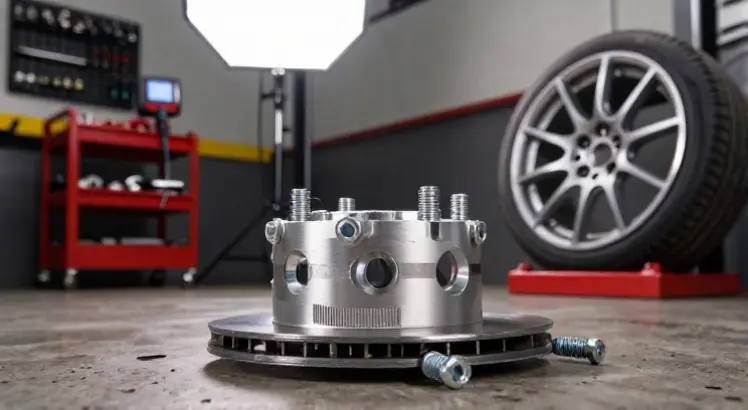
If you have just lifted your truck or fitted wider tires, you have probably noticed that aggressive rubbing sound. Wheel spacers seem like a cheap fix, but the internet is full of horror stories about snapped studs and wheels falling off. This leaves many owners asking one critical question: are Bora wheel spacers safe? The short answer is yes, but only if you understand the engineering behind them and install them correctly. Unlike generic cast aluminum spacers, Bora spacers are built to a different standard entirely.
Safety is not about luck or brand hype. It is about physics, material hardness, and tolerance. In this guide, we will go far beyond the marketing claims. We will dissect the hub-centric design, the specific aluminum alloy used, and the stress calculations you need to understand before bolting a set onto your vehicle.

BORA Wheel Spacers for CHEVY/GMC 1500 (1999-2025) | 6X5.5 | CB: 77.8 | Thread: 14X1.5 | BILLET | QTY 2 | Made in USA (2.0″)
Check PriceThe Engineering Reality Behind Wheel Spacer Safety
To understand why Bora wheel spacers are safe, you must first understand why cheap spacers fail. A wheel experiences massive lateral forces during cornering and vertical impacts from potholes. A flat, non-hub-centric spacer acts like a lever against the wheel studs. This creates a shearing force that factory studs were never designed to handle alone.
Bora spacers, manufactured by Motorsport Tech, change the load path entirely. They do not rely solely on the studs to bear the vehicle’s weight. Instead, they transfer the load to the axle hub, just like a factory wheel does. This is the single most important safety factor in spacer design.
Hub-Centric vs. Lug-Centric: The Critical Safety Difference

BORA Wheel Spacers for RAM 2500/3500 SRW (2012-2026) | 8X6.5 | CB: 121.3 | Thread: 14X1.5 | BILLET | QTY 2 | Made in USA (2.5″)
Check PriceA lug-centric spacer centers the wheel using only the lug nuts. That is a recipe for vibration and potentially catastrophic stud failure. A hub-centric Bora spacer features a machined “lip” that fits precisely over the vehicle’s hub and into the wheel’s center bore. This creates a snug, solid interference fit. The result is a zero-vibration ride and a mechanical connection that fights shear forces naturally.
When a spacer is hub-centric, the clamping force from the lug nuts is purely tensile. The studs simply hold the assembly together, they do not carry the vertical load of the truck. This geometry is why OEM manufacturers design wheels with a center bore, and it is why Bora replicates this critical feature.
Decoding the Metallurgy: 6061-T6 Billet Aluminum

BORA Wheel Spacers for JOHN DEERE 2025R (REAR) | 6X6 | Thread: 12X1.25 | BILLET | QTY 2 | Made in USA | (3.0)
Check PriceNot all aluminum is created equal. The safety of Bora wheel spacers is deeply tied to the raw material. Competing budget brands often use cast aluminum or low-grade 6063 alloy. These materials are brittle and porous, making them prone to cracking under cyclic loading.
Bora spacers are CNC machined from solid 6061-T6 billet aluminum. The “T6” designation means the aluminum has been artificially aged to peak hardness, achieving a tensile strength comparable to mild steel. This hardness ensures the spacer will not compress over time, which is what notoriously causes lug nuts to lose torque on cheaper kits. Furthermore, 6061-T6 offers excellent corrosion resistance to prevent galvanic corrosion where the spacer meets the steel hub.
Stud Quality and the Replacement Factor
A spacer is only as strong as the hardware holding it. Most Bora spacers come with pressed-in, heat-treated 10.9 grade steel studs. This is critical if you are moving from a 5-lug to a 5-lug pattern or simply extending the offset. In applications where the factory studs are retained, the spacers are precision drilled to ensure the shoulder of the lug nut seats perfectly flat against the aluminum.
- 10.9 Grade Studs: These have a minimum tensile strength of 1040 MPa. They handle high torque without stripping rather than snapping.
- Pressed Fit: Bora uses a serrated stud interface that locks into the billet. This prevents the stud from spinning during wheel changes.
- No Welding: Welded-on studs create a heat-affected zone in the aluminum, causing a brittle weak point. Bora avoids this completely.
Installation Discipline: Where Human Error Occurs

BORA Wheel Spacers for JOHN DEERE 2025R (REAR) | 6X6 | Thread: 12X1.25 | BILLET | QTY 2 | Made in USA | (2.0)
Check PriceThe most common cause of spacer failure is not design, it is bad installation. The question of “are Bora wheel spacers safe” frequently gets a no from mechanics who have seen the aftermath of incorrect torque. Thread locker on the hub face, corrosion build-up, and over-torquing are the real enemies of any spacer system, regardless of how premium the spacer is.
The Torque Wrench Mandate and Thread Engagement
You must use a calibrated torque wrench. Air impact guns can easily exceed 250 ft-lbs in a split second, permanently stretching the studs and initiating micro-fractures. Bora spacers usually require 85 to 100 ft-lbs of torque on the internal nuts, but you must follow the specific spec sheet provided with the kit.
Thread engagement is the other critical parameter. A general engineering rule is that you need a thread engagement length equal to the diameter of the stud. For a 14mm stud, you need at least 14mm of thread contact. Thick spacers typically come with new studs to ensure full seating. It is also vital to properly clean the hub face using a wire brush before mounting to ensure zero lateral runout.
Analyzing the Load Path on Heavy-Duty Trucks
BORA Wheel Spacers for JOHN DEERE 2025R (REAR) | 6X6 | Thread: 12X1.25 | BILLET | QTY 2 | Made in USA | (2.5)
Check PriceHeavy-duty diesel trucks exert massive stress on driveline components. If you are driving a Ford Super Duty or a Ram 2500, the weight rating of the spacer is non-negotiable. Bora designs their truck spacers specifically to handle the high tongue weights associated with towing and heavy payloads. The load spreads across the entire billet face rather than isolating on the stud holes.
However, there is a geometry penalty. Moving the wheel outward amplifies the leverage on your ball joints and unit bearings. While the spacer itself will safely handle the load, you must accept that your front-end components will wear faster. This is not a failure of the spacer, it is a consequence of a more aggressive offset.
Dealing with Loctite and Aftermarket Wheels
A common safety protocol involves using a medium-strength thread locker, such as Loctite Blue 242, on the spacer nuts. Never use high-strength Red Loctite unless you plan on torching the spacer to remove it. Also, verify the seat type, if your aftermarket wheels use conical lug nuts, ensure the Bora studs are long enough to fully engage the nut’s taper. A shallow engagement can split the nut under lateral load.
Comparing Bora to Budget Forged Alternatives

BORA Wheel Spacers for JOHN DEERE 1025/1025R | 5X4.5 BP | 3.15 TO 3.12 CB | BOLTS | TAP | HW: 12X1.25 | BILLET | QTY 2 | Made in USA (2.0″)
Check PriceIf you are searching for the top-rated Bora wheel spacer kits, you will notice the price is significantly higher than the yellow-painted spacers found on general e-commerce sites. The price premium pays for precision. Budget spacers often have a generic center bore that is slightly oversized to fit multiple vehicles. This slop destroys the hub-centric advantage. Bora machines each order to the specific vehicle’s hub diameter down to a tolerance of a thousandth of an inch.
In terms of corrosion, 6061-T6 billet is far less susceptible to intergranular corrosion than cast spacers. Salt belt drivers need to worry about the spacer fusing to the hub. A thin coat of anti-seize on the hub pilot, never on the studs or lug seats, can prevent this without compromising clamping force.
Long-Term Safety and Maintenance Checks
You cannot install Bora spacers and forget about them. Re-torquing after the first 50 miles of driving is absolutely mandatory. The initial settling of the aluminum against the steel hub face will cause a slight relaxation in torque values. Driving a thousand miles without a re-check is a gamble one should never take.
- Re-torque Interval: Check torque after the first 50 miles and every tire rotation thereafter.
- Visual Inspection: Look for white powder residue, which signals aluminum oxidation. Dark grey residue signals metal-on-metal fretting.
- Seasonal Change: If you swap winter tires, remove the spacer and clean the back face thoroughly. Corrosion trapped between the spacer and hub pushes the spacer outward, causing runout.
Deep Dive: Axle Load Capacity and Vehicle Dynamics
To quantify safety, look at the axle rating. Bora spacers are engineered with a safety factor that meets or exceeds SAE J2530 standards for aftermarket wheels. This means the spacer has been tested to withstand cornering fatigue and radial impact without structural deformation. For a static 2000 lbs load rating per spacer, the dynamic lateral capacity holds up against extreme slalom forces.
Knowing who manufactures Bora wheel spacers highlights the domestic quality control involved. Motorsport Tech operates in the USA and stands behind their metallurgy. This traceability is a crucial part of safety, you know the source of the billet and the tolerances of the CNC machine. Finally, for independent insight into wheel spacer safety standards, the Specialty Equipment Market Association (SEMA) offers technical resources on installation guidelines and hardware standards at their online portal.
Frequently Asked Questions About Bora Spacer Safety
Can Bora wheel spacers fail on the highway?
Mechanical failure of a genuine Bora spacer is extremely rare if installed correctly. The material is far stronger than the shear forces generated under normal driving. Failure on the highway is almost always traced back to over-torqued studs, severe under-torque allowing the spacer to oscillate, or a complete failure to clean the hub faces. The billet aluminum itself does not spontaneously snap.
Are Bora spacers safe for off-road use?
Yes, they are better suited for off-road than street spacer brands. The 10.9 grade hardware resists impact shock from rocks (crawling) and washboard roads. Ensure you use blue thread locker to prevent loosening from high-frequency chassis vibration. Do not run spacers thicker than 2 inches off-road without reinforcing the spindle, as torque multiplication on the ball joints becomes extreme.
Do Bora spacers require maintenance?
Absolutely. Every time you remove a wheel, check the spacer for flatness with a straight edge. Check that the studs are still pressed in flush and not pulling through the back of the billet. Reapply anti-seize to the axle hub lip yearly in wet climates.
Conclusion: Mechanical Sympathy Overcomes Inherent Risk
After analyzing the load paths, metal composition, and failure modes, Bora wheel spacers are safe when used within the boundaries of mechanical sympathy. A hub-centric, 6061-T6 billet spacer is effectively an extension of the axle hub. Removing play, using torque wrenches, and respecting re-torque intervals eliminates the variables that cause incidents. If you choose to run spacers, Bora is a choice rooted in engineering integrity rather than cosmetic compromise.
They are built in the USA and backed by a lifetime warranty, just ensure you follow precise hand-tool torque specifications during installation to keep that coverage intact. Always confirm the current terms and fitment options directly on Motorsport Tech’s official website before ordering.