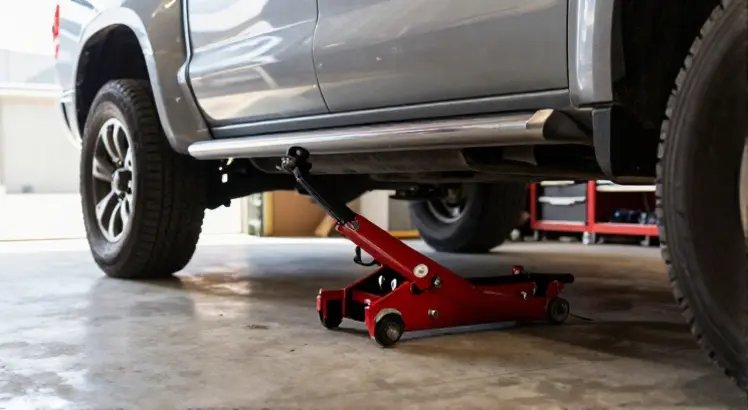
Knowing where to jack a truck up is a fundamental skill that protects both you and your vehicle. Tossing a jack under a random metal component might work in a movie scene, but real life demands precision. This guide dives deep into the specific lifting points every driver should use, whether you own a half-ton pickup, a heavy-duty workhorse, or a body-on-frame SUV.
Lifting a truck incorrectly can bend frame rails, puncture oil pans, or crush fuel lines. Worse, it can lead to the vehicle slipping off the jack, causing severe injury. We will walk you through the manufacturer-approved jacking locations, the tools that make the job safe, and the spots you must avoid at all costs.
Why Correct Jacking Points Matter

Jack Boss 3 Ton Low Profile Aluminum and Steel Racing Floor Jack
Check PriceModern trucks have a specific structure designed to bear the vehicle’s weight when lifted. Using an incorrect spot shifts stress to parts never meant to handle concentrated force. You risk cosmetic scratches, structural damage, and sudden collapse.
Every owner’s manual includes a diagram of the designated lift points. Following these locations keeps the frame straight and prevents expensive body shop visits. Safety is the other half of the story, a jack placed on a weak component can sink or slide without warning.
Understanding Your Truck’s Lifting Points

Maxority 3-Ton Low Profile Hydraulic Heavy-Duty Steel Floor Jack
Check PriceTrucks typically give you three or four primary safe zones. The exact points depend on whether you have a solid axle, independent front suspension, or a full frame. Always prioritize the frame rail, the crossmember, or the axle tube when possible.
Primary Front Jacking Points
Many body-on-frame trucks feature a front crossmember located behind the radiator support. Placing a floor jack under this heavy steel beam lets you lift the entire front end evenly. Alternatively, you can use the frame rails just behind the front wheels, where the frame dips down.
For vehicles with independent front suspension, the lower control arm mounting points on the frame are often acceptable. However, never place the jack on the control arm itself unless the manual explicitly marks it as a lift area. A misplaced pad can bend the arm instantly.
Primary Rear Jacking Points
The rear differential is the go-to location for trucks with a solid rear axle. Place the jack saddle directly under the differential housing, not on the cover itself, and lift until the tires leave the ground. This method is fast and distributes weight across the axle.
If your truck uses independent rear suspension, you cannot jack by the differential. In that case, locate the rear subframe crossmember or the reinforced pinch points near the rear wheels. The owner’s manual will show the precise oval cutouts or heavy-gauge metal pads designed for lifting.
Approved Side Jacking Points
For lifting one corner at a time, look for reinforced notches on the frame rail or the factory pinch weld. On some trucks, the manual specifies a small section of the frame directly under the front or rear door area. You can also use the lower control arm frame mount if it is a beefy, boxed bracket.
SUV owners often find arrows stamped into the rocker panels indicating the pinch weld location. These spots are designed for the scissor jack that came with the vehicle. Always use a rubber pad or a jack adapter to avoid folding the metal.
Where to Avoid Jacking a Truck
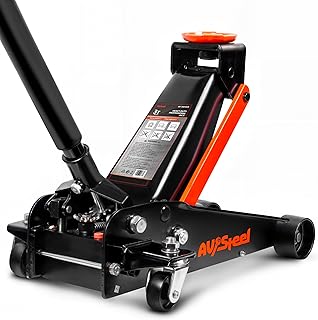
AV Steel 3 Ton Floor Jack
Check Price- The oil pan or transmission pan, these are thin and crack easily.
- Fuel tank and fuel lines, instant disaster.
- Suspension tie rods and steering linkage, they are not load-bearing.
- Plastic underbody panels and bumper covers, they shatter under weight.
- Unexplained pieces of unibody floor, they crumple without warning.
When in doubt, refer back to the stamped steel frame. Frame rails are designed to support the truck during towing and recovery, making them the gold standard for lifting. A factory service manual can also clear up confusion for modified or older trucks.
Tools You Need for Safe Lifting
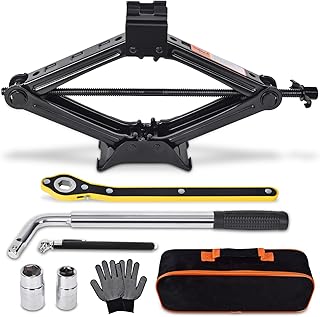
Scissor Car Jack 2 Ton (4409 lbs) Tire Changing Kit with Lug Wrench
Check PriceEven when you know exactly where to jack a truck up, the right equipment makes the difference between a smooth lift and a dangerous situation. Investing in quality tools pays for itself after one avoided hospital bill.
Floor Jack vs. Bottle Jack vs. Scissor Jack
A hydraulic floor jack with a wide saddle provides the most stability. The saddle spreads the load across the frame rail, reducing the chance of metal distortion. A bottle jack works in a pinch but requires a flat, stable base and precise placement on a frame member.
Scissor jacks that come with the truck are emergency tools. They are only safe when placed exactly on the factory-designed lift points, usually the pinch weld notches, and only on level, paved ground. Aftermarket scissor jacks with a wider base offer more confidence. For a solid upgrade, check out our roundup of the best scissor jacks for SUVs.
No matter which jack you use, jack stands are non-negotiable. Once the truck is lifted, place a pair of jack stands under the frame rails or axle and lower the vehicle’s weight onto them. Never crawl under a truck supported only by a hydraulic jack.
Step-by-Step: How to Find and Use Jacking Points

IMAYCC Car Jack Kit 2.5 Ton, Universal Scissor Car Jack
Check PriceThis process works for most pickup trucks, from the Ford F-150 and Ram 1500 to the Toyota Tundra and Nissan Titan. Always cross-reference your owner’s manual before lifting.
1. Park on Level Ground and Chock Wheels
Never lift a vehicle on a slope or soft dirt. Set the parking brake and block the wheels that will stay on the ground with heavy-duty wheel chocks. This prevents any rolling when the truck is in the air.
2. Locate the Frame Rail or Crossmember
Slide under the front or rear and identify the lowest continuous steel beam. For the front, the crossmember behind the radiator is often the safest center point. For the rear, determine whether you have a solid axle and can use the differential.
If you are lifting one side, find the flat section of the frame between the wheels. Wipe away any mud or grease so you can see the metal clearly. Confirm there are no brake lines or wiring harnesses running beneath your chosen spot.
3. Position the Jack and Lift Slowly
Roll the floor jack into place and center the saddle on the lift point. Pump the handle until the saddle makes firm contact, then recheck the alignment. Raise the truck in small increments, watching the jack and vehicle for any tilting or noise.
4. Always Use Jack Stands
Slide your jack stands under the frame or axle near the lifting point. Adjust the height so the stand just touches the metal, then lower the jack until the weight transfers to the stands. Give the truck a firm shove before you get underneath to confirm it is completely stable.
For the full procedure on safely lifting your pickup from start to finish, read our complete guide to jacking up a truck. It covers advanced techniques and common pitfalls in more detail.
Special Considerations for Lifted Trucks and Heavy-Duty Vehicles
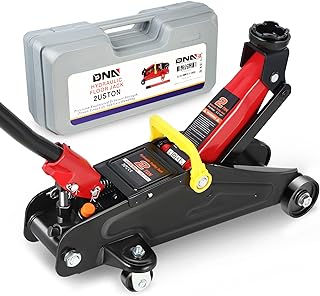
DNA Motoring Low Profile Hydraulic Trolley Floor Jack
Check PriceLifted trucks change the geometry of the frame and suspension. You may need a high-lift floor jack that can reach the frame rails, often combined with a taller jack stand. Never stack blocks or wood under a stand to gain height, buy equipment rated for the extended height.
Heavy-duty trucks like the Ford Super Duty or Ram 3500 have gross vehicle weights that exceed typical consumer jack capacities. Always check the weight rating on your jack and stands. Using a setup rated for 3 tons on a 4-ton truck is a recipe for failure.
Diesel engine blocks add significant front-end weight. If you are lifting the front via the crossmember, confirm it is strong enough to handle the load. Some diesel trucks require lifting from the individual frame rails on each side instead of a central point.
Common Mistakes When Jacking Up a Truck
- Lifting from the differential cover instead of the housing.
- Using a scissor jack on uneven ground without a jack pad.
- Placing the jack on a suspension component that is not designated for lifting.
- Forgetting to loosen lug nuts before raising the tires off the ground.
- Working under the truck without jack stands, relying on a single pump jack.
These errors are easy to avoid once you slow down and check each step. A few extra seconds of preparation prevents hours of repair and potential emergency room visits.
Frequently Asked Questions
Where is the safest jack point on a pickup truck?
The front frame crossmember and the rear differential housing are the two safest universal points on most body-on-frame trucks. Both are thick, reinforced structures designed to handle full vehicle weight when lifted from the center.
Can I jack up a truck by the rear differential?
Yes, on solid axle trucks you can safely lift from the center of the differential housing, not the thin cover. If your truck features independent rear suspension, avoid the differential and use the rear subframe or designated jack pads.
Is it okay to jack a truck by the control arm?
Only if the owner’s manual shows a specific lifting arrow on the lower control arm. The arm itself is not a load point, but the frame mount directly behind it is often reinforced. Placing a jack on a non-designated arm can bend it, ruining the alignment.
Where do you put a jack on an SUV with unibody construction?
Unibody SUVs rely on reinforced pinch welds along the rocker panels. Look for notches or arrows stamped into the metal. Always use a pinch weld adapter or a slotted rubber pad to prevent crushing the seam.
Conclusion
Now you know exactly where to jack a truck up without gambling on shady internet forum advice. Frame rails, crossmembers, and differential housings are your friends. Oil pans, fuel tanks, and suspension links are not. Always pair your jack with quality jack stands and follow the manufacturer’s lifting points for your specific model.
Before your next oil change, tire rotation, or roadside emergency, spend a few minutes locating the lift zones on your truck. Snap a picture of the manual’s diagram and keep it in your glove box. For additional safety guidance, refer to AAA’s official tire changing guide. The few minutes you invest today will keep you safe and your truck damage-free for years to come.