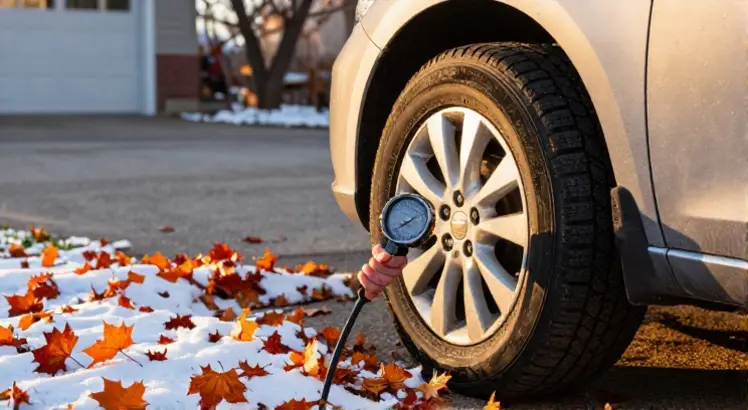
Timing is everything when it comes to staying safe on icy Canadian roads. Many drivers ask, when to install winter tires in Canada to avoid fines, insurance issues, and dangerous skids. If you put them on too early, you waste rubber on warm pavement. If you wait too long, you risk getting caught in the first snowfall with zero traction. This guide breaks down the exact timing by province, temperature triggers, and the legal deadlines you cannot ignore.
We will look at the “7-degree rule,” regional differences across British Columbia, Quebec, Ontario, and the Prairies, plus how insurance discounts work. You will learn practical tips for scheduling your swap, understanding tire wear, and saving money without compromising safety. Whether you are a new Canadian driver or a seasoned commuter, this article will give you a clear, actionable plan for your seasonal tire changes.
Why the Right Installation Date Matters in Canada

Dunlop Winter Maxx SJ8 225/60R17 99R
Check PriceWinter tires are not just a recommendation in many parts of Canada, they are a legal requirement. The rubber compound in dedicated snow tires stays soft below freezing, gripping the road far better than all-season compounds. Driving without them during a sudden cold snap can lead to longer stopping distances, loss of control, and voided insurance claims. Understanding when to install winter tires in canada protects you legally and physically.
Beyond safety, there is a financial angle. Some provinces offer insurance premium reductions if you install certified winter tires by a specific date. Installing them too early in September, however, causes rapid tread wear because soft rubber degrades quickly on hot asphalt. Finding that sweet spot on the calendar keeps you compliant, safe, and keeps your tires lasting multiple seasons.
Poor timing also clogs tire shops. The peak booking window is narrow. If you wait for the first snow warning to call your mechanic, you will likely face long delays. Planning ahead lets you get the appointment you want, often at a lower price, before the seasonal rush officially kicks in.
The Golden Rule: The 7-Degree Celsius Crossover

Cooper Evolution Winter 225/65R17 102T Tire
Check PriceThe automotive industry does not rely on calendar dates alone, it relies on the thermometer. The universal benchmark in Canada is the 7-degree Celsius mark. When the average daily temperature consistently drops below 7°C, summer and all-season rubber hardens, losing flexibility. That is the biological clock for your winter rubber.
Tracking Overnight Lows vs. Daytime Highs
Do not just look at the lunchtime high. Many Canadian regions have warm afternoons in October but freezing mornings. If your morning commute starts at 6 a.m. in near-freezing darkness, you need winter tires even if the afternoon hits 15°C. The risk window is the early-morning drive when frost, black ice, and hardened rubber combine dangerously.
- Monitor the low temperatures for the week ahead.
- Look for sustained drops, not just a one-day cold snap.
- Remember that bridges and shaded roads freeze first.
Waiting until the snow actually sticks to the ground is a gamble. The first snowfall in cities like Calgary or Montreal often catches drivers off guard, causing hundreds of collisions in a single morning. Proactive drivers book their swap shortly after Thanksgiving, aligning with that 7-degree consistency.
Provincial Deadlines and Winter Tire Laws

Dunlop Winter Maxx 2 Winter 195/65R15 91T Passenger Tire
Check PriceCanada does not have a single national law. Each province sets its own mandates, and mixing them up could cost you a ticket. Quebec has the strictest rules. British Columbia has specific highway designations. Ontario does not mandate them province-wide, but your insurance company will penalize you if you ignore the seasonal need. Here is the breakdown of when to install winter tires in canada by law.
Quebec: The Mandatory December 1st Deadline
Quebec law requires all vehicles registered in the province to have certified winter tires between December 1st and March 15th inclusive. This is a hard legal deadline, not a suggestion. You must have the mountain-and-snowflake symbol or the “M+S” marking on your sidewalls by that date. Police can issue fines directly if you are pulled over without them.
Because the deadline is strict, tire shops in Quebec are completely overwhelmed in the last two weeks of November. Smart Quebec drivers install their tires in mid-October to early November. This ensures compliance before the rush and gives them safety for the early frosts that hit the province in late fall.
British Columbia: The Mountain Pass Mandate
British Columbia does not require winter tires across the entire province but enforces them on designated highways between October 1st and either March 31st or April 30th, depending on the route. The “Sea to Sky” highway, the Coquihalla, and high mountain passes see heavy enforcement. If you drive outside the Lower Mainland in winter, you need compliant tires by October 1st.
For Metro Vancouver drivers who stick to the city, the legal pressure is lower. However, the 7-degree rule still applies. Cold rain and the occasional icy burst make late October a smart target for installation. A good resource for choosing the right rubber before the deadline is checking the best winter tires in Canada guide, which compares top-rated options for our climate.
Ontario: Insurance Incentives Over Laws
Ontario has no blanket winter tire mandate. However, all major insurers in the province require you to notify them if you do not use winter tires, often resulting in a premium surcharge. To qualify for the insurance discount, you must install the tires typically between November 1st and April 30th. This date range mimics the Quebec model without the roadside police checks.
For drivers in the Snowbelt regions like Barrie or London, late October is the ideal installation window. Lake-effect snow can arrive suddenly and aggressively. Waiting until December is a recipe for white-knuckle driving.
Calendar Guide by Region: Month by Month

Dunlop Winter Maxx SJ8 225/65R17 102R
Check PriceBecause Canada’s geography is massive, a single date does not fit all. Here is a practical month-by-month breakdown of when to install winter tires in canada based on regional weather patterns.
September: Too Early for Most
Unless you live in the Yukon, Northwest Territories, or very high altitudes in the Rockies, September is premature. The pavement is still warm from summer. The soft compound of winter tires will scrub away rapidly, reducing the lifespan of your expensive tread. Wait for the heat to break.
October: The Sweet Spot for Many
For the Prairies, Northern Ontario, Quebec, and Atlantic Canada, October is the month to act. Calgary often sees its first major snow event before Halloween. Edmonton drivers know that waiting until November can mean navigating black ice on all-seasons. Aim to have your swap completed by the third week of October in these regions.
If you are looking for a rugged set for a pickup before that early freeze, best winter tires for trucks offers great insights into heavy-duty options that handle early-season slush and deep snow with ease.
November: The Legal and Real Deadline
By November, the window is closing fast. Southern Ontario, the Lower Mainland, and Nova Scotia’s coastal areas can sometimes push the date to mid-November if autumn is mild. However, if you are driving on rural roads or highways, the risk of frost is too high to ignore. Quebec drivers must be fully installed by November 30th to stay legal for December 1st.
December and Later: Emergency Mode
If you have not installed your tires by December, you are driving on borrowed time. Tire shops are booked solid, tire inventory runs low, and road conditions are hazardous. You will pay premium prices for rush appointments. Do not let it get this late.
How to Balance All-Weather Tires vs. Dedicated Winter Sets
Some drivers in milder regions, like southern British Columbia, explore all-weather tires as a year-round compromise. These carry the three-peak mountain snowflake symbol but are designed to run all summer. However, in true Canadian winter conditions, dedicated winter tires offer superior ice traction. The installation timing for all-weather tires is less urgent because you do not swap them, but they still harden as temperatures plummet.
If you regularly drive over mountain passes or through heavy lake-effect snow, a dedicated separate set of winter tires is non-negotiable. The rubber is simply softer and safer in extreme cold. For city-only driving in Vancouver or Victoria, all-weather tires might be enough, reducing the headache of scheduling seasonal swaps.
Practical Tips for a Smooth Seasonal Swap
Simply knowing when to install winter tires in canada is half the battle. The logistics of doing it right save you time, money, and stress. Here are actionable tips to implement now.
- Book your appointment 4 to 6 weeks in advance. Shops open their calendars early, and the good slots vanish by late September.
- Consider mounting your winter tires on dedicated steel rims. This allows for a faster, cheaper swap and prevents seasonal damage to your alloy rims.
- Check the tread depth before installing. Winter tread is useless below 4/32 of an inch. If you are close to the wear bars, buy a new set before the season peaks.
- Store your off-season tires properly, indoors and away from direct sunlight and ozone-generating equipment.
A study from the Traffic Injury Research Foundation highlights that vehicles using winter tires reduce the risk of winter driving crashes by up to 50% compared to all-season rubber. Investing in a pre-season swap is an investment in collision avoidance. For an external deep dive into the safety data, you can review the Traffic Injury Research Foundation’s winter driving safety reports to see the stark statistical difference proper tires make.
The Removal Timeline: When to Take Them Off
Knowing when to take the tires off protects your wallet. Wearing winter tires into warm spring weather is like running in snow boots at the beach. The soft compound overheats, wears down in months, and increases your braking distance on dry roads. The reverse 7-degree rule applies here. Once the average daily temperature consistently rises above 7°C in spring, book your removal.
In Quebec, the law does not specify a mandatory removal date, but keeping them past March 15th is not required. Most provinces see mid-April as the safe switch-back point. In the Rockies or northern regions, keep them on until late April or early May to avoid late-season blizzards.
Frequently Asked Questions
Is there a universal date to install winter tires in Canada?
No universal date exists. The best window is when temperatures consistently dip below 7°C, typically mid-October to early November. Quebec mandates December 1st, while British Columbia requires them by October 1st on designated highways.
Can I install only two winter tires instead of four?
Never install just two winter tires. Mounting only two causes a massive imbalance in grip between the front and rear, leading to dangerous oversteer or spin-outs. Always install a full set of four matching winter tires.
What happens if I get into an accident without winter tires?
In provinces like Ontario, your insurer may find you partially at fault for failing to equip your vehicle appropriately for weather conditions. You could face higher premiums or denied claims. In Quebec, you can receive a fine for non-compliance.
Are mud and snow (M+S) tires enough for Quebec law?
Yes, but only if they are specifically stamped with the symbol. However, modern dedicated winter tires with the three-peak mountain snowflake symbol offer far superior ice traction. M+S tires are a bare minimum but do not excel on ice.
Conclusion
Understanding when to install winter tires in canada keeps you compliant with provincial laws, safe on unpredictable roads, and financially protected. The 7-degree rule remains your most reliable guide, with mid-October to early November serving as the peak installation window for most of the country. Ignoring these timelines risks collisions, legal fines, and unnecessary tread wear.
Book your tire swap appointment now before the rush hits. Check your tread depth, invest in dedicated steel rims if you can, and always install a full set of four. Prioritize the early morning conditions you actually drive in, not the warm afternoon highs. By acting proactively, you turn winter driving from a tense, gripping-the-wheel experience into a confident, controlled journey through even the heaviest snowfall. Stay ahead of the calendar, and stay safe.