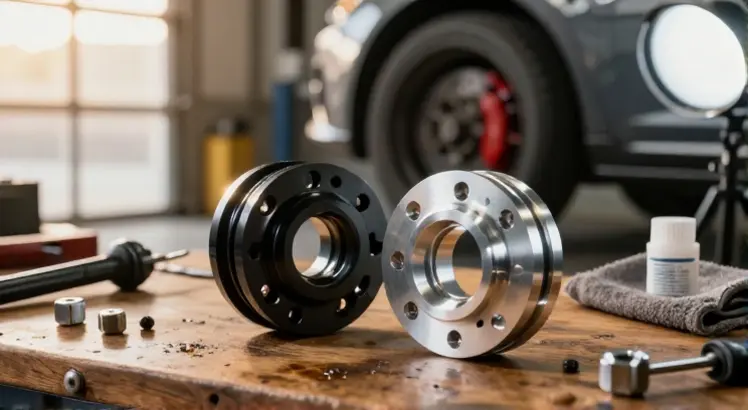
If you have ever wanted a wider stance for your truck or needed to clear larger brake calipers, you have probably asked yourself, What are high quality wheel spacers? Wheel spacers are not simple chunks of metal, they are critical components that sit between your hub and wheel, directly influencing safety and handling. Understanding the difference between a premium spacer and a cheap, dangerous knock-off can save you from catastrophic failure. This guide explains the exact materials, fitment methods, and engineering features that separate high quality wheel spacers from the rest.
The Anatomy of a High Quality Wheel Spacer

Orion Motor Tech 5×4.5 1-Inch Wheel Spacers with 1/2-20 Studs for Jeep TJ/YJ, Ford Explorer, Mustang, Ranger
Check PriceA genuine high quality wheel spacer is much more than a flat aluminum disc. It is a precision-machined component designed to align perfectly with your specific vehicle hub and wheel. Cheap spacers often try to function as a simple ring of metal, ignoring the critical load paths that keep your wheels securely attached. When you look at a top-tier spacer, you see evidence of careful engineering, starting with the way it centers itself on the axle.
Two fundamental design philosophies separate the good from the dangerous: hub-centric and lug-centric construction. High quality examples rely almost exclusively on hub-centric principles, where the spacer physically registers on the vehicle’s hub lip and provides a new hub lip for the wheel. This transfers the weight of the vehicle through the spacer’s solid metal lip rather than placing shear stress on the lug studs. Lug-centric spacers, on the other hand, depend solely on the friction of the lugs to keep the wheel centered, a recipe for vibration, broken studs, and wheel detachment under load.
Hub-Centric vs. Lug-Centric: Why Fitment Matters

KSP 6X5.5 Wheel Spacers for Silverado Sierra
Check PriceYour vehicle’s hub has a small raised lip precisely measured in millimeters. The center bore of the factory wheel fits snugly over this lip, ensuring perfect alignment. When you install a spacer, it should replicate this system. A hub-centric spacer will have a center bore that matches your hub diameter and an integrated lip that matches the wheel’s center bore, creating a vibration-free connection. This design is non-negotiable for any spacer thicker than a few millimeters if you value safety.
Lug-centric spacers, often found in generic universal kits, have an oversized center hole that does not touch the hub at all. The only thing holding the wheel in place is the tightness of the lug nuts. While they may feel snug on the lift, dynamic driving forces can cause them to shift microscopically, inducing a dangerous steering shake. For a complete breakdown of how this affects your vehicle, Tire Rack’s detailed spacer safety primer is an invaluable resource.
Material and Manufacturing: Billet Aluminum and Beyond
Walk away from any spacer made of cast aluminum or, worse, steel that is not specifically engineered for the application. Cast aluminum is porous and brittle, it can crack without warning. High quality wheel spacers are CNC-machined from a solid block of forged 6061-T6 or 7075-T6 aluminum billet. This manufacturing process guarantees a uniform grain structure and immense tensile strength, allowing the spacer to handle the constant pounding from potholes and high-speed cornering without deforming.
Beyond the material, the surface finish tells a story. Premium spacers receive a hard anodized coating, not just for a colorful look, but to create a corrosion-resistant barrier that prevents the aluminum from fusing to the steel hub over time. You might also find high-end spacers made from a high-grade steel composite for specific heavy-duty hauling applications, but for 99% of daily drivers and off-road rigs, aircraft-grade billet aluminum remains the gold standard.
Bolt Pattern and Thread Integrity
A high quality wheel spacer never uses a one-size-fits-all slotted bolt hole. Instead, it is drilled with precision for your exact bolt pattern, such as 5×114.3 or 6×135. The drilled holes are chamfered to match the seat of your lug nuts, whether conical or ball-style. Pay close attention to the studs pressed into the spacer. Cheaper units use generic, ungraded hardware that stretches under torque. Genuine performance spacers come with press-in studs rated at Grade 10.9 or even Grade 12.9, offering shear strength that matches or exceeds original equipment manufacturer specifications. If you need help selecting the right hub-centric fit, our hub-centric spacer selection guide covers the most trusted options.
Key Features That Define Premium Wheel Spacers

KSP 2 inch 6×139.7mm Wheel Spacer
Check PriceOnce you understand the basic anatomy, you can quickly scan a product listing and determine if it belongs on your vehicle. Premium spacers share a consistent set of features that go beyond just looking thick and shiny. Missing even one of these characteristics is a red flag that indicates corner-cutting in the engineering phase.
Precise Center Bore Matching
The spacer must be machined to a tolerance of less than 0.1mm to fit your specific hub. A true high quality spacer will feel like it pops or snaps gently onto the hub lip rather than sliding loosely over it. This tight tolerance eliminates the micro-gap that causes oscillation at highway speeds. Always avoid spacers that rely on plastic hub adapter rings to fill the gap, as those can melt under prolonged heavy braking heat.
High-Grade Hardware and Studs
Look for corrosion-resistant black phosphate or zinc-plated studs that are pressed and splined into the spacer with a hydraulic press. The splines must dig into the billet aluminum, preventing rotation when you torque the nuts. A high quality kit often includes open-ended lug nuts specifically designed to engage the full thread depth of the new studs. If a kit arrives with cheap hardware store-looking nuts that don’t clearly state the grade classification, return it immediately.
Corrosion Protection and Coatings
Road salt, moisture, and brake dust create a hostile chemical environment inside your wheel well. A high quality spacer combats this with a proper anodized layer or a durable powder coat. This coating does not just prevent unsightly white oxidation, it stops the electrolytic reaction that occurs when bare aluminum touches a cast iron brake rotor hat. This galvanic corrosion can literally weld the spacer to the rotor, turning a simple brake job into a workshop nightmare involving torches and sledgehammers.
Benefits of Using High Quality Wheel Spacers

Orion Motor Tech 4×156 2-Inch Black Wheel Spacer Kit for Polaris RZR XP 1000, Ranger
Check PriceInstalling a properly engineered spacer offers tangible performance and aesthetic gains that go far beyond a simple poke look. When you choose a billet hub-centric design, you are actually correcting suspension geometry and opening up new tire possibilities. This is a common modification in both the stance community and serious off-road circles for good reason.
A wider track width lowers the vehicle’s center of gravity slightly and reduces body roll during cornering. It also provides the clearance needed to fit wider, grippier tires without rubbing against the inner fender liner or suspension components. For truck owners, high quality spacers allow the fitment of larger aftermarket upper control arms or the installation of oversized mud-terrain tires. Additionally, if you upgrade to a big brake kit, a precise spacer often serves as the only way to push the caliper away from the spokes of your existing alloy wheels, saving you the cost of brand new rims.
How to Identify Inferior or Dangerous Spacers

KSP 6X139.7 Silverado Hubcentric Spacer
Check PriceThe market is flooded with cheap spacers that look decent in thumbnail photos but fail dangerously under load. You do not need to be a mechanical engineer to spot these risks. A quick visual inspection and a few critical questions can protect you from a wheel passing you on the highway.
- If the spacer feels suspiciously light for its size, it is likely cast aluminum with microscopic air pockets inside.
- If the spacer lacks a raised hub-centric lip on the outer face, it cannot support the weight of the vehicle safely.
- If the studs wobble in their holes or show rough, inconsistent spline marks, they have not been press-fit correctly.
- If the packaging lacks a clear grade stamp on the hardware, the manufacturer is hiding the use of soft, low-tensile steel.
When evaluating a specific brand, always check aggregate user reviews and third-party stress tests. We examined Bora’s safety record in detail and found a consistent focus on the structural integrity issues that cheap knock-offs simply ignore. It is a useful benchmark for what a safety-conscious manufacturer looks like.
Installation Best Practices for Safety and Longevity

Orion Motor Tech 5×4.5 1″ Hub Centric Wheel Spacers for Honda Accord, Civic, CRV, Acura
Check PriceEven the most expensive billet spacer in the world becomes a liability if installed incorrectly. High quality parts demand high quality workmanship. The interface between the hub, spacer, and wheel must be surgically clean to function correctly.
Start by wire-brushing the hub face to remove all rust scale and debris. Any uneven buildup on the mounting surface will translate into a wobbling wheel and uneven lug nut torque. Apply a thin layer of anti-seize compound only to the hub mating surface, never on the threads unless specifically directed by the manufacturer. Thread the spacer hand-tight first, then follow a star-pattern torque sequence using a calibrated torque wrench. Never rely on an impact gun for final tightening.
After driving the first 50 miles with your new spacers, remove each wheel and re-torque the spacer nuts. This is a mandatory step. The thermal cycling of the brakes and the settling of the materials cause an initial relaxation of torque that can loosen the assembly if ignored. Finally, perform a visual check every 5,000 miles as part of your tire rotation routine. Look for cracks, corrosion, or loose hardware, and you will get a lifetime of reliable service.
Frequently Asked Questions

Orion Motor Tech 6×5.5 1.25″ Blue Wheel Spacers for FJ Cruiser, Tacoma, 4Runner, Tundra
Check PriceAre expensive wheel spacers always high quality?
Not always, but there is a strong correlation. A higher price usually pays for billet aluminum, precision CNC machining, and certified hardware. However, you still need to verify the spacer is hub-centric and rated for your vehicle’s gross weight. A high price tag on a slotted, lug-centric spacer is just an expensive mistake.
Do I absolutely need hub-centric spacers?
If the spacer is thicker than a 5mm slip-on shim, yes. A thin shim can sometimes work if enough hub lip remains for the wheel to register on, but anything requiring longer studs or a bolt-on design must be hub-centric. Removing the load-bearing lip shifts all the vehicle’s weight onto the lug studs, which they are not designed to carry.
Can I stack wheel spacers to get more offset?
No, stacking spacers is extremely dangerous. It introduces multiple failure points, impossible torque angles, and massive leverage on the studs. If you need a 2-inch offset, buy a single, high quality 2-inch spacer machined from a solid block. Never stack two 1-inch spacers.
What bolt pattern should I look for?
High quality spacers are vehicle-specific. You need the exact bolt pattern and pitch circle diameter (PCD) of your car. A 5×4.5 pattern is not the same as a 5×114.3, but they are often confused. Always measure or check your owner’s manual. The spacer must also match the thread pitch, such as 1.25 or 1.5 millimeters.
Will wheel spacers ruin my wheel bearings?
A moderate, high quality spacer that is perfectly balanced and hub-centric will not drastically accelerate bearing wear. However, extreme offsets that push the wheel far beyond the factory scrub radius can increase leverage on the bearing. Regular maintenance and monitoring for noise or play will mitigate long-term risks.
Conclusion
The question What are high quality wheel spacers comes down to material integrity, hub-centric fitment, and certified hardware. A genuine premium spacer is a millimeter-precise billet component that never compromises on safety. It is the difference between a confident, stable drive and a sudden loss of control.
When you are ready to upgrade, stick to vehicle-specific designs from manufacturers who publish their material specs and torque ratings. Inspect your spacers every time you rotate your tires, and replace any spacer that shows signs of galling or deformation. Investing in a high quality spacer today is an investment in the structural safety of every mile you drive tomorrow.