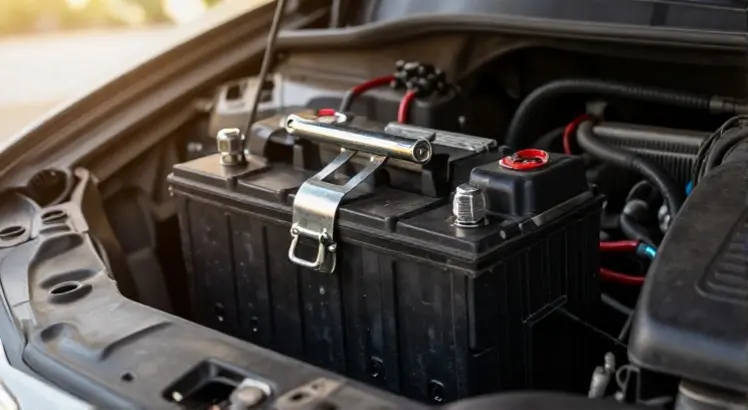
Your car battery powers everything from the starter to the radio, but have you ever wondered what keeps it firmly in place? The answer is the battery tray. How does a battery tray work? At first glance, it looks like a simple plastic or metal base, but it performs several critical jobs that protect your battery and your vehicle. Whether you drive a daily commuter or a heavy-duty truck, understanding this humble component can save you from unexpected breakdowns and costly repairs.
Battery trays are often ignored during routine maintenance. Yet they are the unsung heroes that hold the heavy battery steady against vibrations, potholes, and sharp turns. A failing tray can lead to battery movement, cracked cases, acid leaks, and electrical shorts. This article will walk you through exactly how a battery tray works, the different types available, and what you can do to keep yours in top shape.
What Is a Battery Tray?

Universal Battery Hold Down Tray Kit – Adjustable, Corrosion-Resistant
Check PriceA battery tray is a dedicated platform inside the engine bay that cradles the vehicle’s battery. It is typically made of thick molded plastic, but you can also find metal or steel versions in heavy-duty applications. The tray is bolted to the vehicle’s frame or inner fender and provides a flat, stable surface for the battery to sit on.
Most trays come with a raised lip around the edge to catch any electrolyte spills. They also include attachment points for a hold-down clamp or bracket that locks the battery in place. Without a tray, the battery would slide around, damage nearby components, and potentially cause a dangerous short circuit. In modern cars, the tray is designed to match the exact dimensions of the original equipment battery, ensuring a snug fit.
The Core Functions of a Battery Tray

THEPRO Battery Hold Down Tray Kit (10.6-inch) – Adjustable Steel Bracket
Check PriceSecure Mounting and Vibration Dampening
The primary job of a battery tray is to immobilize the battery. An unsecured battery bounces with every bump and corner, which can crack the internal plates and shorten its lifespan. The tray, combined with the hold-down clamp, forms a rigid enclosure. Battery Council International highlights that a properly secured battery reduces the risk of short circuits and fires. Vibration dampening is especially important in trucks, off-road vehicles, and performance cars where engine movement is more aggressive.
Protection from Corrosion and Leaks
Battery trays act as a safeguard against corrosive acid spills. Over time, lead-acid batteries can vent small amounts of sulfuric acid or leak if the case cracks. The tray usually features a lip and sometimes a drain tube that directs spilled acid safely to the ground, away from brake lines and wiring harnesses. Without this barrier, acid would eat away at metal parts, paint, and sensitive electronics.
Electrical Isolation and Ground Protection
A correctly installed tray also provides electrical isolation. The plastic base insulates the battery from the metal body of the car, preventing an accidental ground path. While the battery’s negative terminal is intentionally grounded, a stray contact between the battery case and the chassis can cause sparks or a slow drain. The tray keeps the battery casing separated from any conductive surfaces.
How Does a Battery Tray Work?

Group 24 Battery Tray with Strap – Secure Marine and RV Fit
Check PriceNow that you know the reasons behind the tray, let’s break down the step-by-step mechanics. How does a battery tray work? It starts with a few simple, yet effective, design principles.
- The tray base is bolted directly to a rigid part of the vehicle structure, often the frame rail or the inner fender well. These anchor points keep the tray perfectly stationary.
- A set of hold-down brackets, J-bolts, or a top strap clamp the battery against the tray. The hardware threads into dedicated slots on the tray or nearby mounts.
- When the hold-down is tightened, the battery compresses against the rubber or felt pad on the tray floor. This pad absorbs micro-vibrations and prevents the battery from shifting even slightly.
- The raised perimeter of the tray contains any leaked fluid, and integrated drain channels allow the acid to escape without pooling against the battery case.
- For side-terminal batteries, the tray often positions the battery so that the terminals face away from metal brackets. This reduces the chance of an accidental wrench-to-chassis short during maintenance.
Think of the tray as a custom-fit cradle that locks the battery into a three-dimensional space. It restricts movement horizontally, vertically, and rotationally. The clamp prevents the battery from jumping up on rough roads, while the tray edges stop it from sliding into the radiator or engine parts.
Many trays also include a thermal barrier. Engine bay heat can reduce battery life significantly, so some trays come with a heat shield that deflects hot air away from the battery. This is especially common in older vehicles where the battery sits close to the exhaust manifold.
Different Types of Battery Trays

Camco RV Large Battery Hold-Down Tray – Transport Stability
Check PriceNot all battery trays are created equal. Depending on your vehicle and driving conditions, you may encounter several styles.
OEM Plastic Trays
Factory trays in most passenger cars are made from durable, chemical-resistant plastic. They are lightweight, affordable, and molded to fit a specific battery group size. The plastic material eliminates any risk of corrosion from acid contact, and it naturally insulates the battery.
Metal or Steel Trays
Heavy-duty trucks, classic cars, and some off-road rigs use steel trays. These offer extreme strength and can survive impacts that would crack a plastic unit. However, metal trays must be coated or painted to resist acid damage. They also require careful installation to avoid creating an unintended ground path.
Adjustable Universal Trays
If you have a custom battery setup or a non-standard group size, adjustable trays provide a flexible solution. They use sliding clamps or movable mounting points to accommodate different battery widths. While convenient, make sure the universal tray is rated for the weight and vibration of your application. A loose fit negates the entire purpose of the tray.
Marine and Heavy-Duty Trays
Boats, RVs, and commercial vehicles demand battery trays that resist extreme vibration and moisture. Marine-grade trays feature sealed drainage systems, corrosion-proof aluminum or reinforced nylon construction, and extra-strong hold-downs that can handle pounding waves. If you use your vehicle in harsh environments, upgrading to a marine-style tray can add years to your battery’s life.
Signs of a Failing Battery Tray

Danti Billet Aluminum Battery Tray – Optima Compatible Mount
Check PriceA compromised tray is a ticking time bomb. Watch for these warning signals that indicate it is time for a replacement.
- Visible cracks or breaks in the plastic base, especially around the hold-down mounting holes.
- White or bluish dried acid residue coating the tray surface, a sign of ongoing leakage.
- Loose or stripped J-bolts that no longer tighten fully, allowing the battery to wiggle by hand.
- Corrosion eating into the metal parts of the tray or the surrounding sheet metal.
- Scorch marks or melted plastic near the tray, often caused by the battery contacting a hot surface after shifting.
If you notice any of these symptoms, do not ignore them. Even a small crack can grow rapidly under vibration and cause a catastrophic failure. Many drivers wonder, is a battery tray necessary? The short answer is yes, and a compromised tray is as dangerous as no tray at all.
How to Maintain Your Battery Tray

Attwood Heavy-Duty Adjustable Battery Tray – Rust-Proof Plastic
Check PriceKeeping your battery tray in good condition takes only a few minutes and can prevent hundreds of dollars in damage. Follow these simple habits.
- Inspect the tray every six months or at each oil change. Look for cracks, loose bolts, and acid buildup.
- Clean the tray with a mixture of baking soda and water to neutralize any acid deposits. Scrub gently with a wire brush for metal trays, then rinse thoroughly.
- Replace worn felt washers or rubber cushions. These inexpensive parts are the first line of defense against vibration.
- Tighten the hold-down hardware to the manufacturer’s specification. Over-tightening can crack the tray or the battery case.
- If your tray has a drain tube, make sure it is not clogged with debris. A blocked drain can cause acid to pool inside the tray.
When cleaning, always wear gloves and eye protection. Battery acid is corrosive and can cause burns. If the tray is severely damaged, do not attempt to patch it with tape or glue. The heat under the hood will quickly break down makeshift repairs. Instead, check our roundup of the best battery tray for your car to find a durable, direct-fit replacement.
Frequently Asked Questions About Battery Trays
Is a battery tray really necessary?
Absolutely. While you might be tempted to skip the tray after an engine swap or custom build, that is a major safety risk. A battery tray locks the battery down, absorbs vibration, and contains acid spills. Without it, the battery can tip over, short out on metal components, and cause a fire. For a deeper dive, read our detailed article on whether is a battery tray necessary.
What happens if the battery tray cracks?
A cracked tray loses its ability to hold the battery securely. The crack can propagate until the hold-down bracket pulls completely through the plastic, leaving the battery unrestrained. Additionally, acid can leak through the crack and corrode the vehicle’s frame or wiring. Replace a cracked tray as soon as you spot it.
Can I drive without a battery tray temporarily?
You should never drive without a battery tray, even for a short trip. Emergency braking or a pothole can launch the battery into the drive belts, radiator, or intake manifold. The resulting damage often costs far more than a tray. If your tray is broken and you must move the car, strap the battery down with heavy-duty zip ties or a ratchet strap as a last resort and drive directly to a repair shop.
How do I clean a badly corroded battery tray?
Start by disconnecting the battery and removing it from the vehicle. Neutralize any acid with a baking soda paste (three parts baking soda to one part water). Let the paste sit for a few minutes, then scrub with a stiff nylon brush. For metal trays, use a wire brush to remove rust, then apply a rust-inhibiting paint before reinstalling. Always ensure the tray is completely dry before putting the battery back.
Conclusion
How does a battery tray work? It combines a rigid mounting platform, a chemical-resistant barrier, and a secure hold-down system to protect your battery from the harsh environment under the hood. Without it, you risk vibration damage, acid spills, and dangerous electrical shorts. A well-maintained tray extends battery life, keeps your engine bay clean, and ensures safety every time you turn the key.
Make inspecting your battery tray a part of your regular maintenance routine. Replace any cracked or corroded units immediately, and always use the correct hold-down hardware. For the best protection, select a tray that matches your battery group size and driving conditions. If you need a new tray, explore our guide to the best battery tray for your car to find a reliable option. A small investment in this overlooked part can save you from a very costly roadside breakdown.