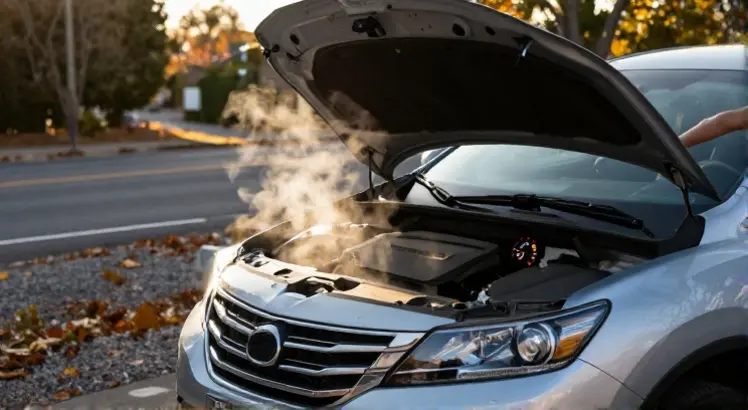
Seeing steam pour out from under your hood is a stressful moment for any driver. Knowing how to fix overheating car can save your engine from severe damage and keep you safe on the road. Overheating often starts with subtle warning signs, and acting quickly is the key to avoiding a blown head gasket or a cracked engine block. This guide walks you through exactly what to do from the moment the temperature gauge climbs into the red zone.
Signs Your Car Is Overheating
You do not need to be a professional mechanic to spot the early warnings. Recognizing these signs early gives you more time to react and prevent expensive repairs. The sooner you pull over and shut the engine down, the better your chances of a simple fix.
Temperature Gauge and Warning Lights
The most obvious indicator is the temperature gauge on your dashboard. It normally stays near the middle, but when the engine overheats, the needle moves toward the H or red zone. Many modern vehicles also have a dedicated engine temperature warning light that will illuminate when coolant temperatures get dangerously high.
Do not ignore a flickering or steady warning light. Even if the gauge only edges past the halfway mark for a few minutes in traffic, that is a clear sign your cooling system is struggling. Address it immediately before a small problem turns into a roadside breakdown.
Steam and Strange Smells
Steam rising from under the hood looks like white smoke and often has a sweet, syrupy odor because of the antifreeze. You may also notice a burning smell if oil or coolant drips onto hot engine parts. These visual and olfactory clues tell you it is time to pull over right away.
Sometimes the odor enters the cabin through the vents before you see any steam. If you detect a sweet or burnt smell while driving, glance at the temperature gauge immediately. Combining these sensory cues helps you catch overheating even before the dashboard tells you.
Immediate Steps When Your Engine Overheats
Your first priority is safety for you, your passengers, and the engine. Panicking or trying to rush to a service station can double the repair bill. Follow these steps calmly, and you will greatly reduce the risk of permanent damage.
Pull Over Safely and Turn Off the Engine
As soon as you notice the temperature gauge rising or see steam, signal and move to a safe shoulder or parking lot. Turn off the engine immediately. Idling prolongs the heat stress on internal components. If you keep driving, you risk warping cylinder heads and blowing the head gasket, a repair that costs thousands of dollars.
If you are stuck in heavy traffic and cannot pull over right away, turn off the air conditioning and turn on the heater to its highest setting. This pulls heat away from the engine and vents it into the cabin. It is uncomfortable, but it can buy you precious minutes to reach a safe stopping spot.
Do Not Open the Radiator Cap Right Away
This is the most important safety rule. The cooling system is pressurized and the coolant inside can be well above boiling point. Removing the cap while the engine is hot will release a geyser of scalding liquid and steam directly onto your face and hands. Severe burns happen every year because people skip this step.
Wait at least 30 minutes after the engine is off before you even touch the radiator cap. Check that the hood feels cool to the touch before attempting any inspection. If you are unsure, it is better to call roadside assistance and let a professional handle the pressure release. For more detailed safety advice, refer to AAA’s comprehensive guide to engine overheating.
How to Fix Overheating Car: Step-by-Step
Once the engine has cooled enough, you can start diagnosing the problem. You will need a rag or towel, gloves if available, and a bottle of coolant or water. These checks will help you determine if you can drive short distances to a shop or need a tow.
Check Coolant Level and Add If Low
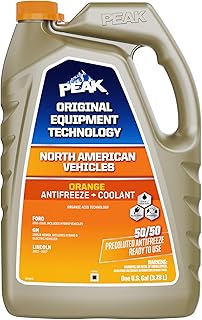
PEAK OET Extended Life Orange 50/50 Prediluted Antifreeze/Coolant
Check PricePlace a thick rag over the radiator cap and slowly turn it counterclockwise to the first stop. This releases pressure safely. After a hissing sound stops, press down and continue turning to remove the cap. Look inside the radiator filler neck. The coolant should be right up to the top. If it is low, that explains the overheating.
Add a 50/50 mix of coolant and distilled water if you have it. In an emergency, plain water works to get you moving again, but you must flush and refill with proper coolant soon after. Also check the coolant reservoir tank, which usually has Full and Low marks. Fill it to the correct line. Choosing the best coolant for overheating issues before an emergency happens can make a big difference in how your engine handles heat.
Inspect for Leaks and Damaged Hoses
With the engine cool, visually scan the engine bay for wet spots, white residue, or green, orange, or pink fluid trails. Pay attention to the radiator hoses, the large rubber tubes connecting the radiator to the engine. Squeeze them gently. A healthy hose feels firm yet flexible. A hose that feels soft, swollen, cracked, or rock hard is a failure waiting to happen.
Look around the water pump, thermostat housing, and radiator seams. A slow leak there can empty your coolant over time without leaving a puddle under the car because the fluid evaporates on hot surfaces. Even small leaks drop cooling system pressure, drastically lowering the boiling point of the coolant.
Assess the Radiator and Cooling Fans
After the engine cools, start the car and let it idle while you watch the radiator cooling fans. They should come on automatically when the engine reaches operating temperature, or immediately if you turn on the air conditioning. If the fans do not spin, the fan motor, relay, or temperature sensor may be faulty.
The radiator itself can become clogged externally by dirt, leaves, and bugs blocking airflow. A damaged radiator with bent fins or internal blockages cannot transfer heat efficiently. A flashlight helps you see through the radiator core. If light does not pass through easily, cleaning or replacement may be needed.
Look at the Thermostat and Water Pump
The thermostat is a small valve that opens and closes to regulate coolant flow. If it sticks closed, coolant cannot circulate and the engine overheats rapidly. A stuck open thermostat causes slow warm-up and poor fuel economy, but usually not extreme overheating. Diagnosing a thermostat requires checking if the upper radiator hose gets hot when the engine warms up. If it stays cold while the gauge reads hot, the thermostat is stuck shut.
The water pump is the heart of the cooling system. A failing pump often produces a grinding sound or a coolant leak from the weep hole near the front of the engine. Without a functioning water pump, coolant sits stagnant and cannot draw heat away from the cylinder heads. Replacing a water pump is a bigger job, but catching it early prevents an overheating episode.
Common Causes of Car Overheating
Understanding the root causes helps you fix the problem permanently. Low coolant is the most frequent culprit, but there are several other possibilities. A collapsed radiator hose, a failed cooling fan, an air pocket trapped in the system, or a defective radiator cap that does not hold pressure can all trigger overheating. Even a slipping serpentine belt can reduce water pump speed and cause insufficient coolant flow.
Another overlooked cause is using the wrong type of coolant or mixing incompatible formulas. These mistakes can create sludge that clogs narrow passages inside the radiator and heater core. If you are unsure which coolant your car needs, refer to your owner’s manual or a trusted resource. Taking the time for proper preparing your car’s cooling system for extreme temperatures drastically reduces the chance of a breakdown.
How to Prevent Overheating in the Future
Prevention is always better and cheaper than a cure. A few simple habits keep your cooling system healthy for years. These steps become even more critical if you tow heavy loads, drive in mountains, or live in a hot climate where the engine works harder to stay cool.
Regular Cooling System Maintenance
Make it a habit to visually inspect your coolant level at least once a month. Check the reservoir when the engine is cold and top off with the exact coolant type recommended by the automaker. Never mix different colors unless they are confirmed compatible. Hoses should be squeezed and inspected during every oil change for cracks or brittleness.
Pay attention to the radiator cap’s rubber seal. A worn seal cannot maintain the 15 to 16 psi of pressure the system needs, causing the coolant to boil at a lower temperature. Caps are inexpensive and should be replaced every four or five years as preventive maintenance. Also make sure the front of the radiator is free of debris by gently rinsing it with a garden hose from the engine side outward.
Flush and Replace Coolant on Schedule

Honda Genuine Extended Life Antifreeze/Coolant Type 2, 50/50 Pre-Diluted
Check PriceCoolant degrades over time and loses its anti-corrosive properties. Old coolant becomes acidic and eats away at gaskets, radiator cores, and heater cores from the inside. Follow the interval listed in your owner’s manual, usually every 30,000 to 60,000 miles for conventional coolant, or up to 100,000 miles for long-life formulas.
A proper flush removes rust, scale, and old sludge that simple draining does not. After a flush, the system is refilled with fresh coolant and burped to remove air pockets. Trapped air prevents circulation and creates hot spots. Many overheating problems disappear after a thorough cooling system flush and proper refill, restoring your engine’s ability to manage heat even under load.
Frequently Asked Questions
Can I drive my car if it overheats slightly then cools down?
It is not recommended without finding the cause. An engine that briefly overheats may have an intermittent problem like a sticking thermostat or an air pocket. Even a short overheat cycle can cause hidden damage. At the very least, check the coolant level and have the system pressure tested before driving further.
Is it safe to pour cold water onto a hot engine block?
No. Shock cooling a hot engine introduces rapid thermal contraction, which can crack the engine block or cylinder head. Always let the engine cool naturally with the hood open. If you need to add water, pour it into the radiator or reservoir slowly, and only after the engine has cooled significantly.
How much does it cost to fix an overheating car?
The cost varies widely from a $20 bottle of coolant and a new radiator cap to a $1,500 plus head gasket repair. Thermostat replacement usually costs between $150 and $300. A water pump job runs $300 to $800. The key is catching the issue early. A neglected overheating event often leads to the most expensive repairs.
Conclusion

Zerex Asian Vehicle Blue Silicate and Borate Free 50/50 Prediluted
Check PriceKnowing how to fix overheating car gives you the confidence to handle a stressful situation without making costly mistakes. The core rule is simple: stop driving as soon as it is safe, let the engine cool, and never open a hot radiator cap. From there, checking coolant level, hoses, fans, and the thermostat will point you toward the solution nine times out of ten.
Make cooling system checks part of your routine maintenance, use the correct coolant, and replace aging parts before they fail. Your engine depends on stable temperatures to run efficiently, and taking these proactive steps ensures it stays cool every mile. Keep a gallon of premixed coolant and a rag in your trunk, and you will always be ready to act before a small hiccup turns into a breakdown.