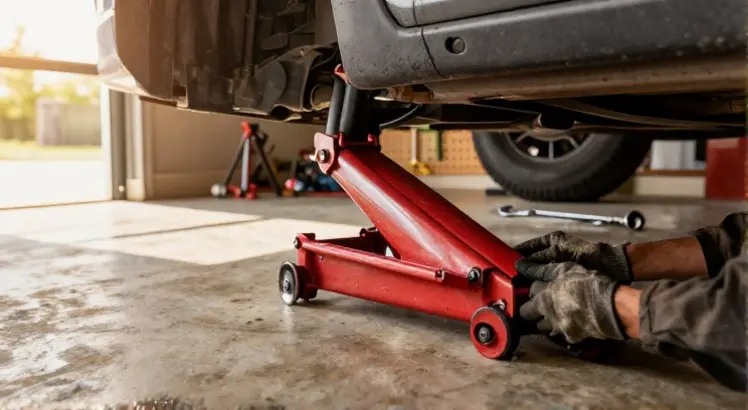
Finding the right spot to lift your vehicle is not just about convenience, it is a critical safety step. Placing a jack incorrectly can damage your car’s underbody, lead to a dangerous collapse, or even cause serious injury. Whether you are changing a tire on the side of the road or working on your brakes in the garage, knowing exactly where to place car jack makes the job safer and easier. This guide breaks down every jack point you need to know, from compact sedans to heavy trucks.
I have helped countless DIY beginners avoid bent floor pans and crushed oil pans simply by teaching them how to read their vehicle’s underside. The information you are about to read comes from real garage experience, manufacturer guidelines, and a focus on practical, step-by-step safety. Let’s walk through the correct lift points so you can jack up your car with total confidence.
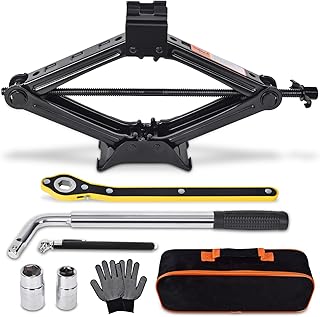
Scissor Car Jack 2 Ton (4409 lbs) Tire Changing Kit with Lug Wrench
Check PriceWhy Correct Jack Placement Matters
Your car’s frame and underbody are designed to channel thousands of pounds of force, but only in specific reinforced zones. Placing a jack on a thin floor pan, a plastic cover, or a suspension component that is not rated for lifting can instantly deform metal or crack critical parts. Even worse, a poorly placed jack can slip when you are on a slight incline, dropping the car onto your limbs or brake rotor.
Using the manufacturer-designated jack points ensures the weight is supported by the vehicle’s structural skeleton. This keeps you safe, protects your car’s alignment, and prevents expensive body repairs. When you lift a vehicle properly, you also leave room to slide a jack stand into the same secure spot without crowding.
Most roadside emergencies happen because people rush, but spending 30 seconds locating the right lift point makes all the difference. The good news is that car makers stamp or mark these spots clearly. Once you learn how to spot them on one vehicle, the skill translates to almost any model you will ever drive.
How to Find Your Vehicle’s Jack Points

Jack Boss 3 Ton Low Profile Aluminum and Steel Racing Floor Jack
Check PriceCheck Your Owner’s Manual First
The absolute safest resource sits right in your glovebox. Every owner’s manual has a section on emergency tire changes that includes clear diagrams of the recommended lift points. This takes the guesswork out of the process and shows you exactly where the factory-supplied scissor jack is meant to go.
If you are using an aftermarket floor jack, you can still use the same reinforced pinched metal or frame rail shown in the manual. The manual also tells you the proper order for loosening lug nuts and how to stabilize the vehicle before lifting.
Look for Pinch Weld Indicators
Unibody cars, which include most modern sedans and crossovers, use a thick seam of metal running along the rocker panel known as the pinch weld. Factory engineers design small notches, arrows, or scalloped cutouts in this seam to show you exactly where to place a jack. These indicators are usually located just behind the front wheels and just in front of the rear wheels.
Run your fingers along the pinch weld and you will feel a small indentation or a slight raised tab. That is your target. Placing the jack saddle or a slotted rubber adapter right on this reinforced spot spreads the load safely. Never position the jack an inch forward or backward from the notch because the weld is significantly weaker outside those factory-marked zones.
Frame Rails and Subframe Points
For body-on-frame vehicles like pickup trucks and many older SUVs, the main lift points are the solid steel frame rails that run the length of the chassis. You will also find a sturdy crossmember under the engine, often called the front subframe, and a rear differential or axle that can serve as a central lift point. These components are built to handle the entire weight of the front or rear end.
You can use a floor jack directly on these wide, flat surfaces as long as you check for rust or dirt that might cause slipping. Some trucks even include factory cutouts in the frame for a bottle jack. A rubber jack pad is a cheap insurance policy that prevents metal-on-metal scraping and adds grip.
Where to Place Car Jack on Different Vehicles
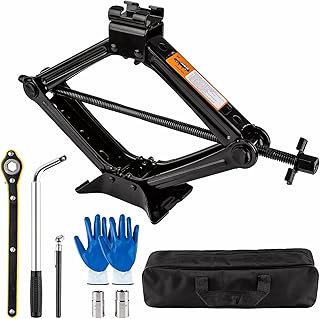
Beaiguna Portable Car Jack Kit, 2 Ton (4409 lbs) Scissor Jack for Car
Check PriceStandard Passenger Cars and Hatchbacks
Most sedans and compact cars, like the Honda Civic, Toyota Corolla, or Ford Focus, use unibody construction. The only safe side lift points are the pinch weld notches behind the front wheels and ahead of the rear wheels. You can lift one corner at a time with a scissor jack or a trolley jack fitted with a pinch weld adapter.
If you need to lift the entire front end, look for a central jack point under the engine. This is usually a reinforced section of the front subframe, often marked with a circular indentation or a flat metal plate. Place a floor jack here, and the whole nose of the car will rise evenly. Just be careful not to hit the oil pan, radiator support, or plastic splash shield.
For the rear, many unibody cars have a central rear jack point near the tow hook or on the rear beam axle. On some models, you can safely lift under the rear differential if the vehicle is rear-wheel drive or all-wheel drive, but only if the manufacturer approves. Always double-check your manual before using a central rear point on a front-wheel-drive car.
SUVs and Crossovers
Modern crossovers like the Toyota RAV4, Honda CR-V, and Ford Escape share many characteristics with unibody cars. They use reinforced pinch weld locations along the rocker panels, but the weight is higher, so you must be even more precise. Some crossovers also have small frame-like subframe points that can be used with a floor jack.
Larger body-on-frame SUVs, such as the Toyota 4Runner or Chevrolet Tahoe, give you more options. You can lift from the frame rails behind the front wheels and in front of the rear wheels, or use the front crossmember and rear differential. On these heavier vehicles, never attempt to place a jack on the suspension control arms or the running boards, they are not designed for the point load of a jack.
Trucks and Pickup Trucks
Pickup trucks sit high and weigh a lot, so using the correct jack point is non-negotiable. The safest locations are the thick steel frame rails that run beneath the cab and bed. On a Ford F-150 or Ram 1500, you will typically find flat sections of the frame just behind the front tire and in front of the rear tire, perfect for a bottle jack or a high-lift floor jack.
The rear differential, with its solid cast-iron housing, is frequently the preferred central lift point for raising the entire rear axle. Place a floor jack saddle squarely under the differential pumpkin, not on the cover or the axle tubes, and the truck will lift smoothly. For a more detailed look at truck-specific locations and heavy-duty lifting, check out our truck-specific jack placement guide.
Rear-Wheel Drive and AWD Vehicles
Rear-wheel-drive cars, along with many all-wheel-drive crossovers, give you the advantage of a robust rear differential that acts as a natural lift point. Placing a floor jack under the differential housing lets you raise both rear wheels at once, which is a huge time-saver during brake jobs or tire rotations.
Just make sure you are on the cast-iron housing, not on the differential cover, as a thin metal cover can bend under the weight. Sports cars like the Mazda MX-5 Miata or BMW 3 Series have exposed differentials that are very easy to target once you know what you are looking for.
Where to Place Jack Stands for Safety
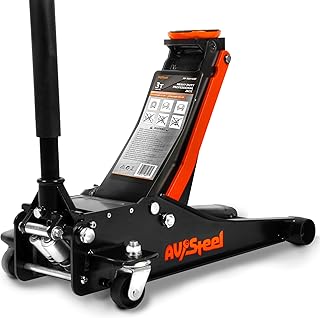
AV Steel Low Profile Floor Jack 3 Ton
Check PriceA jack is a lifting tool, never a support tool. Once your vehicle is in the air, you must immediately transfer the weight to a pair of jack stands rated for the load. The jack stand heads should land on the exact same reinforced points you just used for lifting, whether that is a pinch weld, a frame rail, or a subframe section.
Slide the stand into position, slowly lower the jack until the stand takes the full weight, then leave the jack in light contact as a backup. Never place jack stands under suspension parts like control arms, anti-roll bars, or strut rods. Those components move and can cause the stand to tip, especially if you are removing wheels or applying torque to bolts.
On unibody cars, many home mechanics use hockey puck adapters or slotted rubber pads on the jack stand saddles to protect the pinch welds from being crushed. This small addition greatly increases stability and prevents paint damage that can lead to rust over time.
Common Mistakes to Avoid When Jacking Up a Car
- Lifting on the floor pan. The interior floor skin is thin and will dent immediately under the weight of a jack.
- Placing a jack on the oil pan or transmission pan. These aluminum or stamped steel pans cannot support the vehicle weight and will crack, causing expensive leaks.
- Lifting on suspension arms. Control arms and lateral links are designed to move, so a jack placed here can slip sideways without warning.
- Ignoring the ground surface. Soft asphalt, gravel, or uneven terrain can cause a jack to sink or tilt. Always use a solid level surface and a thick piece of plywood if you must work on dirt or grass.
- Relying on a jack alone. Never go under a vehicle supported only by a hydraulic or scissor jack. Jack stands are mandatory for any work that puts your body beneath the chassis.
Even experienced wrenchers can get complacent, but a five-second check of each lift point before pumping the handle is the best habit you can build.
Choosing the Right Jack for the Job

BIG RED T10152 Torin Steel Scissor Lift Jack Car Kit, 1.5 Ton (3,000 lb) Capacity
Check PriceYour choice of jack affects where you place it. A trolley floor jack with a wide saddle can reach under the car and lift from a central subframe point, making it ideal for garage use. A compact scissor jack, the kind that comes in your trunk, has a narrow head with a slot that fits precisely over the pinch weld notches, so you must line it up with the factory indicators.
Bottle jacks offer tremendous lifting power in a small package but have a very small contact pad. On trucks, they work best when placed on a solid frame rail with a flat area. A high-lift farm jack is useful for off-roading but should only be used with its dedicated lift points, like rock sliders or heavy steel bumpers. Using the right tool for the right spot prevents dents and dangerous shifts.
Step-by-Step Guide: Jacking Up Your Car Safely
When you are ready to get started, follow this checklist to ensure every lift is secure. First, park on level concrete, engage the parking brake, and chock the wheels on the opposite side of the vehicle. Loosen the lug nuts slightly while the tire is still on the ground to avoid spinning the wheel later.
Next, locate the correct lift point using your manual or the visual indicators on the pinch weld or frame. Position the jack saddle or slotted adapter directly under the reinforced area. Slowly pump the handle and watch that the jack stays centered on the target as the vehicle rises. Once you reach the desired height, slide a jack stand onto the matching factory lift point and lower the car onto the stand gently.
Before you remove the wheel or begin any work, give the vehicle a firm shake at the corner. If the car shifts or wobbles, lower it and reposition your equipment. For a complete visual walkthrough that covers floor jacks and scissor jacks in detail, take a look at our step-by-step guide to lifting a car safely. The techniques shown there pair perfectly with the lift point knowledge you have just gained.
Frequently Asked Questions
Where is the safest place to jack up a car with a scissor jack?
The safest place is the reinforced pinch weld notch directly behind the front tire or just in front of the rear tire. The scissor jack’s slotted head is designed to fit over this thick seam. Always align the slot perfectly with the factory notch to prevent the jack from slipping while you raise the vehicle.
Can I use the differential as a jack point on any car?
You can safely lift by the differential only on vehicles that have a solid rear axle or a heavy-duty differential housing. This is common on rear-wheel-drive trucks and many all-wheel-drive SUVs. On front-wheel-drive cars that have an independent rear suspension, the differential is often too small or mounted to a subframe not intended for point loads, so always verify in the owner’s manual first.
Is it okay to place a floor jack under the engine oil pan?
No, you must never place a jack under the oil pan, transmission pan, or any thin stamped metal cover. The weight of the vehicle will crush these components instantly, leading to catastrophic fluid loss and an expensive repair. Always look for the solid subframe crossmember nearby instead.
How do I know if my jack stand is placed correctly?
A correctly placed jack stand will sit firmly on a reinforced frame rail or pinch weld with its saddle making full, even contact. After lowering the vehicle onto the stand, the car should settle without tilting. Grab the roof rail and gently rock the vehicle; it should feel rock solid. If you see the stand leaning or the pinch weld starting to bend, lift the car again and adjust the position until both sides sit flat.
What if I cannot find the jack point notches on an older car?
Rust and undercoating can hide the indicators over time. Use a wire brush to clean the pinch weld area behind the front wheel and in front of the rear wheel. The notches are usually still present as subtle indentations. If they remain invisible, consult the factory service manual or an online forum specific to your model for the exact measurements from the wheel arch.
Conclusion
Knowing where to place car jack transforms a stressful roadside stop into a calm, controlled task. By focusing on factory-marked pinch welds, reinforced frame rails, and approved subframe points, you protect both your vehicle and your personal safety. The habit of checking your manual, positioning the jack precisely, and always backing up the lift with jack stands will serve you for a lifetime of DIY car care.
Next time you reach for your jack, take an extra few seconds to identify the right spot. For more in-depth guidance on truck lifts and the full lifting procedure, explore our dedicated resources. For additional safety best practices from a trusted automotive authority, visit safe jacking guidelines. Your car, and your body, will thank you.