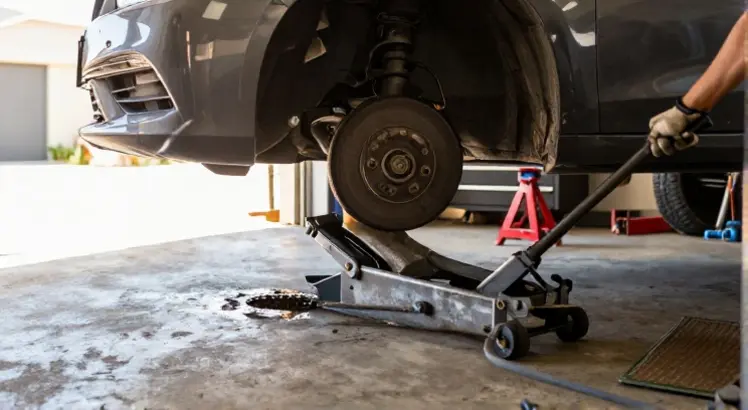
Lifting a car with a jack looks simple, but doing it the wrong way can lead to serious injury or vehicle damage. Whether you need to change a flat tire, inspect the brakes, or do a quick underbody check, knowing how to lift car with jack safely is a fundamental skill every driver should have. This guide walks you through the entire process, from choosing the right jack to securing the vehicle properly. You will learn the difference between jack types, where to place the jack, and how to avoid the most common mistakes even experienced DIYers make.
I have lifted countless cars in my own garage using both scissor jacks and hydraulic floor jacks. Trust me, the first time feels intimidating, but once you understand the mechanics and safety rules, it becomes second nature. This article will give you the confidence to handle a roadside emergency or a weekend repair without second-guessing yourself.
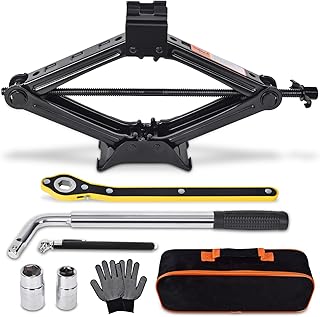
Scissor Car Jack 2 Ton (4409 lbs) Tire Changing Kit with Lug Wrench
Check PriceSafety First: The Non-Negotiable Rules
Before you even touch a jack, you need to commit to a few hard rules. A car weighs several thousand pounds. If it falls, nothing underneath it survives. Never work under a vehicle supported only by a jack. A jack is a lifting tool, not a support tool. Always use jack stands rated for your vehicle’s weight once it is lifted.
Park on a hard, level surface, such as concrete or asphalt. Soft ground, gravel, or a sloped driveway can cause the jack to sink or tip. Engage the parking brake and place wheel chocks behind the wheels that will remain on the ground. If you do not have dedicated wheel chocks, a sturdy piece of wood or a brick can work in an emergency, but real chocks are far safer.
Make sure the transmission is in Park for an automatic or in first gear for a manual. This adds an extra layer of resistance against rolling. Turn off the engine and remove the key. If you have a passenger, ask them to step out of the car and stand well clear. These precautions take only a minute but dramatically reduce the risk of a catastrophic accident.
Types of Car Jacks and When to Use Them

Jack Boss 3 Ton Low Profile Aluminum and Steel Racing Floor Jack
Check PriceNot all jacks are created equal. Each type has a specific purpose, and using the wrong one can make the job harder or more dangerous. The three most common types you will encounter are the scissor jack, the hydraulic floor jack, and the bottle jack.
Scissor Jack
The scissor jack is the compact, mechanical jack that comes with most cars from the factory. It uses a screw mechanism turned by a handle to raise and lower. You typically find it stored in the trunk alongside the spare tire. It is designed for emergency tire changes only, and it does the job on level ground when used correctly.
The biggest advantage is portability. It takes up very little space. The downside is that it requires significant physical effort and is less stable than a floor jack. If you use a scissor jack, make absolutely sure it is seated squarely on the pinch weld or designated jack point. Never get under the car when this jack is holding the weight, not even for a moment. Many roadside accidents happen because a scissor jack slips on an uneven shoulder.
Hydraulic Floor Jack
A hydraulic floor jack is the workhorse of home garages and professional shops. It has a long, low profile, four wheels, and a long pumping handle. Floor jacks lift quickly and with minimal effort. They are far more stable than scissor jacks, but they are heavy and expensive, and they need occasional maintenance like bleeding air from the hydraulic system.
Floor jacks come in various weight capacities, usually from 1.5 tons to 3 tons for typical passenger cars. Choose one rated for at least three-quarters of your vehicle’s gross weight. A good floor jack paired with quality jack stands makes home repairs safe and efficient. After lifting, always lower the vehicle onto jack stands before you crawl underneath.
Bottle Jack
Bottle jacks are vertical hydraulic cylinders that look like a small bottle. They are common on trucks and SUVs because they offer high lifting capacity in a compact size. However, their narrow base makes them tippy, especially on uneven ground. They also require more clearance to fit under a vehicle. Unless your vehicle came with one and you are stuck on the roadside, avoid using a bottle jack for general car lifting. A floor jack with a wide stance is universally safer.
Step-by-Step: How to Lift Car With Jack
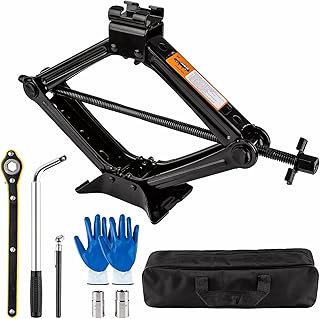
Beaiguna Portable Car Jack Kit, 2 Ton (4409 lbs) Scissor Jack for Car
Check PriceNow that you understand the tools and safety rules, let us go through the process one step at a time. This sequence works for front-wheel-drive cars, rear-wheel-drive cars, and most SUVs. For truck-specific details, you can refer to our guide on where to jack a truck up.
1. Prepare the Vehicle
Park on a flat, solid surface. Turn off the engine, set the parking brake, and chock the wheels that are staying on the ground. If you are lifting the front, chock both rear wheels on the front and back sides. If lifting the rear, chock the front wheels. Remove any loose items from the area around the car. Lay out your jack, jack stands, and a piece of cardboard or a kneeling mat if you have one.
2. Locate the Correct Jack Points
Every vehicle has specific reinforced areas designed to support the weight of the car without bending the frame or damaging critical components. The owner’s manual is your best friend here. Typically, jack points are located behind the front wheels and in front of the rear wheels, along the pinch weld or the frame rail. They often have small notches or a reinforced metal flange.
Never place the jack under the floor pan, oil pan, transmission, radiator support, or suspension components like control arms and tie rods. These parts are not designed to bear the car’s concentrated weight and will bend or crack. If you misplace the jack, you can cause hundreds of dollars in damage in seconds. For a deeper dive into lift point location, check out our article on how to jack up a truck, which covers the same principles.
3. Position the Jack
Slide the jack under the vehicle so the lifting saddle or contact point lines up exactly with the designated jack point. For a floor jack, make sure all four wheels are flat on the ground and the jack is centered under the lift point. Pump the handle a few times until the saddle just makes contact with the frame. Double-check the alignment before you apply real pressure.
If you are using a scissor jack, position the top groove so it cradles the pinch weld. The jack must sit perpendicular to the car, not angled. A tilted scissor jack can buckle and collapse under load. Take the extra ten seconds to get this right.
4. Lift the Car Slowly
Begin lifting with smooth, controlled motions. Watch the jack and the vehicle closely as weight transfers. Listen for any creaking or shifting sounds. If anything looks or sounds off, stop and lower the car immediately. Raise the vehicle only as high as needed for the job. The higher you lift, the more unstable it becomes.
With a floor jack, once you reach the desired height, do not get under the car yet. The jack’s hydraulic pressure can bleed off over time. Immediately place a jack stand under a secure frame point near the jack. Lower the jack slightly until the vehicle weight rests fully on the stand. Give the car a gentle shake with both hands to confirm stability. Now it is safe to work underneath.
5. Lower the Vehicle Carefully
When the work is done, raise the jack just enough to remove the jack stands. Double-check that no tools, body parts, or pets are under the vehicle. Slowly turn the release valve on a floor jack or crank the scissor jack in reverse. Lower the car at a steady pace. Do not drop it quickly. Once the tires touch the ground, remove the jack, wheel chocks, and store your equipment.
Common Mistakes That Lead to Accidents
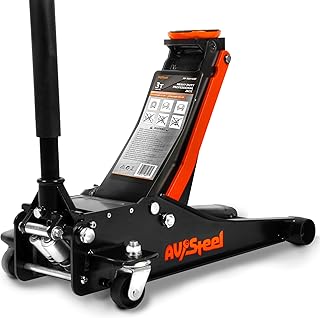
AV Steel Low Profile Floor Jack 3 Ton
Check PriceEven people who have lifted cars dozens of times can become complacent. These are the mistakes I see most often, and they are easily avoidable with a little awareness.
- Using a jack on soft or sloped ground. Asphalt with a hot sun can also let the jack sink. Always carry a small plywood board to place under the jack if the surface is questionable.
- Skipping jack stands because the job is quick. A hydraulic jack can fail without warning. It only takes a few seconds for a seal to burst. The few minutes it takes to position jack stands are never wasted.
- Lifting by the wrong component. I have seen oil pans crushed, brake lines severed, and rocker panels crumpled. When in doubt, consult the manual or look for the reinforced notch on the pinch weld.
- Not chocking the wheels. Even a one-degree slope can cause the vehicle to roll once a wheel leaves the ground. Wheel chocks are cheap insurance against a runaway car.
- Overloading the jack. A 1.5-ton jack is too small for a full-size SUV. Always check the weight rating and leave a safety margin.
Frequently Asked Questions

BIG RED T10152 Torin Steel Scissor Lift Jack Car Kit, 1.5 Ton (3,000 lb) Capacity
Check PriceCan I lift a car with just the factory scissor jack?
Yes, a factory scissor jack is designed to lift your car for emergency tire changes. However, it should only be used on level, hard ground, and you must never get under the vehicle while it is supported solely by a scissor jack. Their narrow footprint makes them inherently less stable than a floor jack.
Do I really need jack stands?
Absolutely. Jack stands are the only way to safely support a lifted vehicle while you work under it. A hydraulic jack can lose pressure or a scissor jack can tip. Jack stands provide a solid mechanical lock. They are not optional, they are essential safety equipment.
Where are the jack points on my car?
The exact locations are in your vehicle’s owner’s manual. Generally, they are on the pinch weld behind the front tires and in front of the rear tires, marked by notches or exposed metal flanges. If you cannot find them, an online search with your car model and jack points will usually yield clear diagrams. Never guess.
How high should I lift the car?
Only as high as required to complete the job safely. For a tire change, just enough to clear the ground. For underbody work, you need enough clearance to slide comfortably underneath, but no higher. The higher the vehicle sits on jack stands, the more leverage a lateral force can exert. Keep it low and stable.
Is it safe to lift a car on a slight incline?
No. Even a minor slope can cause the jack to lean or the vehicle to roll once lifted. Always move the car to a flat area. If that is impossible on the roadside, use extra wheel chocks and place a board under the jack, but understand the risk increases significantly.
Conclusion
Learning how to lift car with a jack safely is one of the most empowering skills you can develop as a car owner. The key is respecting the weight of the vehicle and never cutting corners on preparation. Start by choosing the right jack for the job, always use jack stands, and double-check those lift points every single time. The whole process takes only a few minutes when done correctly, and it saves you from a dangerous accident or a costly repair bill.
If you want to expand your knowledge further, have a look at the safe tire change guide from AAA. That resource reinforces the same safety principles and adds context for roadside scenarios. And remember, the moment you feel unsure, step back and reassess. No repair is worth risking your safety.