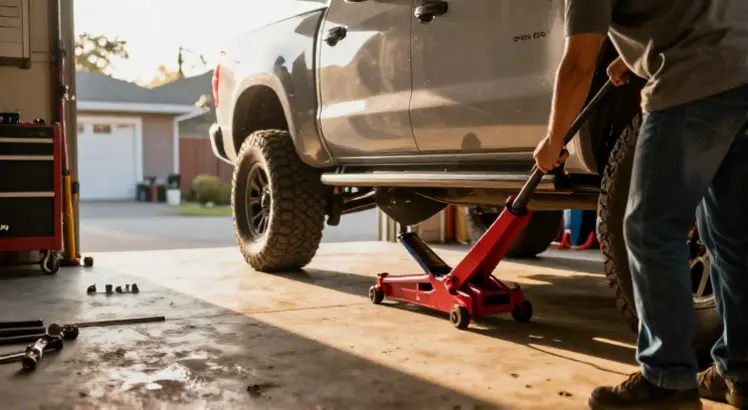
Knowing how to jack up a truck is a core skill every truck owner should have. It goes far beyond just changing a flat tire on the side of the road. Routine maintenance like brake jobs, suspension upgrades, and fluid changes all start with safely lifting the vehicle. If you skip safety steps or use the wrong lift points, you risk severe damage to the truck and serious personal injury. This guide walks you through the entire process, from choosing the right equipment to lowering your truck back onto the ground with confidence.
Understanding Your Truck’s Lift Points

Jack Boss 3 Ton Low Profile Aluminum and Steel Racing Floor Jack
Check PriceEvery truck has specific reinforced areas designed to handle the stress of a jack. Lifting from the wrong spot, like a body panel, a suspension arm, or a differential cover not rated for lifting, can cause catastrophic failure. Before you even touch a jack, you need to locate these factory lift points. Your owner’s manual is the most reliable source, but general patterns hold true across most pickup trucks and SUVs.
Modern body-on-frame trucks usually have a sturdy frame rail running the length of the vehicle. The front lift point is typically a crossmember or a reinforced section of the frame just behind the front wheels. The rear lift point is often a solid section of the frame near the rear axle or a dedicated pad on the axle tube itself. Always look for a flat, thick metal surface that will not bend or slip.
Locating the Front Jack Points
For most trucks, the preferred front central lift point is the front crossmember that sits directly under the engine. This is often a heavy-gauge steel beam bolted or welded between the two frame rails. If your owner’s manual allows lifting by the lower control arms, you can place jack stands under the frame rails after lifting. Never lift from the engine oil pan or the radiator support, as these parts are not designed to bear the entire weight of the truck.
When lifting one corner at a time, use the reinforced section of the frame rail directly behind the front wheel. Many trucks have a notch or a small cutout in the plastic trim that marks this spot. Use a rubber jack pad to prevent metal-to-metal contact that can chip the protective coating on the frame and invite rust.
Finding the Rear Lift Points
The safest rear center lift point is almost always the rear differential housing. This is the large, rounded metal casing in the middle of the rear axle. It is extremely strong and gives a single, stable lifting spot that raises both rear wheels at once. However, this only works on trucks with a solid rear axle and only if you position the jack saddle squarely on the flat bottom of the differential, not on the cover itself.
For side lifting, place the jack under the rear axle tube as close to the wheel as possible, or use the designated frame point just ahead of the rear wheel. Avoid lifting by the leaf spring shackles or the shock mounts, as these can shift under load. Once the truck is in the air, jack stands must go under the frame rails or axle tube, never under the differential if it serves as the rear support point.
Choosing the Right Jack for Your Truck

Maxority 3-Ton Low Profile Hydraulic Heavy-Duty Steel Floor Jack
Check PriceTrucks are heavy, often weighing between 4,500 and 7,000 pounds or more. The small scissor jack that came with your truck is only meant for emergency tire changes on level ground and should not be your primary garage tool. Investing in a proper jack that matches your truck’s weight rating makes the job safer and much faster. Always check the jack’s capacity and ensure it has at least a 25 percent safety margin over your truck’s front or rear axle weight.
For regular home maintenance, a quality floor jack is the gold standard. It offers a low profile to slide under lowered trucks, a long handle for easy pumping, and a wide stance for stability. Look for a model with a minimum 3-ton capacity, and if you own a heavy-duty diesel truck, a 4-ton or larger unit is a smarter choice.
Bottle jacks are compact and powerful, often rated for 6 tons or more. They work well for lifting high-clearance trucks from the frame or axle, but they can be top-heavy and require careful placement. If you prefer a compact option that still offers mechanical simplicity, a sturdy scissor jack can work, especially one designed for heavier vehicles. We have tested and compared several options, and finding a sturdy scissor jack designed for heavier vehicles can be a viable backup solution. For those wanting a completely effortless lift, a quality electric jack removes all the pumping work and is especially handy on uneven roadside surfaces.
Step-by-Step Guide to Jack Up a Truck Safely
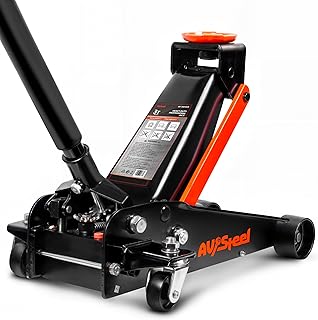
AV Steel 3 Ton Floor Jack
Check PriceNow that you know the lift points and have the right jack, it is time to get the truck in the air. Rushing this process is the fastest way to a bent frame or a trip to the emergency room. Follow each step in order, and never skip the jack stand placement. A jack alone is only a lifting device, it is never a support device.
1. Prepare the Vehicle and Work Area
Park the truck on a hard, level surface like concrete or asphalt. Never jack up a truck on dirt, gravel, or an incline, as the jack can sink or tip over. Engage the parking brake firmly and, if you have a manual transmission, leave it in first gear or reverse. Place wheel chocks on the opposite end you are lifting. If you are lifting the front, chock both rear wheels on the front and back sides.
Gather your tools before starting. You will need your floor jack or bottle jack, a pair of heavy-duty jack stands rated for at least the axle weight, a rubber jack pad or wood block, and a lug wrench if you are removing wheels. Clear the area of children, pets, and distractions. A small magnetic tray for lug nuts helps keep things organized.
2. Position the Jack Correctly
Slide the jack under the vehicle and align the saddle directly with the lift point you identified. The saddle should sit flat and centered on the frame, crossmember, or differential. If the lift point has a seam or a slight curve, use a grooved rubber pad to prevent the metal from deforming. Double-check that the jack is not touching any brake lines, electrical wiring, or plastic shields.
On a floor jack, slowly pump the handle until the saddle just makes contact. Pause and inspect the alignment one more time. The truck should not shift when contact is made. If it does, lower the jack, reposition, and try again. This patient approach prevents a lot of damage and frustration later.
3. Raise the Truck Slowly and Steadily
Lift the truck in smooth, controlled pumps. Watch the lift point as it rises. The jack’s wheels should roll slightly inward toward the vehicle to maintain a vertical lifting arc. If you are lifting the front from the central crossmember, stop once the wheels are about two inches off the ground, then check that the truck is stable. Continue lifting until you have enough clearance to slide the jack stands under their designated support points.
Never lift the truck higher than necessary. Raising it far above the minimum clearance adds unnecessary risk. If you hear any creaking, popping, or see the jack tilting, stop immediately and lower the vehicle back down to reassess the setup. A shifting jack is a clear warning sign that the lift point, surface, or saddle placement is wrong.
4. Insert Jack Stands and Secure the Load
Once the truck is at the desired height, slide a jack stand under each frame rail, axle tube, or dedicated stand point. Adjust the stand’s ratchet post until it is just below the frame, then raise it into the locked position. Lower the jack slowly until the truck’s weight rests entirely on the stands. Give the truck a firm shake from multiple angles to confirm it is completely stable before you place any part of your body underneath.
As an extra layer of safety, slide the wheels you removed under the frame rails near the jack stands. If a stand were to fail, the wheel assembly could catch the truck and prevent it from crushing you. This simple habit, used by professional mechanics, has saved lives. Once everything is rock solid, you can work with peace of mind.
Crucial Safety Tips When Lifting a Truck
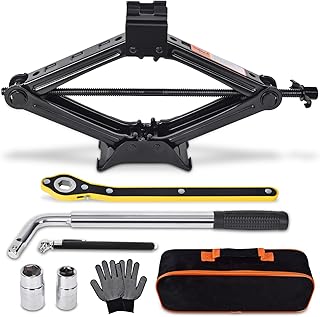
Scissor Car Jack 2 Ton (4409 lbs) Tire Changing Kit with Lug Wrench
Check Price- Always use jack stands rated for the weight you are supporting. A 3-ton stand pair can hold 6,000 pounds, but that assumes perfectly distributed load. Check the individual stand rating.
- Never leave a truck supported only by a hydraulic jack. Seals can fail without warning, causing a sudden and catastrophic drop.
- Use wheel chocks on the grounded wheels, even on a flat surface. Unexpected rolling is a common cause of jacks tipping over.
- Place a piece of plywood under the jack and stands if you are working on asphalt. Hot weather can soften asphalt enough for the metal to sink in.
- Wear safety glasses when working underneath. Rust, dirt, and fluids can fall into your eyes.
Adopting a methodical safety routine turns second nature with practice. For even more detailed guidelines on vehicle lifting, you can review the comprehensive safe jacking techniques outlined. They reinforce the same principles with clear illustrations and additional tips that apply directly to trucks.
Common Mistakes to Avoid

IMAYCC Car Jack Kit 2.5 Ton, Universal Scissor Car Jack
Check Price- Lifting from the differential cover instead of the housing. The cover is thin stamped steel or aluminum and can crack under the truck’s weight.
- Using cinder blocks or bricks as jack stands. These can shatter without warning and offer zero load rating.
- Forgetting to loosen lug nuts before lifting the wheels off the ground. The wheel will spin freely, making it almost impossible to break the nuts loose.
- Placing the jack or stands on uneven surfaces or on suspension components that can pivot.
- Working under a truck with the engine running or with only a jack holding it up, even for a quick look.
Frequently Asked Questions
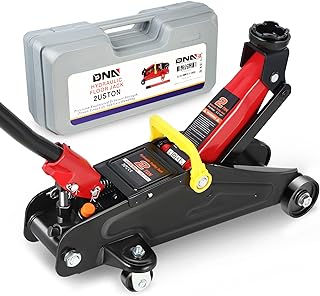
DNA Motoring Low Profile Hydraulic Trolley Floor Jack
Check PriceCan I jack up my truck from the differential?
Yes, you can lift the rear of the truck from the differential housing, but only from the thick, central pumpkin section, not the thin cover. Place the jack saddle squarely on the flat bottom of the housing. This is a strong lift point for solid axle trucks, but check your manual because some independent rear suspensions do not allow this method.
What size floor jack do I need for a full-size truck?
A 3-ton floor jack is the minimum for most half-ton pickups, but a 4-ton model offers a much larger safety margin and more lifting height. Heavy-duty 3/4-ton and 1-ton diesel trucks call for at least a 5-ton or 6-ton jack. Always match the jack capacity to your truck’s heaviest axle rating, not the total vehicle weight.
Where should I place jack stands on a truck?
Jack stands should go under the frame rails or solid axle tubes right near the wheels you are working on. If you lifted from the front crossmember, place the stands under the frame behind the front wheels. For a rear diff lift, place the stands under the axle tubes or frame rails. Never put stands under body panels, floor pans, or suspension arms.
Is it safe to use a Hi-Lift jack on a truck?
A Hi-Lift jack is an extreme off-road tool, not a shop lift. It is inherently unstable and can kick out violently if the truck shifts. Only use it with solid attachment points like rock sliders or heavy-duty bumpers, and never crawl under a vehicle held only by a Hi-Lift. For regular maintenance, stick to a floor jack and proper jack stands.
How often should I inspect my jack and stands?
Inspect your equipment before every use. Check for hydraulic fluid leaks, bent frames, rusted welds, and cracked wheels on the floor jack. Jack stands must have fully functional ratchet pawls and no signs of spreading or deformation. If anything looks questionable, replace the tool. The cost of new equipment is nothing compared to a life-altering accident.
Conclusion
Learning how to jack up a truck safely rewards you with independence and the ability to handle repairs on your own schedule. The difference between a successful lift and a disaster comes down to preparation, the right equipment, and never compromising on support. Find your factory lift points, choose a quality jack that exceeds your truck’s weight, and always, without exception, set jack stands before you go underneath.
Start small if you are new to this. Practice a simple tire rotation on a level driveway in good weather. Pay attention to every detail from chocking the wheels to doing a final stability shake. Each safe lift builds muscle memory that will keep you and your truck out of trouble for years to come. Keep this guide handy, and you will never have to second-guess the right way to get your truck off the ground.