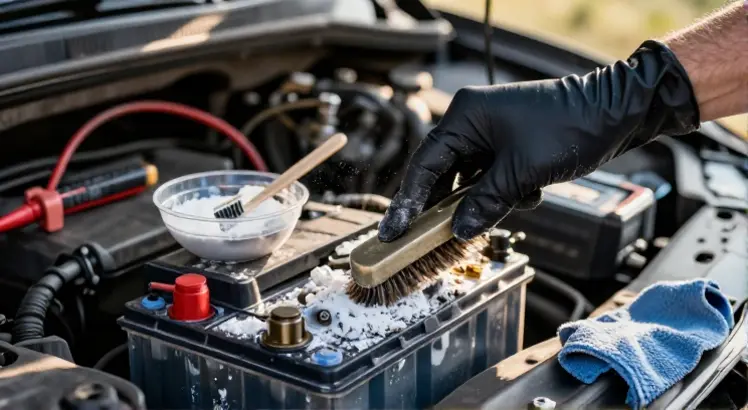
Taking care of your car battery is one of the simplest ways to avoid roadside emergencies. Battery corrosion is a common problem that happens to almost every vehicle owner at some point. You might notice a strange white, blue, or green powdery substance building up on the terminals. This buildup can stop your car from starting, even if the battery itself is still good.
Many drivers ignore this issue until they turn the key and hear nothing but a click. The good news is that cleaning battery corrosion is a fast and easy DIY task. You do not need to be a professional mechanic to get the job done right. With a few household items and proper safety gear, you can restore a clean connection in about ten minutes.
This guide will show you exactly how to clean car battery corrosion safely. We will walk you through every step, explain why corrosion forms in the first place, and how to prevent it from coming back. Let’s help you keep your battery terminals spotless and your engine starting strong.
Why Does Car Battery Corrosion Happen?
Understanding the root cause helps you stop corrosion before it gets worse. That white or bluish fuzz is not random dirt. It is actually the result of a chemical reaction happening right on the metal terminals.
When your battery charges and discharges, it releases hydrogen gas through the vents. This gas mixes with moisture and other elements under the hood. The specific color of the corrosion often tells you what went wrong. White or gray powder usually means too much acid has leaked and reacted with the lead in the terminal. Blue or greenish buildup on the copper cables generally points to oxidized copper from the wire itself.
Overfilling the battery cells with water can push excess electrolyte out of the vents. Extreme heat also accelerates fluid evaporation, while a loose connection creates extra resistance and heat around the post. All of these conditions invite that crusty buildup to form faster.
Is Battery Corrosion Dangerous?
Yes, you should always treat battery corrosion with caution. The white, powdery substance is not just harmless dust. It can cause skin irritation and damage your vehicle’s metal components over time. More importantly, the sulfuric acid inside a lead-acid car battery is extremely caustic.
If you touch corrosion and then touch your face or eyes, you will feel a burning sensation. It also eats through paint and metal, which is why the battery tray area often rusts out first. When a thick layer of corrosion covers the terminal, it acts as an insulator. This interrupts the flow of electrical current from the battery to the starter, leaving you stranded.
You should also never smoke or use open flames near a car battery. Even a sealed battery can vent explosive hydrogen gas. Always work in a well-ventilated area, preferably outdoors or with the garage door open.
What You Need to Clean Battery Corrosion
You likely already own most of the necessary safety gear and tools. Having everything ready before you pop the hood makes the job quick and clean. Here is a checklist of what to gather.
- Safety glasses: Protect your eyes from flying debris and acid crystals.
- Rubber gloves: Disposable nitrile or heavy dish gloves keep chemicals off your skin.
- Wrench set: Usually a 10mm or adjustable wrench to loosen the terminal clamps.
- Baking soda: A natural alkaline substance that instantly neutralizes battery acid.
- Water: Warm water mixes better with baking soda.
- Old toothbrush or wire brush: For scrubbing the crusty buildup off metal surfaces.
- Petroleum jelly: A protectant to put on the clean terminals afterward.
- Rag or paper towels: For drying and wiping away grime.
Some people prefer commercial battery cleaning sprays. These sprays often contain acid detecting dyes that fizz up and change color when they hit corrosion. While convenient, the baking soda method works just as well and costs almost nothing.
How to Clean Car Battery Corrosion Step by Step
The process is straightforward, but following the correct order prevents electrical shorts. You must disconnect the battery correctly to avoid damaging the car’s computer or getting a shock. Follow these steps carefully for a safe repair.
1. Turn Off the Engine and Locate the Battery
Park on a flat surface, turn the ignition off, and remove the keys. Pop the hood and secure it with the prop rod. Identify the battery location. Most batteries are in the front engine bay, but some vehicles hide batteries in the trunk or under the rear seat. If unsure, check the owner’s manual.
2. Inspect the Cables and Terminals
Look for the negative terminal, which has a minus sign (-) and usually a black cable. The positive terminal will have a plus sign (+) and a red cable. Check how deep the corrosion goes. If the cables are swollen, cracked, or the copper wire is green deep inside the insulation, you may need to replace the terminal ends. Cleaning will only fix surface damage.
3. Disconnect the Negative Terminal First
This is the golden rule of auto repair safety. Use your wrench to loosen the nut on the negative terminal. Wiggle the connector off the post gently. If it is stuck, do not hammer on it. Use a terminal puller tool or twist it slightly until it breaks free. Tuck the cable down to the side so it cannot accidentally spring back and touch the post. Removing the negative first breaks the electrical circuit and prevents sparks when you touch the positive side with a metal wrench.
4. Disconnect the Positive Terminal
Now you can safely loosen the positive terminal clamp. Be careful not to touch the wrench to any other metal part of the car engine while working on the positive post. If the wrench bridges the positive post and the car frame, you will get a big spark and potentially melt the wrench. Lift the cable away and set it cleanly aside.
5. Apply the Baking Soda Solution
Mix a tablespoon of baking soda into a cup of warm water. Stir it until it dissolves. You can pour this mixture directly over the corroded terminals and any crusty spots on the battery tray. You will immediately see a bubbling, fizzing reaction. This is proof that the alkaline baking soda is neutralizing the acid. If you prefer a paste for heavy buildup, mix the baking soda with just a few drops of water and apply it thickly to the clamps.
Let the solution sit for a minute or two. This gives it time to break down the hardened corrosion. For extremely thick, rock-like buildup, you might need to pour a little more solution over the clamps.
6. Scrub Away the Corrosion
Dip the old toothbrush or a wire brush into your baking soda mixture. Scrub the battery posts, the inside of the cable clamps, and the top of the battery case hard. Focus on getting bare, shiny metal on the inside of the clamps. This is where the connection actually happens. A battery terminal cleaning tool with a wire ring makes cleaning the posts very easy.
Do not forget the battery hold-down bracket at the bottom. Corrosion often drips down and eats this metal piece. If the bracket is too far gone, rusted, or snapped, replace it immediately. A loose battery bounces while driving, which damages the internal plates and shortens its life.
7. Rinse With Clean Water
Use a small spray bottle of plain water to rinse off the baking soda residue. Try not to dump large amounts of water directly onto the engine electronics. A targeted spray cleans the terminals without soaking the sensors. Wipe the terminals and the battery top dry with a clean rag immediately. Leaving moisture on the battery case can attract dirt and create a path for slow voltage drain.
8. Reconnect the Positive Terminal First
The connection order during assembly is the opposite of disassembly. Place the positive cable back onto the positive post first. Push it down firmly. It should sit flush and not wiggle. Tighten the clamp nut until it is snug. You want the clamp to grip the post tightly without stripping the soft lead threads.
9. Reconnect the Negative Terminal
Place the negative cable on the negative post and tighten it securely. A loose terminal clamp will cause arcing, which leads to rapid corrosion again. The connection should be tight enough that you cannot twist the clamp off by hand.
10. Protect the Terminals
Apply a thin layer of petroleum jelly, dielectric grease, or even marine grease to the outside of the terminals. You want to coat the metal but not put grease between the post and the clamp, as that can hinder electricity. These protective coatings seal the metal away from oxygen and acid vapor. Red felt anti-corrosion washers soaked in oil also work well if placed over the posts before the clamps.
Cleaning Heavy Corrosion on a Car Battery
Sometimes the corrosion is so thick you cannot even see the top of the battery. If the baking soda mixture is struggling to cut through, you can use a specialized battery cleaner spray. These acidic cleaners foam rapidly to lift decades of crust. You should also remove the battery entirely if the tray beneath is severely rusted.
Clean the tray with baking soda paste and a wire brush, then rinse it off. Let everything dry completely before putting the battery back. If the tray has rusted through, you will need to install a new one. You can find more details on how these parts work in our guide on how a battery tray works.
Common Mistakes When Cleaning Battery Corrosion
Even experienced DIYers rush through battery maintenance and create new issues. Avoid these common errors to ensure your car starts perfectly after the cleanup. One big mistake is using soda colas for cleaning. While cola contains phosphoric acid that can eat rust, the sticky sugar residue attracts dirt and can wick moisture into the connections.
- Disconnecting the positive first: A wrench touching the positive terminal while the negative is grounded sends a massive shock through the tool.
- Spraying cold water on a hot battery: Thermal shock can crack the plastic casing. Let the engine cool down for 15 minutes before cleaning.
- Overtightening the nuts: Battery posts are made of soft lead. If you crank the nut too hard, you will strip the post or crack the case.
- Skipping memory saver tools: Modern cars lose radio presets, power seat memory, and even throttle position adaptation when the battery is disconnected. Using a memory saver tool prevents this hassle.
How to Prevent Car Battery Corrosion from Coming Back
Cleaning the corrosion is only half the battle. You need to stop it from returning next month. The best defense is a tight connection and a proper coating. Check the battery every oil change. Look for signs of white fuzz around the terminals and remove it immediately before it gets thick.
Applying corrosion inhibitor spray or terminal protector felt pads creates a long-lasting barrier. You should also make sure your charging system is working correctly. An overcharging alternator pushes too much voltage into the battery, causing excessive gassing and acid leaks. If you see corrosion returning within weeks of a deep clean, test the alternator output at a parts store. It should read between 13.7 and 14.7 volts while running.
Sometimes the battery itself is physically failing. A cracked case near the terminal post will leak tiny amounts of acid vapor constantly. If the battery is old, bulging, or smells like rotten eggs, you probably need a replacement. For more information on battery health, you can read our discussion on whether you should replace your car battery early.
Does Battery Corrosion Mean a Drain Problem?
A small amount of venting gas is normal on older lead-acid batteries. However, rapid and heavy corrosion on only one terminal can point to a specific issue. Corrosion on the positive terminal usually means the battery is being overcharged. The system is pushing too much power, which causes excessive outgassing of hydrogen and acid mist that collects on the red cap.
Corrosion on the negative terminal often points to undercharging. The battery never reaches a full state, causing sulfate crystals to form and creep up the post. An external parasitic drain forcing the battery lower overnight can also cause this issue. According to expert analysis from AAA’s automotive resource center, identifying which terminal is corroded first is a key diagnostic clue.
If you clean the terminals and the car still struggles to start, you need to check the battery health itself. A carbon pile tester provides the best reading, but even a simple digital voltmeter will tell you the state of charge. A fully charged lead-acid battery should sit at 12.6 volts or higher when the car is off.
Frequently Asked Questions About Car Battery Corrosion
Can I use WD-40 to clean battery corrosion?
WD-40 works better as a protectant than a cleaner. It does not neutralize acid the way baking soda does. You can spray WD-40 onto a clean terminal to displace moisture, but you should remove the crusty acid buildup first with an alkaline solution.
Is it safe to touch battery corrosion with bare hands?
It is best to avoid this. The powdery substance can contain dried sulfuric acid, which burns the skin slightly. You might not feel it immediately, but it can leave a rash or itch. If you touch it accidentally, wash your hands with soap and water right away.
Does a corroded battery need to be replaced?
Not always. If the battery casing is intact, the voltage holds steady, and the posts are solid, cleaning the corrosion fixes the problem. However, if the battery case has cracks around the base of the post, acid is leaking from inside and the battery cannot be saved.
Why does my battery keep getting corrosion so quickly?
Frequent corrosion suggests an electrical issue. Check the tightness of the clamps first. A loose connection vibrates and sparks. Next, test the alternator for overcharging. Finally, look at the battery age, as old batteries gas more and vent fluid around the caps.
Can battery corrosion drain the battery overnight?
Yes, dirty terminals with thick corrosion can create a subtle path for electricity to leak. The moisture mixed with the corrosion conducts a tiny current between the posts. This parasitic draw is usually small, but on a weak battery, it can be enough to kill it overnight.
Conclusion
Cleaning car battery corrosion keeps your vehicle reliable and safe. This maintenance task takes only a few minutes and costs almost nothing compared to an expensive tow truck call. You have learned that corrosion is a product of acid vapor reacting with metal. You know how to use baking soda to neutralize it safely, and you understand the critical order of disconnecting the negative cable first.
Do not wait until you are stuck in a parking lot with a dead engine. Pop the hood this weekend and inspect your terminals. If you see the familiar white or green powder, grab a wrench, some baking soda, and an old toothbrush. Scrub the terminals back to shiny metal, apply a protective coating, and tighten those clamps firmly. Your car will thank you with a strong, instant start every time.