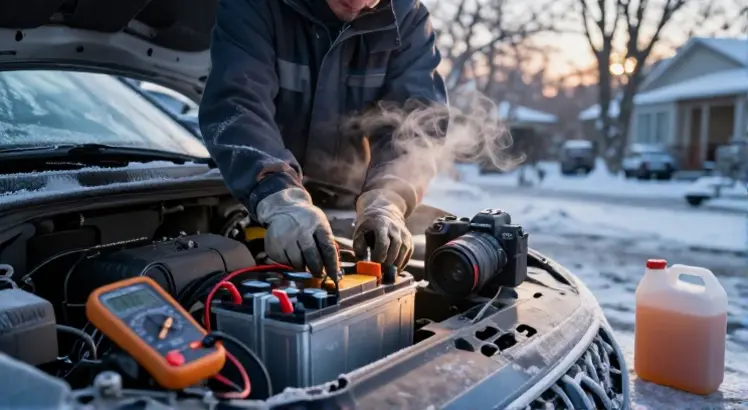
Winter can be tough on your vehicle, and your car battery is often the first part to fail when temperatures drop. A dead battery on a freezing morning is frustrating, but it is also preventable. You just need the right winter car battery maintenance routine. Let’s walk through exactly what you should do to keep your battery strong all season long.
Why Cold Weather Kills Car Batteries
Your car battery relies on a chemical reaction to produce electricity. When the temperature falls, that reaction slows down significantly. At 32°F (0°C), a battery loses about 35% of its power. At 0°F (-18°C), it can lose up to 60% of its cranking power. At the same time, cold engine oil becomes thicker, requiring more effort from the starter motor to turn the engine over. That combination puts a heavy strain on the battery. If the battery is already weak or old, winter will expose it fast.
Corrosion on terminals, loose connections, and short trips that don’t fully recharge the battery can make the problem worse. A solid winter car battery maintenance plan helps you avoid being stranded. It centers on testing, cleaning, charging, and taking a few smart precautions.
How to Test Your Battery Before Winter Hits
Testing the battery is the first step. You can do a quick voltage check with a multimeter, or get a free battery load test at most auto parts stores. A healthy, fully charged battery should read around 12.6 volts when the engine is off. If it reads 12.2 volts, it is only 50% charged, and that is a warning sign. Anything below 12 volts means the battery is significantly discharged and may fail when the temperature drops. A load test simulates the draw of starting the engine and tells you if the battery can still deliver enough power.
If the battery is more than three years old, testing becomes even more important. Many batteries in cold climates fail between the third and fifth winter. Proactive testing is a key part of winter car battery maintenance. If you find the battery is weak, you can decide if you should replace your battery before it dies.
Clean Terminals and Check Connections
Corrosion on battery terminals is common, and it creates resistance that prevents the battery from delivering full power. Even a thin white or bluish buildup can cause trouble. Cleaning the terminals is simple. You need a wire brush, baking soda, water, and a wrench. Disconnect the negative cable first, then the positive. Scrub the terminals and the inside of the cable clamps until they are shiny. Rinse with a baking soda and water mixture, dry everything, and reconnect positive first, then negative.
After cleaning, make sure the connections are tight. Loose battery cables can mimic a dead battery. A quick wiggle test tells you if the clamps are secure. You should also check the battery hold-down bracket. A battery that bounces around can suffer internal damage and short circuit.
Keep Your Battery Charged in Cold Months
Short trips are a battery killer in winter. The starter draws a huge amount of current, and the alternator needs time to replenish it. If you only drive five or ten minutes, the battery may never fully recharge. Over time, this leads to a gradual discharge. If your routine involves many short trips, consider using a battery maintainer or trickle charger. You can plug it in overnight, and it will keep the battery at an optimal charge without overcharging.
If you do not have a garage, a portable jump starter is a smart investment. Even with good winter car battery maintenance, emergencies happen. A compact lithium-ion jump pack can save you without needing another vehicle. If you are looking for a reliable charger, you can check this guide to the best car battery charger for cold weather.
Insulate the Battery Against Extreme Cold
A battery blanket or insulation wrap is an affordable way to help the battery retain heat. These wraps plug into a standard outlet and keep the battery warm. They are especially useful if you park outside and temperatures stay below zero for days. A warm battery cranks faster and charges more efficiently. Even if you do not use an electric blanket, a simple thermal wrap can slow heat loss overnight.
Minimize Electrical Load on Startup
Before you turn the key, turn off all accessories. Headlights, heater fan, defroster, radio, and seat heaters draw power from the battery. Giving the starter all available current improves your chances on a very cold morning. Once the engine is running, you can switch everything back on. This small habit reduces strain and is an easy winter car battery maintenance tip that costs nothing.
Park Smart When Temperatures Plunge
If you have a garage, use it. Even an unheated garage can keep the battery 10 to 15 degrees warmer than the outside air. That can make a big difference. If you must park outside, try to park facing away from the wind. A windbreak, like a fence or a building, can reduce the wind chill effect on the engine bay. Simple strategies like parking on a better side of the house can help your battery survive the night.
Signs Your Battery Is Failing in Winter
Recognizing early warning signs can save you from a tow truck. The most common symptom is a slow engine crank. When you turn the key, the engine turns over sluggishly. That is a clear sign the battery is struggling. Another sign is dim headlights or dashboard lights that flicker while starting. You might also notice a clicking sound when you turn the key, which means there is not enough power to engage the starter. If you experience any of these, test the battery immediately.
Winter Car Battery Maintenance Checklist
- Test battery voltage and cranking amps before winter.
- Clean corrosion from terminals and tighten connections.
- Inspect battery case for cracks or bulges.
- Drive longer or use a battery maintainer to avoid undercharging.
- Turn off accessories before starting the engine.
- Park in a garage or use a windbreak.
- Consider a battery blanket for extreme cold.
- Keep a portable jump starter in the trunk.
Frequently Asked Questions
How often should I test my battery in winter?
Test it at the beginning of the season and again mid-winter if the battery is over three years old. A monthly voltage check with a multimeter takes two minutes and gives you peace of mind.
Can a completely dead battery be recharged in cold weather?
It is possible, but a frozen battery must never be charged. If the battery case is bulging or you suspect it is frozen, let it thaw indoors first. A deeply discharged battery often loses capacity permanently, so replacement may be the better option.
Is a battery blanket safe to use?
Yes, when used correctly. Battery blankets are designed to provide gentle heat. Follow the manufacturer’s instructions, and never use a household heating pad. A quality battery blanket is thermostatically controlled and safe for overnight use.
Does idling the car charge the battery in winter?
Idling does charge the battery, but very slowly. Modern alternators are not very efficient at idle speed. It is better to take a 20-minute drive. That will warm the engine and restore the battery charge more effectively than idling in the driveway.
Conclusion
Winter car battery maintenance is not complicated, but it requires a little attention before the mercury drops. Testing the battery, cleaning terminals, avoiding short trips, and using a maintainer will dramatically reduce your risk of a no-start situation. The few minutes you spend today can save you from a freezing morning waiting for a tow. If your battery is old or struggling, replace it now. A reliable battery is one of the best investments you can make for winter driving safety. Stay proactive, and you will get through the cold months without a problem.