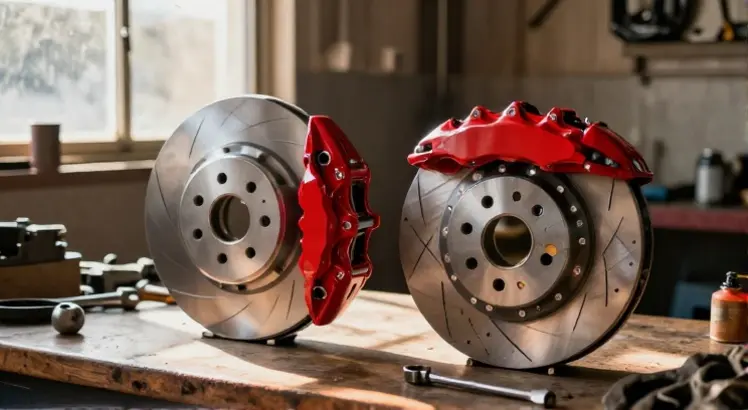
When it is time to replace your car’s brakes, the classic debate of OEM brakes vs aftermarket always comes up. Many drivers wonder if they must pay dealer prices for factory parts or if there is a better value in the aftermarket world. Getting this choice right matters because your brakes directly affect safety, comfort, and long-term ownership costs.
The truth is, neither option is universally superior for every situation. Your driving style, budget, and even the type of vehicle you own play a huge role. In this guide, we will walk you through exactly what sets OEM and aftermarket brake components apart so you can make a confident, informed decision.
What Are OEM Brakes?

Bendix SBC1161 Premium Ceramic Rear Brake Pads for Ford Fusion, Lincoln MKZ, Mazda 6, Mercury Milan
Check PriceOEM stands for Original Equipment Manufacturer. OEM brake pads, rotors, and calipers are the exact parts your car was built with on the assembly line. They are manufactured either by the automaker itself or by a supplier who produces them under strict specifications set by the vehicle brand.
When you buy OEM brakes from a dealership or an authorized parts counter, you are essentially buying a guaranteed replica of the factory component. There is no guesswork on fit, and the friction material is designed to match the original brake system’s calibration. These parts are often priced higher, but they come with the advantage of absolute consistency.
Many owners appreciate that OEM brakes maintain the exact pedal feel and stopping characteristics the car had when it was new. If you have a lease or a vehicle still under warranty, sticking with OEM components is often the safest path to avoid any potential disputes.
What Are Aftermarket Brakes?

Bendix SBC1169A Premium Ceramic Front Brake Pads for Buick Enclave, Chevy Traverse, GMC Acadia, Saturn Outlook
Check PriceAftermarket brakes include any brake pads, rotors, and calipers not sourced directly from the vehicle’s manufacturer. This is a massive category that ranges from budget economy pads to high-performance racing compounds. Companies like Bosch, Akebono, PowerStop, and Brembo all fall under the aftermarket umbrella.
Unlike OEM parts that target a single, balanced formulation, aftermarket options let you choose a friction material tailored to a specific need. You can find ceramic pads for low dust, semi-metallic pads for aggressive bite, and heavy-duty rotors for towing. This flexibility is the main appeal of going aftermarket.
However, the sheer number of choices can also be overwhelming. Without proper research, it is easy to buy a cheap set that squeals loudly or wears out prematurely. A curated list of high-performing options can help, much like our breakdown of the best aftermarket brake pads for different driving styles.
Key Differences Between OEM and Aftermarket Brakes

Bosch BE2076H Blue Ceramic Front Brake Pad Set for Lexus ES, Toyota Camry, RAV4, Avalon and more
Check PriceUnderstanding the major differences will help you see why this decision is not just about price. The distinctions show up in material quality, design philosophy, and the overall driving experience. Here is a practical breakdown of where these two paths diverge.
Material Composition and Build
OEM pads are typically a semi-metallic or low-metallic ceramic formulation engineered for a quiet, all-around character with moderate dust. The rotor metallurgy is strictly controlled to match thermal expansion rates and pad transfer layers. Aftermarket parts, on the other hand, give you direct access to pure ceramic, hybrid compounds, or high-carbon rotors that resist warping better under heat.
This does not mean aftermarket is always better material, but it does mean you can upgrade beyond the factory spec. If you live in a mountainous area and experience brake fade, a premium aftermarket pad and drilled or slotted rotor can deliver a tangible improvement over OEM parts designed for flat highway commutes.
Performance and Stopping Power
OEM braking performance is designed to be predictable, safe, and comfortable for the average driver. The stopping distances are optimized for a wide range of temperatures and weather conditions without any surprises. For daily commuting, this is usually more than adequate.
Aftermarket performance pads can shorten stopping distances when they are at their ideal operating temperature, but some aggressive compounds need heat to grip well. Independent tests, such as Car and Driver’s brake pad testing, often reveal that high-quality ceramic or semi-metallic aftermarket pads match or beat OEM cold bite while offering better fade resistance.
Noise, Dust, and Comfort
One area where OEM parts shine is noise suppression. Automakers spend millions on tuning the brake harmonics to eliminate squeal and groan. Factory shims, chamfers, and specific rubberized coatings work together to deliver a silent experience.
Aftermarket pads vary widely in this department. Cheap economy pads are notorious for squealing, while top-tier ceramic aftermarket pads can be even quieter and cleaner than OEM. If keeping your wheels free of black dust is a priority, a premium aftermarket ceramic pad will almost always outperform a factory semi-metallic pad in cleanliness.
Durability and Longevity
Longevity is a mixed bag. OEM brakes are designed to last a certain mileage under typical driving conditions, often in the range of 30,000 to 70,000 miles depending on the vehicle. They deliver consistent wear without eating into the rotor prematurely.
Some heavy-duty aftermarket pads can outlast OEM pads by a significant margin, especially on trucks and SUVs that tow. However, an overly aggressive pad compound can accelerate rotor wear, meaning you might save money on pads but spend more on rotors during the next service.
Cost Comparison: OEM vs Aftermarket Brakes

Bendix SBC34 Premium Ceramic Front Brake Pads for Ford Mustang, Fairlane, Falcon, Mercury Cougar, Comet
Check PricePrice is where the aftermarket world truly opens up. A full front brake job using OEM pads and rotors from a dealer can cost anywhere from $300 to $700 in parts alone, depending on the vehicle make. Aftermarket kits from reputable brands often range from $150 to $400 for a comparable axle set.
The savings can be substantial, especially if you handle the labor yourself. But it is crucial to avoid the lowest-tier options. A $30 set of pads might need replacement three times as often while producing noise and dust that degrade the driving experience. The sweet spot is usually a mid-range to premium aftermarket product that undercuts the dealer price without sacrificing quality.
Warranty and Fitment Considerations

Detroit Axle Drilled and Slotted Rotors with Ceramic Pads for 2020-2025 Subaru Legacy, Outback, 2022-2024 WRX
Check PriceOEM brakes purchased from a dealer generally include a limited warranty against defects, often for 12 months or 12,000 miles. The exact fit is guaranteed because the part number matches your vehicle’s VIN without any guesswork.
Many premium aftermarket manufacturers now offer lifetime warranties on brake pads, covering wear and tear, not just defects. This can add enormous long-term value. Fitment on well-known aftermarket brands is typically spot on, but you might occasionally run into issues with budget brands where the pad abutments need slight filing to slide smoothly into the bracket.
If you drive a modern car with electronic wear sensors, it is important to verify that your chosen aftermarket pad includes the correct sensor slot or comes with a new sensor. OEM parts always include these details, which is why some owners prefer staying factory for complex luxury vehicles.
When to Choose OEM Brakes
- You want the exact pedal feel and noise characteristics your car had when new
- Your vehicle is still under a comprehensive or extended warranty that could be voided
- You own a high-performance luxury car with a finely tuned braking system
- You prefer a hassle-free, one-part-number solution without research time
For example, many Honda owners find that genuine rotors and pads eliminate any chance of pulsing or noise complaints. Our review of the best Honda OEM rotors and pads shows exactly how factory engineering leads to consistent, reliable braking performance over many miles.
When Aftermarket Brakes Are the Better Option

Bendix Priority1 CFC2457 Ceramic Rear Brake Pads for Mazda CX-50 2023-2024
Check Price- You want to reduce brake dust dramatically with a ceramic upgrade
- You need better heat resistance for towing, mountain driving, or spirited driving
- Budget is a concern, and you are willing to research a trusted mid-range brand
- You desire lifetime warranty coverage that cuts long-term ownership costs
Many drivers find that a quality aftermarket set, paired with properly bedded rotors, transforms the brake pedal feel into something sharper and more confidence-inspiring. The key is sticking with established brands and reading verified customer feedback that aligns with your vehicle platform.
Frequently Asked Questions
Can mixing OEM and aftermarket brake parts cause problems?
Mixing an OEM rotor with an aftermarket pad, or vice versa, is generally safe as long as both parts meet the vehicle’s specifications. However, for the most consistent braking balance and wear, using matched sets from the same design philosophy is recommended. A performance pad on a soft factory rotor might accelerate rotor wear slightly.
Do aftermarket brakes void my car’s warranty?
Installing aftermarket brake pads or rotors will not automatically void your vehicle’s warranty. Under the Magnuson-Moss Warranty Act, a manufacturer cannot deny warranty coverage unless they can prove the aftermarket part caused the failure. Still, if a brake-related issue arises, the dealer may scrutinize the installed parts, so keep your receipts and choose reputable brands.
Why are some aftermarket brakes so cheap, and should I avoid them?
Extremely cheap aftermarket brakes often use lower-grade friction materials, minimal shim technology, and inconsistent quality control. They can be noisy, dusty, and wear out quickly, turning a supposed bargain into frequent brake jobs. Spending just a bit more on a middle-tier aftermarket pad almost always pays off in safety and longevity.
Are ceramic pads always better than OEM semi-metallic pads?
Ceramic pads excel in reducing dust and operating quietly, but they are not always better across the board. OEM semi-metallic pads often have a slight edge in cold initial bite and heat transfer under extreme conditions, like heavy towing. A high-quality ceramic compound from a brand like Akebono, however, can match or beat OEM performance while keeping your wheels cleaner.
Final Verdict on OEM Brakes vs Aftermarket
There is no universal winner in the OEM brakes vs aftermarket debate. The right choice hinges on your personal priorities. If you value zero-risk fitment, factory tuned acoustics, and the simplest buying experience, OEM remains a solid investment, especially for vehicles still under warranty.
If you want to pay less, achieve longer pad life, dramatically cut dust, or handle demanding driving conditions, aftermarket brakes offer compelling upgrades. The most important step is avoiding the rock-bottom tier and selecting a reputable brand that matches your driving style. Invest the time to match the friction material to your roads and habits, and you will stop with confidence every time.