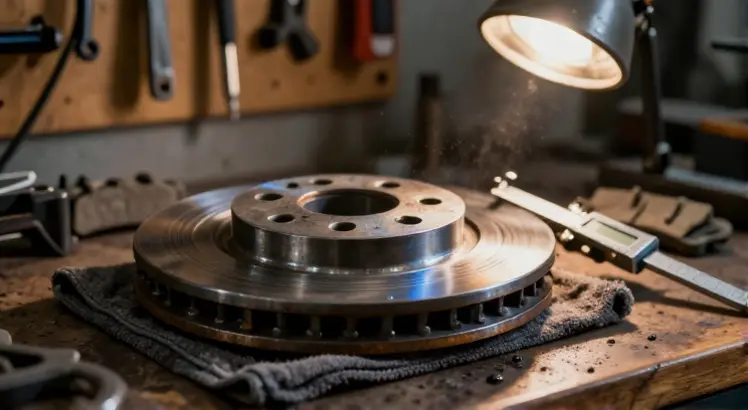
How long do brake rotors last? It is one of the most common questions drivers ask when they feel a shimmy in the steering wheel or hear a squealing noise. The straightforward answer is that most brake rotors last between 30,000 and 70,000 miles. However, that range is wide because a rotor’s actual lifespan depends heavily on your driving habits, the quality of the components, and the environment you drive in.
Your brake rotors are the large metal discs that sit behind your wheels. When you press the brake pedal, the brake pads clamp onto the rotors, creating friction that slows your car down. Over time, that friction wears both the pads and the rotors. Knowing when to replace your rotors keeps your stopping distances short and your daily drives safe.
What Affects Brake Rotor Lifespan

Detroit Axle – 10pc Brake Kit for Toyota Highlander Sienna Lexus RX350 RX450h, Drilled and Slotted Disc Brake Rotors Ceramic Brakes Pads Replacement : 12.91″ inch Front and 12.17″ inch Rear Rotor
Check PriceNo two drivers will get the exact same mileage out of a set of rotors. Several key variables determine whether your rotors wear out at 25,000 miles or push past 80,000 miles. Understanding these factors helps you set realistic expectations and spot problems early.
- Driving style: Frequent hard braking, riding the pedal, and stop-and-go traffic generate extra heat. That heat accelerates wear and can cause rotors to warp.
- Rotor material and quality: Premium cast iron or carbon-ceramic rotors resist wear better than cheap generic blanks. A well-machined rotor handles heat cycles without deforming.
- Brake pad compound: Semi-metallic pads grip aggressively but wear rotors faster. Ceramic pads are gentler on rotors and produce less dust.
- Vehicle weight and usage: Towing, hauling heavy loads, or driving a full-size SUV puts more stress on the braking system, shortening rotor life.
- Environmental exposure: Road salt, moisture, and gravel can cause surface rust, pitting, and uneven wear over time.
Even the way you maintain your brake fluid plays a role. Old, moisture-contaminated fluid can corrode calipers and cause uneven pad pressure, which leads to uneven rotor wear. Keeping up with routine brake inspections helps you catch small issues before they ruin a set of rotors.
Average Brake Rotor Lifespan by Driving Conditions

PowerStop Front and Rear Brake Kit for Toyota Camry 2018-24 – Z17 Ceramic Brake Pads & Disc Rotors Replacement, KOE7931
Check PriceYour daily route matters more than you might think. A car that spends its life on the highway can run the same rotors for well over 70,000 miles. A delivery vehicle that stops at every block might need fresh rotors in under 30,000 miles.
City driving with heavy traffic forces you to brake hundreds of times each day. Every stop generates heat, and that constant thermal cycling wears down the rotor friction surface much faster. On the open road, your brakes get long cooling intervals between applications, which slows the wear rate significantly.
Here is a rough lifespan breakdown based on driving environment:
- Mainly highway cruising: 60,000 to 80,000 miles, sometimes more.
- Mixed city and highway: 40,000 to 60,000 miles.
- Aggressive city driving or frequent towing: 25,000 to 40,000 miles.
These numbers assume you are using quality brake pads and that your rotors stay free of deep scoring. Always check your owner’s manual for specific inspection intervals, but treat these averages as a solid starting point.
Signs Your Brake Rotors Need Replacement

Detroit Axle – Front Brake Rotors for 2011-2026 Chevy Silverado GMC Sierra 2500 3500 HD 2016-2019 Suburban 3500 HD Drilled & Slotted Brake Rotors : 13.98″ inch Rotors
Check PriceRotors rarely fail without giving you clear warning signs. Learning to recognize these symptoms can save you from a dangerous situation and from damaging other brake components. If you notice any of the following, have your brake system inspected right away.
- Vibration or pulsation in the steering wheel when braking: This usually means the rotor surface has become uneven, often called a warped rotor.
- Loud grinding or groaning noise: A deep metallic sound often indicates that the pads are worn down completely and metal is scraping against the rotor.
- Squealing or squeaking that never goes away: While some brake noise is normal, a persistent high-pitched squeal points to a wear indicator touching the rotor or a glazed rotor surface.
- Visible scoring, grooves, or a lip along the rotor edge: Run your finger (when the rotor is cold) across the surface. If you feel deep ridges, the rotor has worn beyond its service limit.
- Longer stopping distances: If your car takes extra effort to slow down, thin or glazed rotors may be reducing friction.
You should also pay attention to the color of the rotor surface. A blue tint or heat cracks mean the rotor has been overheated repeatedly and its structural integrity is compromised. In that case, replacement is the only safe option.
How to Extend the Life of Your Brake Rotors

Detroit Axle – Front Brake Kit for 2018-2025 Honda Odyssey, 2019 2020 2021 2022 2023 2024 Drilled and Slotted Disc Brake Rotors Ceramic Brakes Pads with Hardware Replacement : 12.60″ inch Rotor
Check PriceYou cannot make rotors last forever, but a few simple habits can add thousands of miles to their lifespan. Most of these tips cost nothing and become second nature once you practice them.
Start with smooth, progressive braking. Anticipate stops and ease onto the pedal instead of jamming it at the last moment. This lowers peak temperatures and gives the rotor surface time to dissipate heat gradually.
Never ride the brake pedal with your left foot, even on long downhill grades. Constant light pressure generates steady heat without ever letting the rotors cool. On steep descents, downshift the transmission to let engine braking do some of the work.
Use the correct brake pad material for your driving style. If you want maximum rotor life and low dust, ceramic pads are your best friend. For towing or performance driving, a high-quality semi-metallic pad works well but will wear rotors faster. Whenever you upgrade your pads, consider upgrading to aftermarket brake pads that match your rotor material perfectly.
Keep your brake fluid fresh. Brake fluid absorbs moisture over time, which lowers its boiling point and can cause irregular brake pressure. Flush the fluid according to your vehicle’s schedule, usually every two to three years.
Finally, have a professional measure rotor thickness at every pad replacement. If the rotor is still above the minimum thickness stamped on the hat, it can often be resurfaced. Once it dips below, it must be replaced. Pairing new pads with worn rotors only shortens the life of both components.
Brake Rotors vs. Brake Pads: Replacement Intervals

AutoShack Front & Rear Brake Rotors & Premium Pads for Subaru, Forester 2019-2024 Crosstrek 2024-2026 Impreza 2024-2026, AWD H4 2.0L 2.5L – Coated Drilled & Slotted – Black Matte Finish – BlackShield
Check PriceBrake pads wear down faster than rotors, which can confuse owners about what to replace and when. Pads typically last between 30,000 and 50,000 miles. Rotors, being much harder, can often survive two sets of pads before reaching their service limit.
However, many drivers and shops choose to replace rotors and pads together. This approach guarantees a flat, fresh friction surface and eliminates any chance of uneven wear causing noise or vibration. If your rotors are still thick enough and smooth, a pad-only replacement is acceptable, but you must be honest about the condition of the rotor.
When you are ready to shop for new components, spending a little more upfront on a matched set pays off. A set of high-quality rotors paired with compatible pads gives you predictable stopping power and less headache down the road. For a deeper look at your options, read our guide on choosing high-quality rotors.
Always check the minimum thickness specification for your rotors. This number is cast into the rotor hat or listed in the service manual. A rotor well above that threshold can be reused, but never gamble with a rotor that is close to the limit. Brake performance degrades quickly once the solid mass is reduced too far.
Frequently Asked Questions About Brake Rotor Lifespan

Metrix Premium Chassis Parts – 11.02 inch (280 mm) 2 PC Front Coated Vented Disc Brake Rotor Kit Fits 2021-2025 Hyundai Elantra, 2024-2026 Hyundai Kona FWD, 2023-2024 Kia Niro Replacement 982785FZN
Check PriceHow often should brake rotors be replaced?
There is no fixed schedule. Most vehicles need new rotors somewhere between 30,000 and 70,000 miles, but always rely on thickness measurements and visible condition rather than mileage alone. Replace them when they are worn past the manufacturer’s minimum specification or show signs of warping, cracking, or deep scoring.
Can you just replace brake pads without rotors?
Yes, if the rotors are still thick, smooth, and free of damage. A mechanic can measure them with a micrometer and check for runout. If they are well above the discard thickness and have no pulsation, you can safely install only pads. However, if there is any doubt, replacing both is the safer long-term choice.
Do I need to replace all four rotors at once?
Not necessarily. Brakes wear faster on the front axle because the weight of the car transfers forward during stops. You could replace only the front rotors if the rears are still in good shape. But replacing them in axle pairs (both fronts or both rears) is a must for balanced braking performance.
What happens if you drive with worn rotors?
Driving on worn or warped rotors increases stopping distances and puts extra stress on your entire braking system. The uneven surface can cause the brake pads to wear unevenly and may lead to caliper failure. In an emergency stop, you may not have the full braking force you expect, which is a serious safety risk.
Are more expensive rotors worth it?
For most daily drivers, a mid-range coated rotor provides excellent service life and rust resistance. Premium slotted or drilled rotors dissipate heat better and are a good choice for trucks or performance cars, but they often make little difference in a commuter vehicle. The real value comes from matching the rotor quality with the pad compound and your driving demands.
Conclusion
Your brake rotors are a safety component you simply cannot ignore. By understanding how long brake rotors last and what influences their lifespan, you gain control over your maintenance budget and your car’s stopping power. Listen for grinding, feel for vibration, and get those rotors measured whenever pads are changed.
Make it a habit to inspect your brakes at least once a year, and always match new pads to rotors that are within spec. For peace of mind, refer to understanding brake system safety standards from a trusted source. A small investment in routine care keeps your vehicle safe, predictable, and road-ready for the miles ahead.