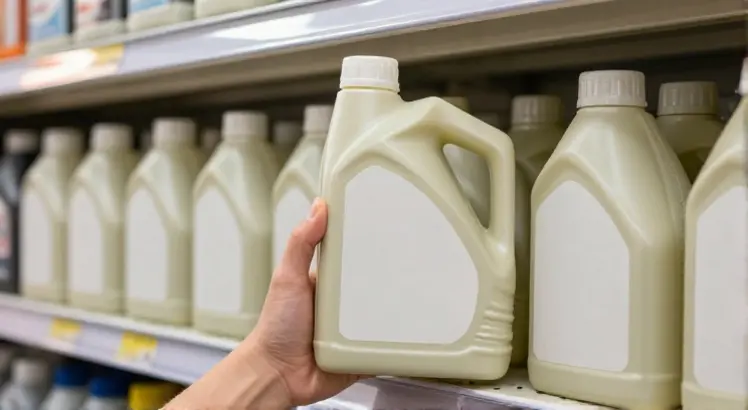
You have probably stood in the oil aisle staring at a row of jugs and asked yourself, why is Quaker State oil so cheap compared to the bottles sitting right next to it. It is a fair question. In a market where synthetic oil prices can easily climb past $40 for a five-quart jug, Quaker State regularly sits around $20 to $25. The price gap makes many drivers suspicious. But a low price tag does not automatically mean low quality. This article breaks down the real reasons behind Quaker State’s budget-friendly pricing, explains what you actually give up (and what you don’t), and helps you decide if it is the right oil for your engine.
You will also learn how Quaker State stacks up against pricier competitors in independent testing, what its additive package looks like, and when spending a few extra dollars on a premium oil actually makes sense. By the end, you will see why millions of daily drivers and fleets trust this oil without emptying their wallets.
The Perception of Cheap: How Low Price Triggers Doubt

Quaker State Full Synthetic 0W-20 Motor Oil, 5 Quart (3 Pack)
Check PriceAs a car owner, you are conditioned to equate price with quality. High-end synthetic brands have spent decades building marketing campaigns that link a premium price to superior protection. When you see Quaker State on the shelf for nearly half the cost of Mobil 1 or Pennzoil Platinum, your brain immediately suspects a compromise. But motor oil pricing is far more complex than just the cost of ingredients inside the bottle.
Three major levers control the final price you pay: the base oil group, the additive package, and the brand’s marketing and distribution strategy. Quaker State happens to play the distribution and marketing side differently, not necessarily the chemistry side. That is the first clue to solving the mystery of its low price.
Reason 1: Massive Economies of Scale Under Shell

Quaker State Full Synthetic 5W-20 Motor Oil, 1 Quart (6 Pack)
Check PriceQuaker State is wholly owned by Shell, one of the largest energy and lubricant companies on the planet. This is not a small independent blender fighting for shelf space. When Shell manufactures Quaker State, it uses the same global supply chain that produces Pennzoil, Shell Rotella, and other Shell-branded lubricants. Buying base oils, additives, and packaging materials in staggering volumes drives down the cost per quart dramatically.
Think of it like store-brand cereal made in the same factory as the big name brand. The machinery, logistics, and raw material procurement are shared. That overhead spread is enormous. Quaker State benefits from Shell’s purchasing power without carrying the premium branding costs of its sister product, Pennzoil. This single factor explains a large chunk of the price difference before we even touch the oil’s formulation.
Reason 2: Differentiated Brand Positioning
Quaker State Full Synthetic 0W-20 Motor Oil, 5 Quart (3 Pack)
Check PriceShell deliberately positions Pennzoil as the high-tech, ultra-premium synthetic line made from natural gas, and Quaker State as the reliable, rugged, value-driven workhorse. This is not an accident. It is a classic good-better-best strategy. By keeping Quaker State’s marketing budgets modest and avoiding expensive sponsorships or high-budget TV ads, Shell keeps the brand’s overhead low. That saving is passed directly to you.
Pennzoil pours significant money into NASCAR sponsorships, synthetic innovation messaging, and PurePlus natural gas base oil technology. Quaker State relies mostly on its 100-year heritage and word-of-mouth trust. Fewer dollars spent on flashy advertising means the oil itself can be priced to move volume, not to build a luxury image. This does not make the oil worse. It makes it more honest.
Reason 3: Simpler Additive Packages, Not Empty Packages
What the Bottle Does Contain
Modern Quaker State full synthetic oils meet or exceed ILSAC GF-6, API SP, and Dexos1 Gen 2 requirements. To earn those certifications, an oil must pass rigorous tests for timing chain wear protection, low-speed pre-ignition prevention, and oxidation stability. Quaker State does not skip the essentials. Its additive pack includes a solid dose of detergents, dispersants, anti-wear agents like ZDDP, friction modifiers, and antioxidants. In a normal commuter car, these are enough to protect the engine through a full oil change interval.
Where more expensive oils stretch ahead is in the concentration and refinement of those additives. A premium oil might use a heavier dose of molybdenum friction modifiers to squeeze out an extra fraction of a percent in fuel economy, or a higher total base number (TBN) to extended drain intervals beyond 10,000 miles. Quaker State picks a balanced formula that covers 90% of driving situations at 60% of the cost.
What Is Left Out and Why It Often Does Not Matter
If you drive a naturally aspirated engine under normal conditions, the delta between an oil with 700 ppm of moly and one with 200 ppm is negligible over a 5,000-mile change. Quaker State’s formulation philosophy is about practical protection, not chasing lab numbers that rarely translate to real-world engine life extensions. Unless you own a high-strung turbocharged direct-injection engine that sees track time, the missing exotic additives will never show up on your oil analysis report.
Many budget-conscious owners send used oil samples to labs like Blackstone. The results routinely show that Quaker State synthetic holds its viscosity and keeps wear metals in check just as well as mid-tier competitors. For a thorough look at how the full synthetic holds up in everyday driving, you can explore our full synthetic formulation review.
Reason 4: Bulk Retail Agreements and Distribution
Quaker State Full Synthetic 5W-20 Motor Oil, 1 Quart (6 Pack)
Check PriceWalk into any Walmart, and you will see massive stacks of Quaker State jugs. The brand has historically maintained strong, high-volume contracts with big-box retailers. These agreements guarantee shelf space and sell massive quantities at razor-thin margins. In exchange, the retailer uses Quaker State as a traffic driver to get you into the automotive aisle. The brand is happy to operate on volume rather than margin, because Shell’s integrated business model profits from every barrel of crude they process, not just a single bottle of oil.
This is similar to how Kirkland Signature oil works at Costco. The business model is optimized for throughput. The manufacturer, the distributor, and the retailer all get their little slice, but because of massive scale, your final price stays low. There is no hidden catch, just a different profit strategy.
Reason 5: Lower Research and Development Cost Allocation
Shell invests heavily in Pennzoil’s PurePlus technology, which converts natural gas into a crystal-clear base oil with fewer impurities. Quaker State uses more conventional, high-quality Group III hydrocracked base oils, which are still fully synthetic but more widely available and less expensive to produce. The R&D cost allocated to Quaker State is minimal because it leverages proven base stock technologies and off-the-shelf additive chemistries already developed for larger brands.
This does not make it low-tech. Group III base oils still deliver excellent cold-flow properties, oxidation resistance, and sheer stability. In fact, many premium oils outside the natural gas category rely on nearly identical base stocks. Quaker State simply does not need to recoup a billion-dollar gas-to-liquid project, so you are not paying that premium.
Performance vs. Price: Is It Worth Saving the Money?
Independent Testing Results
Project Farm, a popular YouTube engine oil testing channel, ran a series of wear tests comparing Quaker State full synthetic against Mobil 1, Castrol, Valvoline, and AmazonBasics. The Quaker State performed admirably, consistently placing near the middle of the pack and occasionally beating more expensive names in cold temperature flow. No visible failures, no alarming shear-down. For a daily driver doing 5,000 to 7,500-mile oil changes, the difference in engine protection is practically invisible.
Used oil analysis forums support the same conclusion. You will find countless reports of 200,000-mile engines that thrived on a steady diet of Quaker State. If you want to read more about how the oil performs in long-term evaluations, check out this detailed look at the overall quality of Quaker State oil based on real owner feedback.
When the Savings Are Absolutely Worth It
- Second vehicles and older commuter cars that are no longer under warranty
- Drivers who change their oil every 3,000 to 5,000 miles regardless of formulation
- Fleet vehicles where cost per mile is the primary metric
- Any engine that does not have a history of oil consumption or extreme heat
- DIY mechanics who enjoy frequent oil changes without financial guilt
When You Might Want To Upgrade
There are scenarios where stepping up to a more premium synthetic makes sense. If you drive a turbocharged direct-injection engine that generates excessive heat and is prone to low-speed pre-ignition, an oil with a stronger additive pack, like Pennzoil Ultra Platinum or Mobil 1 Extended Performance, can give you an extra safety margin. The same goes for high-performance engines with aggressive cam profiles that require elevated ZDDP levels. For most commuter cars, though, Quaker State’s API SP certification already covers the necessary LSPI protection.
Certifications That Prove the Oil Is Legitimate
Skeptical about cheap oil? Look at the back of the bottle. Quaker State synthetic carries the starburst symbol and the API donut, indicating it is licensed and certified, not just recommended for a certain spec. These certifications come from the American Petroleum Institute after passing standardized, blind engine tests. An oil cannot buy its way onto that list. You can verify any claim by checking the API’s engine oil licensing program directly.
The Dexos1 Gen 2 approval adds another layer of rigorous testing for GM’s turbo engines known for piston deposits and timing chain wear. Quaker State holds this license. If it were genuinely inferior, it would never survive the 100,000-mile sequence tests required for these badges.
Why Quaker State Fuels So Many Budget DIY Oil Changes
Many home mechanics are moving toward cheaper synthetics combined with shorter drain intervals instead of using a premium oil for extended mileage. The logic is simple. Fresh oil, even a budget synthetic, contains a full dose of additives with no depletion, soot, or fuel dilution. Changing the oil every 4,000 miles with Quaker State can keep an engine healthier than stretching a premium synthetic to 10,000 miles where the additives are tired.
This approach works especially well for direct-injection engines that are notorious for fuel dilution. Regular cheap oil changes flush out contaminants before they can thicken the oil or cause sludge. For less than $25 and 20 minutes of work, you get a reset that a $45 jug cannot provide if it stays in the crankcase too long.
Debunking the Biggest Myths About Cheap Oil
- Cheap oil will sludge up my engine. Modern synthetics resist oxidation and sludge formation better than conventional oils from 30 years ago. Quaker State synthetic will not sludge if you change it on time.
- It has no detergents. It actually carries enough detergent to keep piston rings clean. Low detergent oils are obsolete.
- It will void my warranty. As long as the oil meets the viscosity and API SP specification listed in your owner’s manual, your warranty is safe. The manual never demands a specific brand.
- It only works in old beaters. Thousands of late-model cars run perfectly on Quaker State with zero oil-related failures.
Frequently Asked Questions
Is Quaker State full synthetic actually fully synthetic?
Yes. It uses Group III hydrocracked base oils, which are legally and technically classified as full synthetic. This is the same category most mainstream synthetic oils fall into, including many from Castrol and Valvoline.
Can I use Quaker State in a turbocharged engine?
Absolutely. Its API SP and Dexos1 Gen 2 certifications specifically address turbocharger protection and LSPI prevention. For high-output engines running extra boost, you might prefer a premium formulation with extra moly, but the base Quaker State synthetic handles stock turbo setups without issue.
Why is Quaker State so much cheaper than Pennzoil if they are both Shell brands?
Pennzoil uses a more expensive natural gas-to-liquid base oil and carries a heavier marketing budget. Quaker State uses high-quality but less costly hydrocracked base oil and historically focuses on value pricing to capture the budget-conscious segment.
How often should I change Quaker State synthetic oil?
Follow your vehicle manufacturer’s normal service interval up to 7,500 miles or six months. Some drivers comfortably stretch it to 10,000 miles with a good filter, but the oil’s value proposition shines at moderate intervals where you get maximum additive freshness for minimum cash.
Does Quaker State oil cause increased engine wear?
Independent wear tests and long-term owner experiences show no abnormal wear when compared to mid-range and premium oils under normal driving conditions. It consistently meets strict industry specifications.
The Bottom Line on Quaker State’s Price Tag
After stripping away marketing smoke and shelves of inflated price tags, Quaker State emerges as a thoughtfully engineered oil that happens to be packaged for the value-driven driver. Its low price is the result of Shell’s massive scale, shared supply chains, strategic brand positioning, and refusal to overspend on glamour. It is not the result of cutting corners on critical protection. The bottle still carries API SP, ILSAC GF-6, and Dexos approvals, which demand a baseline of performance many cheaper no-name oils cannot meet.
If your goal is protecting a daily driver, a family hauler, or a simple commuter without paying for advertising budgets and exotic base stocks, Quaker State makes a lot of sense. You can pocket the savings, shorten your drain interval, and still drive with the confidence that your engine is lubricated by a legitimate, certified synthetic. That is the real answer to why Quaker State oil is so cheap, and why being cheap does not have to mean being bad.