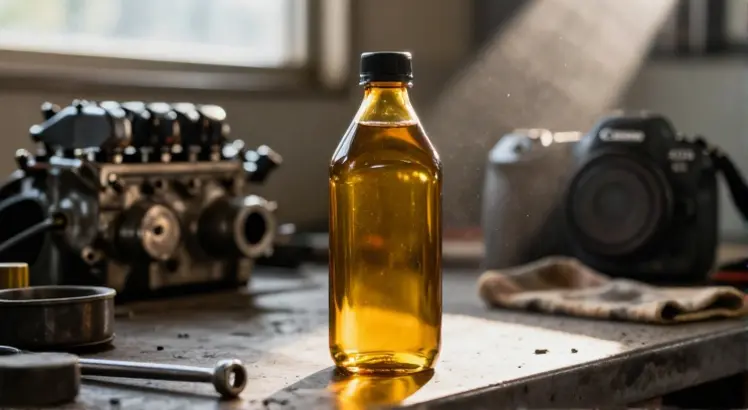
If you own a vehicle with over 75,000 miles on the odometer, the ticking of the engine can sometimes feel like a countdown to a major repair bill. You want to keep it running smoothly without switching to a different vehicle. Standard oil no longer feels sufficient because aging seals are shrinking, and internal wear patterns are already set in. This is where a specialized formulation steps in to change the game.
This Mobil 1 high mileage motor oil review delves deep into why this specific lubricant is the go-to choice for seasoned mechanics and careful car owners alike. We are not just talking about basic lubrication. We are discussing a scientifically engineered solution designed to rejuvenate seals, reduce sludge, and prevent the dreaded blue exhaust smoke that often signals trouble in older engines.
What Is Mobil 1 High Mileage Motor Oil?

Mobil 1 High Mileage Full Synthetic Motor Oil 5W-30, 5 Quart
Check PriceBefore you pour anything into your crankcase, you need to understand what separates a standard full synthetic from a high mileage formula. This is not just conventional oil with a different sticker on the bottle. It is Mobil 1’s advanced full synthetic base stock loaded with a unique additive package targeting the specific pain points of worn engines.
When an engine ages, the plasticizers in the gaskets and seals begin to leach out. This causes hard, brittle seals that shrink and eventually leak oil onto your driveway or exhaust manifold. The formulation in this product contains a specific seal conditioner. This agent swells the seals back to their original size, stopping minor leaks from the valve cover or crankshaft areas without making the seals too soft.
The Science Behind the Protection
Beyond seal conditioning, this oil boasts a higher viscosity index and extra anti-wear additives like ZDDP (Zinc Dialkyldithiophosphate). As metal components scrape past each other over hundreds of thousands of miles, microscopic gaps widen. The thick film strength of this oil fills those gaps, cushioning bearings and cylinder walls. Moreover, the thermal stability of the synthetic base resists oxidation, meaning it will not turn to sludge as quickly as conventional oils when subjected to the high heat of an older, less efficient cooling system.
Key Benefits of Using This Oil in Your Older Vehicle
Mobil 1 High Mileage Full Synthetic Motor Oil 5W-30, 5 Quart
Check PriceYou might wonder if the extra cost over a standard synthetic justifies the performance. For a car with six-digit mileage, the benefits are tangible, not just theoretical. The internal cleaning properties are often the first thing drivers notice after a couple of oil changes.
- Leak Stopping Power: The proprietary seal conditioners revive hardened rear main seals and valve cover gaskets, often eliminating the need for costly mechanical repairs.
- Sludge Combatant: Extra cleaning agents dissolve the baked-on residue left behind by years of short trips or infrequent changes with conventional oil.
- Reduced Oil Consumption: Thicker film strength and stable viscosity prevent the oil from thinning out at high temperatures, reducing the likelihood of the engine burning up oil internally.
- Wear Protection: A phosphorus-heavy anti-wear layer shields the camshaft and lifters, which are typically starved for oil during cold startups.
Performance Deep Dive: What Real Drivers Experience
Mobil 1 High Mileage Full Synthetic Motor Oil 5W-30, 5 Quart
Check PriceTo provide a balanced perspective, we have to look at the real-world feedback from daily drivers and heavy-duty users. Most consensus points to a quieter cold start. That rattling noise on a frosty morning, often caused by the timing chain tensioner bleeding down, is noticeably muted because the oil circulates faster to the top end.
In hotter climates or towing situations, the resistance to thermal breakdown is a standout feature. Many enthusiasts who track their older cars or use SUVs for towing boats report that oil pressure remains stable even when the engine is under severe load. This stability provides peace of mind that thinner oils simply do not offer to a high-mileage engine.
Comparing Conventional vs. High Mileage Synthetic
You might have used conventional 10W-30 your whole life. Switching to a synthetic high mileage formula can feel like a gamble, but the chemical engineering gap is massive. Conventional oil contains irregular molecules and waxes that thicken in the cold and thin out in the heat. In contrast, the uniform molecular structure of Mobil 1 synthetic provides immediate lubrication. This cold-pour point makes it significantly easier on your battery and starter motor during winter, a double benefit for aging electrical systems.
Choosing the Right Viscosity for Your Engine
Selecting the correct weight is the most crucial step in your oil change journey. Mobil 1 High Mileage comes in several common grades, and picking the wrong one can lead to unnecessary oil consumption or low oil pressure. Always check your owner’s manual first, but if you are dealing with significant wear, you might have some flexibility.
- 5W-20 and 0W-20: Ideal for modern engines where tight tolerances require a thin fluid to quickly lube the variable valve timing (VVT) solenoids. This is common in Japanese and American sedans.
- 5W-30: A universal viscosity and arguably the most popular. It provides an excellent balance of fuel economy and high-temperature shear protection for light trucks and SUVs.
- 10W-30 and 10W-40: The heavy lifter of the group. If your engine has a slight bearing knock or consumes thinner oil rapidly, moving up to a 10W-40 can restore oil pressure and quiet down the valvetrain, especially in older pushrod engines.
If you are not certain whether your engine is ready for a thicker oil, learning how to distinguish the properties of high mileage formulas is essential before making the jump.
Mobil 1 High Mileage vs. The Competition
Mobil 1 High Mileage Full Synthetic Motor Oil 5W-30, 5 Quart
Check PriceThe high mileage category is crowded, with major players like Valvoline MaxLife and Castrol GTX High Mileage claiming the same benefits. How does Mobil 1 stack up? The difference lies in the base oil. While many competitors use a synthetic blend or a lower-tier group III base stock, Mobil 1 High Mileage uses a proprietary blend that offers superior oxidation stability.
In used oil analysis reports, Mobil 1 tends to show a lower iron wear metal count over the same oil change interval compared to conventional high mileage options. The Total Base Number (TBN), which indicates the oil’s ability to neutralize acids, also stays higher for longer. This means you can confidently push closer to the 10,000-mile interval if your driving habits allow, whereas a synthetic blend might be severely depleted by 7,500 miles.
A Closer Look at Valvoline MaxLife

Valvoline High Mileage with MaxLife Technology SAE 10W-40 Synthetic Blend Motor Oil 5 QT
Check PriceA common question is whether to buy the red bottle or the silver bottle. Valvoline MaxLife is an excellent product for the price and uses a slightly different chemical pathway for seal conditioning. However, for vehicles that suffer from severe heat soak, like turbocharged engines or trucks that plow snow, the shear stability of Mobil 1 usually provides a wider safety margin. If you are curious about the comparison, you can read our detailed analysis of Valvoline’s high mileage performance.
Addressing the Myths of Synthetic Oil in Old Engines
Mobil 1 High Mileage Full Synthetic Motor Oil 5W-30, 5 Quart
Check PriceThere is a persistent garage myth that putting synthetic oil in an old engine will wash away the sludge and cause massive leaks. This is partially rooted in fact but largely misleading. If you have a completely neglected engine held together by carbon deposits, a strong detergent package can indeed scour those deposits away, exposing worn seals that were masking leaks.
However, the seal conditioners in Mobil 1 High Mileage actively work to counteract that. The oil is designed to swell seals to a precise specification. If you have a healthy engine that has simply aged naturally, the synthetic switch will only improve protection. It does not cause leaks, it reveals pre-existing failures that you should fix anyway.
Maximizing Oil Change Intervals Safely
One of the main selling points of a premium synthetic is the extended drain interval. However, high mileage engines are a wild card. They often suffer from increased blow-by, where fuel and combustion gases sneak past the piston rings into the crankcase. This contamination dilutes the oil.
Do not blindly trust the 15,000-mile claim advertised on the bottle if your engine burns a quart every 2,000 miles. The constant topping off with fresh oil replenishes the additive pack, but the constant fuel dilution requires more frequent changes. A good rule of thumb for high mileage engines is to stick to a 5,000 to 7,500-mile interval unless a used oil analysis proves otherwise.
You also want to pair this premium oil with a high-quality filter. A cheap paper filter will collapse and go into bypass mode long before the oil wears out. A premium glass-fiber media filter ensures that the oil staying clean actually continues to flow through the filtration membrane for the life of the oil.
Practical Tips for Transitioning to High Mileage Oil
If you have decided to make the switch, there is a right way and a wrong way to introduce this fluid to your engine. Start by cleaning the slate. An engine flush is not always necessary, but if you see brown sludge through the oil fill cap, it might be worth considering a gentle flush product before the final drain.
- Perform a Short Interval Change: On your first switch, change the oil after 3,000 miles. This cleaning cycle removes the loosened debris leftover by the old dino oil before it clogs the filter.
- Monitor Oil Levels Weekly: For the first month, check the dipstick every weekend. The cleaning detergents might rapidly clean the ring packs, temporarily increasing oil consumption until the reconditioners take effect.
- Check for Leaks: A few spots of oil on the ground are normal initially as the seal conditioners go to work, but a steady stream indicates a gasket that is ripped beyond chemical repair.
The Verdict on Value and Longevity
Mobil 1 High Mileage Full Synthetic Motor Oil 5W-30, 5 Quart
Check PriceWhen you perform a cost-benefit analysis, the price of a jug of Mobil 1 High Mileage is negligible compared to an engine rebuild. The tool is engineered for preservation. The value comes from its ability to bridge the gap between a tired engine and a retirement home. It actively reduces the engine’s reliance on frantic top-offs between changes.
According to many automotive resource centers, including the data found on Mobil’s official technical resources on vehicle maintenance, specific seal interactions are designed to meet critical performance specifications to extend engine life.
If you are looking for the single best fluid to keep your daily driver reliable for another 50,000 miles, this is a sound investment. Pair this with a high-quality filter to ensure the longevity of your engine’s internal components, and you will likely see a reduction in the small nuisances that make an old car feel worn out.
Frequently Asked Questions
Is Mobil 1 High Mileage full synthetic?
Yes, it is a full synthetic motor oil. Unlike some competitors that use a synthetic blend formulation, Mobil 1 High Mileage uses a fully synthetic base oil, which provides superior thermal and oxidative stability.
Can I use high mileage oil in a new car?
You can technically use it, but it is not recommended. High mileage oil contains seal conditioners designed to swell aging gaskets. New engines do not need this swelling, and standard full synthetic oil is actually optimized for the tighter tolerances of a new block.
Will Mobil 1 High Mileage stop my engine from smoking?
It can help if the smoke is caused by sticky piston rings or minor valve seal leaks. The detergents can free the rings, and the conditioners can soften the seals. However, if you have cracked piston rings or a blown head gasket, no oil additive will fix that mechanical failure.
How often should I change this oil?
While the oil is capable of 10,000 miles or more, most high mileage engines benefit from a 5,000-mile interval due to higher internal blow-by contamination. Always follow the severe service schedule in your owner’s manual for the safest results.
Conclusion
Keeping a high-mileage vehicle on the road requires a proactive strategy, and the lubricant you choose sits at the core of that plan. This oil proves that you do not need to settle with the sludge, leaks, and consumption that usually come with an aging drivetrain. The advanced additive package works to reverse the minor ailments of old gaskets, while the robust synthetic base shields against the extreme heat that older cooling systems struggle to manage.
Whether you are nursing a classic commuter sedan or a heavy-duty pickup truck with a trailer hitch that never rests, the switch to a specialized lubricant is a decision you will feel in the smoother idle and see in the cleaner dipstick readings. It is not just an oil change, it is an active maintenance measure that buys you time on the road.