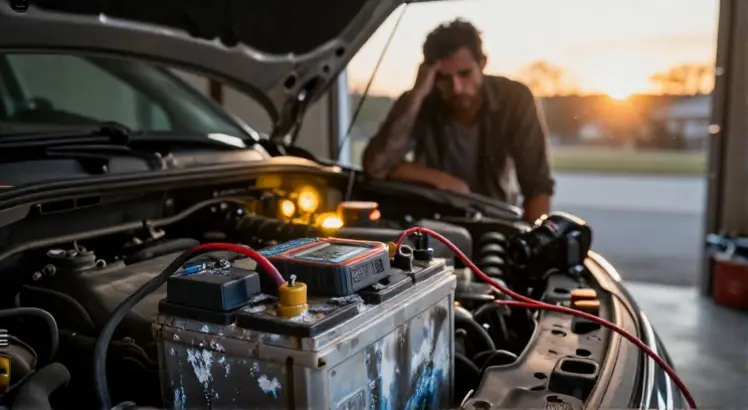
You turn the key in the ignition, expecting the familiar roar of your engine. Instead, you hear a sluggish crank, a rapid clicking noise, or perhaps nothing at all. That sinking feeling in your stomach often means one thing, your car battery is on its last legs. Recognizing bad battery symptoms early can save you from being stranded in a parking lot or a dark garage.
Your vehicle’s battery is the heart of the electrical system. It powers everything from the starter motor to the headlights and the infotainment screen. When it starts to fail, your car communicates distress signals. Ignoring these warning signs can overload your alternator, damage the starter, and leave you with a repair bill far more expensive than a simple replacement.
This guide covers every tell-tale indicator of a failing battery. We will break down how corrosion, temperature swings, and age affect performance. You will also learn how to test your battery and what to do next.
How a Car Battery Works and Why It Fails
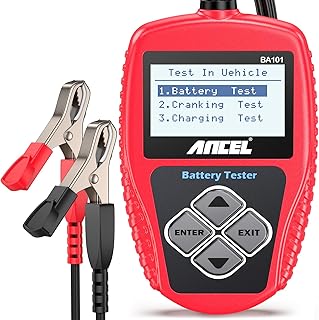
ANCEL BA101 Car Battery Tester, 12V Digital Automotive Alternator Meter Diagnostic Tool
Check PriceBefore diving into the symptoms, it helps to understand the basic science. A standard 12-volt lead-acid battery stores energy through a chemical reaction between lead plates and sulfuric acid. When you turn the key, the battery sends a massive surge of power to the starter, igniting the combustion process.
Over time, this chemical cocktail degrades. Plates sulfate, fluid evaporates in extreme heat, and internal connections break. While most drivers ask, should I replace my car battery before it dies, the answer is almost always yes. Proactive replacement prevents the unpredictable failure that kills your schedule and towing budget.
The Definitive List of Bad Battery Symptoms
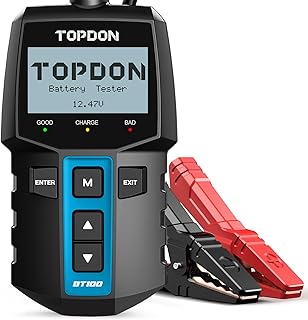
TOPDON BT100 Car Battery Tester 12V Load Tester
Check PriceModern vehicles provide subtle hints long before complete failure occurs. Here is a breakdown of the most common bad battery symptoms you should never ignore.
1. Slow Engine Crank
The most classic sign of trouble is a lazy engine turnover. When you turn the key, the starter motor groans and rotates slower than usual. This happens because the battery doesn’t have enough amperage to kick the engine to life instantly.
The internal chemical reaction slows down, especially in cold weather. If the cranking sound resembles a drawn-out rurr-rurr-rurr instead of a crisp vroom, the battery lacks Cold Cranking Amps (CCA).
2. The Dreaded Clicking Sound
If you turn the ignition and hear a rapid clicking, the starter solenoid is trying to engage but it cannot lock. The battery has enough juice to engage the solenoid but not enough to turn the starter motor.
This rapid clicking is often mistaken for a bad starter. However, you can differentiate by checking the dashboard lights. If the dash lights flicker violently or go out completely during the click, the battery is the culprit.
3. Dim Headlights and Electrical Gremlins
Your headlights are a direct window into battery health. A fully charged battery powers bright, steady beams. If your lights flicker at idle or dim significantly when you turn on heavier electronics like the heater or radio, the alternator might be working overtime to compensate for a dying battery.
You may also notice erratic behavior in other components. Power windows might roll up slower than normal. Your stereo might reset its settings or stop working altogether. These electrical gremlins often precede a no-start condition.
4. The Check Engine Light Appears
Many drivers are surprised to see their check engine light illuminate simply due to a battery problem. Low voltage can confuse the Engine Control Unit (ECU). Sensors require a stable voltage signal to read data correctly.
If the battery is weak, the ECU may register improper readings and trigger a warning light. While a code reader is necessary to confirm this, a voltage issue is a common root cause of phantom warning lights.
5. Bloated or Swollen Battery Case
Car batteries are a product of chemical engineering. Exposure to excessive heat, often in summer, can cause the flat sides of the battery to bulge or swell. A bloated battery indicates that the internal lead plates are warping.
This is a critical safety hazard. A swollen battery can leak acid or explode if charged. If you see a misshapen case, do not attempt to jumpstart it. You must replace it immediately.
6. Rotten Egg Smell
A distinct sulfur smell, similar to rotten eggs, should never be ignored. This odor signals a leaking battery. The leak releases hydrogen sulfide gas, which is toxic and highly flammable.
Corrosion often accompanies this smell. If you open the hood and detect this odor, inspect the battery terminals immediately. The casing likely has a crack, often caused by overcharging or freezing temperatures.
7. Corroded Terminals and Connectors
Look at the metal posts on top of your battery. A healthy connection is clean metal. If you see a white, ashy, or blue-green granular substance coating the terminals, you are looking at corrosion buildup.
This corrosion interrupts the flow of electricity traveling from the battery to the starter and electrical system. While you can sometimes clean light corrosion with a wire brush and baking soda, heavy corrosion is one of the clearest bad battery symptoms of a venting issue.
8. Old Age
Car batteries don’t last forever. The standard lifespan for a lead-acid battery is three to five years. If your battery is within this window, particularly past the three-year mark in a hot climate, symptoms are almost guaranteed.
Driving habits matter. Short trips prevent the alternator from fully recharging the battery after the starter saps its power. If your battery has an easily visible manufacturing date sticker, check it. You might simply be dealing with a unit past its prime.
Why Do These Symptoms Happen?

MOTOPOWER MP0515A 12V Car Battery Tester Automotive
Check PriceUnderstanding the root cause helps you prevent recurring problems. It is rarely just a random failure. Three main factors contribute to these bad battery symptoms.
Parasitic Drain
Parasitic drain occurs when electrical components continue to draw power even after the key is off and the doors are closed. This could be a trunk light that stays on, a phone charger left plugged into a live socket, or a faulty relay. Over the course of a night, this drain can deplete a battery enough to prevent a morning start.
Temperature Extremes
Extreme heat evaporates the vital fluids inside the battery, causing irreversible internal damage. This is why batteries often die in the summer but manifest symptoms in the winter. Cold thickens the engine oil, requiring more amperage from a battery that cold weather has made chemically sluggish.
Faulty Charging System
Sometimes the battery is a victim, not the culprit. A failing alternator, a slipping serpentine belt, or a broken voltage regulator will prevent the battery from charging correctly. If you replace your battery but the alternator is outputting low voltage, your new battery will fail shortly after installation.
How to Test for a Failing Battery

MOTOPOWER MP0514A 12V Digital Car Battery Tester Voltmeter
Check PriceYou should confirm your suspicion before spending money on a replacement. Fortunately, you can perform a few simple tests at home or rely on professional equipment.
The Headlight Test
With the engine off, turn on the headlights. Then, attempt to start the engine. If the headlights go extremely dim or die completely, the battery is discharged or failing. If the lights stay bright but the engine still struggles, the issue may lie with the starter circuit.
Voltmeter Diagnosis
A digital multimeter is the most accurate DIY tool. Set it to DC voltage and touch the red probe to the positive terminal and the black probe to the negative terminal.
- A fully charged battery should read 12.6 volts or higher with the engine off.
- 12.4 volts indicates roughly a 75% charge.
- 12.0 volts or lower signifies a discharged or defective battery.
With the engine running, the voltage should rise to between 13.7 and 14.7 volts if the alternator is working correctly.
What to Do When You Notice Bad Battery Symptoms
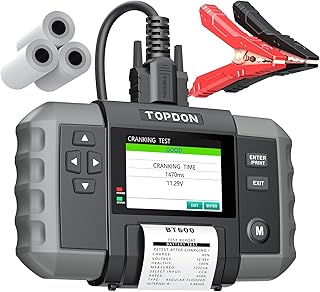
Car Battery Tester, TOPDON BT600 12V, 12V/24V Cranking Tests
Check PriceOnce you have identified the signs, swift action is critical. Here is how to navigate the situation safely and efficiently.
Safe Jumpstarting Practices
If you are stranded, a jumpstart is a temporary fix. Always connect the positive (red) cable to the dead battery first, then to the good battery. Next, connect the negative (black) cable to the good battery and finally to an unpainted metal surface on the dead car’s engine block, away from the battery.
This final connection should not be made directly to the dead battery’s negative terminal. This placement avoids igniting hydrogen gas that might be venting from the battery.
Selecting the Right Replacement
Buying a new battery isn’t just about finding one that fits in the tray. You must match the Group Size, CCA, and Reserve Capacity to your vehicle’s specifications. Picking the wrong group size leads to loose mounting, which causes vibrations that can damage the internal plates.
If you are unsure where to start, you can consult our detailed guide on how to choose the right car battery. This resource ensures you buy a battery that perfectly matches your climate and driving habits.
Cleaning Corrosion Properly
If your terminals are corroded but the battery still holds a charge, clean them. Disconnect the negative terminal first, then the positive. Mix baking soda with water to neutralize the acid. Scrub with a stiff brush, rinse with water, dry thoroughly, and apply a corrosion preventative spray.
Bad Alternator vs. Bad Battery: The Crucial Difference
These two components share symptoms, but distinguishing them saves you from buying a battery you don’t need.
- Starts with a jump, dies shortly after: If your car jumpstarts fine but stalls minutes after removing the jumper cables, the alternator is likely dead. The engine runs solely on the battery until the battery voltage drops too low.
- Starts with a jump, runs fine: If the car runs perfectly after a jump but cannot restart on its own after you park it, the battery cannot hold a charge. This is a clear battery internal failure.
- Dimming lights with RPM: Notice headlights getting brighter when you accelerate and dimmer when you idle. This usually points to a weak alternator belt or failing voltage regulator.
Frequently Asked Questions About Bad Battery Symptoms
Can a car battery test good and still be bad?
Yes. A surface voltage test might show 12.6 volts, but the battery lacks the depth of charge to provide amperage under load. This happens with surface charge. A professional load test simulating the starter draw is the only way to confirm the battery’s true health. A battery can have good voltage but fail a load test instantly.
How long will a car run with a bad battery?
If the alternator is functioning perfectly, a car can run indefinitely with a technically bad battery because the alternator supplies the power while the engine runs. However, this is extremely risky. A completely dead battery acts as a massive electrical drain, forcing the alternator to run at maximum amperage constantly, which can fry the alternator.
Will a bad battery throw a code?
Low voltage often triggers U-codes, which stand for network communication faults. While you won’t get a generic P-code that specifically says replace battery, low voltage messes with module communication. The Body Control Module (BCM) and ECU often store low-voltage history events.
Can a bad battery cause dash lights to flash?
Absolutely. Random flashing of the anti-theft light, traction control light, or airbag light is a classic sign. Insufficient voltage prevents the sensors and control modules from booting up in the correct sequence during the ignition cycle.
Is corrosion a sign of a bad battery?
It can be. Corrosion is often a sign of leaking hydrogen gas or a venting issue. While minor crust on old terminals is normal, sudden, rapid buildup of blue-green powder usually indicates that the seal around the battery post is compromised. This is a physical battery defect.
Preventative Maintenance to Avoid Early Failure
The best defense against unexpected bad battery symptoms is routine maintenance. You don’t need to be a mechanic to keep your terminals clean and the battery secure.
- Secure the Battery: Ensure the hold-down bracket is tight. Excessive vibration destroys battery plates faster than normal wear.
- Insulate from Heat: If you live in a hot climate, a battery insulation kit reflects engine bay heat away from the battery case.
- Limit Short Trips: Short drives drain the battery without giving time for a full recharge. Use a battery maintainer if you primarily drive less than 10 minutes at a time.
- Turn Off Accessories: Make sure the AC, radio, and headlights are off when you start the car to require less amperage from the battery when it is most vulnerable.
For a deeper understanding of vehicle electronics, the experts at Batteries Plus provide exceptional additional reading on symptoms and voltage testing.
Conclusion: Trust Your Instincts
Ignoring bad battery symptoms is a gamble that rarely pays off. The signs are usually crystal clear if you know what to look for. That sluggish crank on a cold Monday morning is your car asking for help before it completely quits. By understanding the difference between a battery issue and an alternator failure, you empower yourself to make the right call.
Don’t wait for the silence of a dead engine. Pop the hood, inspect the terminals, check the manufacturing date, and if you see that bloated case or smell that sulfur odor, head directly to a parts store for a free load test. A healthy battery means a reliable start and peace of mind every time you sit behind the wheel.