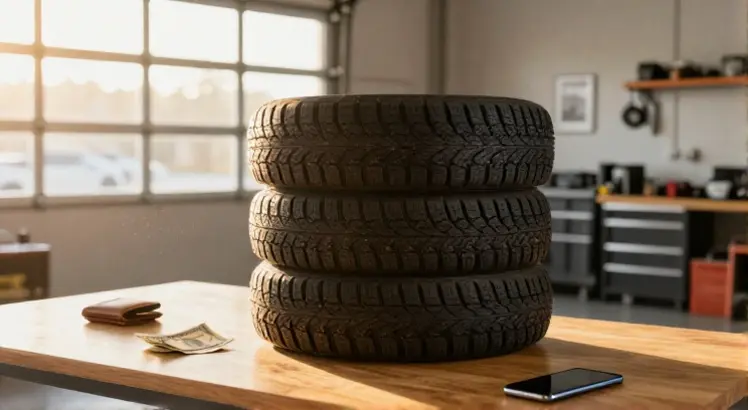
If you live in a region where temperatures plunge below 45 degrees Fahrenheit, investing in a dedicated set of cold weather rubber is non-negotiable. Understanding the total cost of 4 winter tires can feel overwhelming because the price tag varies dramatically based on your vehicle, driving habits, and the harshness of your local climate. We are going to break down every expense you need to plan for so you can budget accurately without sacrificing safety.
It is easy to get sticker shock when you see a quote for the first time, especially if you have a large SUV or a performance sedan. However, looking at this expense purely as a monetary hit ignores the long-term value. By purchasing these specialized tires, you are extending the life of your all-season set and dramatically reducing your risk of a collision on icy pavement.
What Factors Impact the Cost of 4 Winter Tires?

Lexani Quattro Tempo Tour AW All Weather P225/50R17 98V Passenger Tire
Check PriceThe price you pay for a full set is never a flat number, and understanding the variables helps you spot a fair deal. You are not just paying for rubber, you are paying for research, specialized compounds, and tread engineering that stays flexible in freezing temperatures. Several core elements influence the final figure on your invoice.
Vehicle Size and Tire Dimensions
The most significant factor is the physical size of your tire, which is determined by the wheel diameter and sidewall profile. A compact car rolling on 15-inch or 16-inch wheels will always be far cheaper to equip than a heavy-duty truck using 20-inch wheels. The sheer volume of raw materials needed to manufacture a towering light-truck tire drives the price up sharply.
For example, a common 205/55R16 passenger tire might sit at the lower end of the pricing spectrum, while a 275/55R20 truck tire will easily cost two to three times more per corner. This is also true for high-performance cars that require wide, low-profile winter rubber intended for high-speed stability. Always check your driver’s side door jamb for the exact size before shopping.
Brand Tier: Budget vs. Premium
Just like any automotive component, the tire market is split into distinct quality tiers, and the name on the sidewall heavily dictates the cost of 4 winter tires. Premium brands like Michelin, Bridgestone, and Nokian invest massively in ice-grip technology, often using porous compounds and intricate siping patterns. These tires offer superior stopping distances on black ice, but that technology commands a higher price.
Mid-range manufacturers such as General, Cooper, or Falken provide impressive performance that closes the gap with the premium leaders, usually for a 20 to 30 percent discount. Budget options from brands like Firestone, Nexen, or Sailun offer reliable snow traction for a very accessible price, though they may sacrifice some ice grip or tread life longevity. Your choice here depends entirely on how much you value extreme ice security versus highway stability.
Studded vs. Studless Technology
A specific feature that adds to the bill is the decision to buy studdable tires and the subsequent cost of the metal studs. Studded tires provide unmatched traction on sheer ice, but they are often a bit noisier and can damage bare pavement. The installation of metal studs adds a labor fee on top of the tire price, usually ranging from $15 to $25 per tire.
In contrast, modern studless friction tires, like the renowned Nokian Hakkapeliitta R5 or Bridgestone Blizzak, rely on advanced rubber compounds to grip ice without metal pins. While these high-tech studless options often cost as much as studded alternatives, you save the extra installation fee. Your local laws matter here too, as many states and provinces heavily regulate or ban metal studs entirely.
Average Price Ranges for a Complete Set

Eternopresa 225/60R17 99V Tire
Check PriceTo give you a realistic baseline, we researched current market data for popular vehicle segments. These figures represent the tire cost alone before mounting, balancing, and taxes. Always get a fully itemized quote to see what is bundled in.
- Compact Cars (15-16 inch): A set of four tires typically falls between $400 and $700. Budget options can dip as low as $320, while premium studless tires may hit $800.
- Mid-Size Sedans (17-18 inch): Expect to spend $600 to $1,100. The jump in rim size means you need more material, pushing entry-level sets into the upper $500 range.
- SUVs and Crossovers (18-20 inch): This is the most common category, where a set of four winter tires averages $800 to $1,400. High-end performance SUVs can push the upper boundary toward $1,600.
- Light Trucks (18-22 inch): Heavy-load ratings and larger sizing push four-tire costs to a range of $1,000 to $2,000. Specialty winter tires for lifted trucks or heavy-duty towing sit at the absolute top of the scale.
These numbers might seem alarming, but remember that you are splitting the mileage between two sets of tires throughout the year. That $900 set might easily last you four to five winter seasons depending on your commute, making the annualized cost quite manageable.
Installation, Mounting, and Hidden Fees

Fullway HP108 All-Season Passenger Car Performance Radial Tire-205/55R16 205/55/16 205/55-16 91V Load Range SL 4-Ply BSW Black Side Wall UTQG 380AA
Check PriceThe cost of 4 winter tires is rarely the final number you pay at the register. The installation process includes skilled labor, disposal fees, and often the purchase of new tire pressure monitor sensor hardware. Ignoring these secondary costs during your budget planning can cause a frustrating surprise.
Mount and Balance Services
If you are swapping winter rubber onto your existing factory wheels, a tire shop must dismount your old tires, clean the bead area, install the new tires, and spin-balance the assembly. This labor generally adds between $80 and $120 for all four corners. Shops might also charge a valve stem replacement fee, usually about $4 per wheel, which is a small price for keeping a reliable air seal in freezing temperatures.
Tire Pressure Monitoring Sensors (TPMS)
Modern vehicles have sensors inside the wheel that trigger a dashboard warning if pressure drops. When you mount new tires, the shop may recommend a rebuild kit for the sensor valve, which adds roughly $10 to $20 per wheel. If you have an older vehicle with degrading sensor batteries, you could be facing a replacement cost of $50 to $100 per sensor, an expense that catches many first-time buyers off guard.
The Dedicated Wheel Package Strategy
An upfront investment that drastically reduces your long-term cost is buying a dedicated set of steel or cheap alloy rims for your winter tires. This allows you to perform the seasonal changeover in your own garage with a jack, saving the $80 to $120 mounting fee twice a year. Steel wheels usually cost $60 to $90 each, meaning you can break even on the extra hardware within two or three winters.
How to Save Money Without Sacrificing Safety
Lexani Quattro Tempo Tour AW All Weather P185/55R16 83H Passenger Tire
Check PriceNavigating the financial side of this purchase is much easier when you know the industry’s seasonal patterns and rebate cycles. Shopping at the wrong time can easily cost you an extra $200 for the exact same set of tires. Use these strategies to keep your wallet intact.
- Buy in the off-season or early fall. The highest demand hits right after the first snowstorm. Prices typically rise and inventory shrinks. Purchasing in September or even late August locks in the best availability.
- Stack manufacturer rebates. Major brands like Bridgestone, Michelin, and Continental frequently offer mail-in or instant rebates of $70 to $110 on a set of four. Always check the manufacturer website before checking out.
- Consider reputable mid-tier brands. Tires like the Cooper Discoverer True North or General Altimax Arctic often cost hundreds less than premium rivals but deliver nearly identical dry-road stability, as detailed in our guide to top rated winter traction for passenger cars.
- Look at last year’s stock. A tire manufactured twelve months ago but stored properly is chemically stable and completely safe. Tire shops often deeply discount these to clear shelf space.
Are Winter Tires Really Worth the Investment?

Firestone Winterforce 2 Winter/Snow Passenger Tire 205/60R16 92 S
Check PriceIf you are contemplating whether to skip this purchase and limp through the season on all-seasons, consider the real-world data. The rubber compound in all-season tires begins to stiffen and lose adhesion when temperatures drop below 45 degrees, even on dry pavement. Your braking distance increases dramatically as a result.
Independent testing from reliable third parties shows that a vehicle equipped with winter rubber stops 30 to 40 feet shorter on an icy road compared to an identical car on standard tires. That distance is often the difference between a safe stop and a severe collision. When you factor in the deductible on a collision repair, which is often $500 or $1,000, the cost of 4 winter tires becomes a form of affordable insurance.
You are also protecting your investment in your primary wheels and tires. Road salt and freezing water are highly corrosive, and storing your nicer three-season wheels for half the year preserves their finish and extends their tread life. It is a classic case of spending a little now to save a lot later, a topic often highlighted in thorough expert winter tire reviews that evaluate safety returns.
Matching Your Vehicle Type to the Right Price Point
Different vehicle types demand different load ratings and speed symbols, which is why SUV and truck tires are wider and more expensive. A crossover driver should never try to save money by installing a passenger car tire that lacks the necessary load index, as it can lead to dangerous sidewall flex and blowouts.
We have previously broken down segment-specific recommendations, including a detailed look at cold weather traction solutions for heavy-duty pickups. For family haulers, the added weight of an SUV requires a stiff internal structure. Pay attention to the “XL” or extra load marking on the sidewall, which usually adds about 10 to 15 percent to the cost compared to a standard load tire of the same size.
Frequently Asked Questions About Winter Tire Costs
Is it cheaper to buy a winter tire and wheel package?
Yes, in the long term it is much cheaper. While you are paying an extra $250 to $400 for steel rims upfront, you eliminate the need for costly mount-and-balance swaps twice a year. You can change the bolt-on assemblies yourself in twenty minutes without a trip to the shop, saving labor fees and reducing the physical wear on your tire beads.
How much should I budget for a good set of 4 winter tires?
A realistic total budget for a standard sedan, including quality mid-range tires, mounting, balancing, and taxes, sits between $750 and $1,000. If you drive a large SUV or truck and demand a premium, ice-focused compound, you should prepare for a final walk-out cost closer to $1,600 to $2,000 once all the installation fees are settled.
Can I just buy two winter tires for my drive wheels?
This is a dangerous and costly mistake. Installing winter tires only on the front or rear creates a massive grip imbalance. While the drive wheels might accelerate forward, the rear of the car will have virtually no lateral stability, causing a spin-out during a light turn. Tire retailers will refuse to install only two winter tires for this exact safety reason, and it is always a four-set purchase.
Do used winter tires reduce the overall cost safely?
Buying used tires is a risk that requires careful inspection. Winter tires require a deep tread depth, usually at least 6/32 of an inch, to effectively channel slush and bite into snow. A used set might look acceptable but could be aged out, as the rubber compound loses its flexibility after four to six years regardless of tread wear. Only buy used if you can verify the date code is recent and the tread is consistent across all four tires.
Final Thoughts on Your Winter Tire Budget
The true cost of 4 winter tires extends beyond the price sticker, encompassing installation, maintenance, and the long-term preservation of your all-season set. By understanding the variables like sizing, brand choices, and seasonal rebates, you can plan a budget that avoids last-minute stress. This is not a luxury purchase but a fundamental safety tool that pays for itself by preventing even a single fender-bender on a frozen morning.
Take the time now to measure your tire size, research current manufacturer promotions, and reach out to a local shop for an itemized quote. Walk into the season fully prepared with the right gear, and you will drive with the confidence that only comes from knowing you have the best possible grip underneath you.