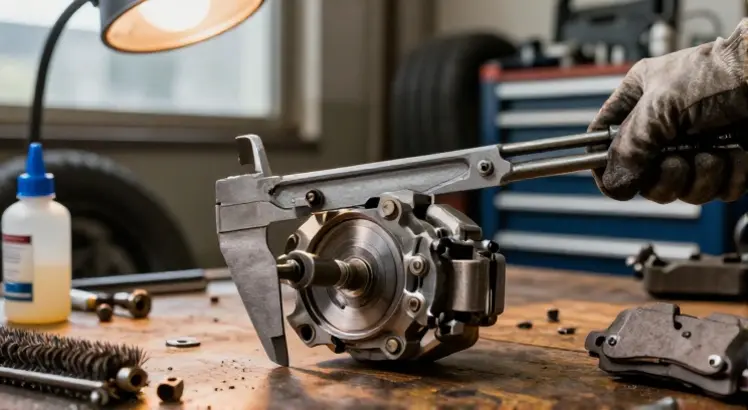
If you are planning a DIY brake pad replacement, you might be wondering: is a caliper compression tool necessary? The short answer is it depends entirely on your vehicle. Many front brake calipers can be pushed back using a simple C‑clamp or a pair of large pliers. However, modern rear calipers with integrated parking brakes often require a twisting motion to retract the piston correctly. Using the wrong method can damage the caliper, leading to an expensive repair. In this guide, we will break down exactly when you need a dedicated caliper compression tool and when you can safely get away with common workshop tools.
Why Compressing the Caliper Piston Is Crucial

Orion Motor Tech 24pc Brake Caliper Compression Tool Set
Check PriceWhen you install new, thicker brake pads, the caliper piston must be pushed back into its bore to make room. Without retracting the piston, you simply cannot fit the new pads over the brake rotor. This step is a non‑negotiable part of every disc brake job. Failing to compress the piston properly can lead to a spongy brake pedal, uneven pad wear, or even a stuck caliper that drags on the rotor.
The real question is not whether you need to move the piston back, but what type of movement your specific caliper requires. The answer determines if a standard lever or clamp will work, or if a specialized tool is mandatory.
The Two Types of Brake Calipers: Screw‑In vs. Push‑Back

MAYESAR Brake Caliper Compression Tool
Check PriceBrake calipers fall into two broad categories based on how the piston retracts. Understanding this difference is the key to answering the question, is a caliper compression tool necessary for your job.
Push‑Back (Compression) Calipers
Most front calipers, and some older rear calipers, use a simple push‑back design. The piston slides straight into the bore under steady, even pressure. You can compress these with a C‑clamp, a large pair of channel‑lock pliers, or even a sturdy flathead screwdriver if you are careful. The force required is usually moderate, and no twisting is involved.
- Found on the vast majority of front brakes.
- Piston face is smooth, with no notches or cross‑shaped indentations.
- A cheap C‑clamp often does the job perfectly.
Screw‑In (Twist‑In) Calipers
Many modern vehicles use screw‑in calipers on the rear axle. These calipers integrate the parking brake mechanism inside the piston. To retract the piston, you must rotate it clockwise while applying steady inward pressure. Simply pushing on the piston will not move it and can strip the internal threads, destroying the caliper.
- Common on cars from Honda, Volkswagen, Mazda, Ford, and many others.
- The piston face has two notches, a cross pattern, or small holes.
- A generic C‑clamp is useless and dangerous here.
Is a Caliper Compression Tool Necessary? A Detailed Breakdown

8MILELAKE Disc Brake Caliper Compressor Wind Back Tool 24pc
Check PriceNow we come to the heart of the matter. For some brake jobs, the answer is a clear no. For others, skipping the right tool is a recipe for a ruined caliper and an unsafe vehicle. Let us look at both scenarios.
When You Can Use a C‑Clamp Instead
If you are working on a push‑back caliper, a dedicated compression tool is nice to have but far from necessary. A sturdy C‑clamp with a 4‑inch or larger opening will retract the piston smoothly. Place the old brake pad or a block of wood against the piston to distribute pressure, then slowly tighten the clamp. Many weekend mechanics have done this successfully for decades.
You can also use a large pair of slip‑joint pliers with the old pad still in place. The key is even, controlled force. If the piston tilts, stop and realign it. This method costs nothing if you already own a C‑clamp, making the brake job very budget‑friendly. In these cases, the answer to is a caliper compression tool necessary is a comfortable no.
When a Special Tool Is Mandatory
Screw‑in rear calipers change the game. You absolutely must have a tool that simultaneously rotates and pushes the piston. Attempting to force a twist‑in piston with pliers can chew up the piston face, break the internal parking brake adjuster, or cause a leak. Even if you manage to turn it slightly, the piston will likely not retract far enough for new pads.
A proper caliper compression tool kit includes a threaded shaft and interchangeable adapters that fit the notches on the piston. These adapters engage securely, letting you wind the piston back clockwise with ease. Some vehicles require the piston to be wound back counterclockwise, so a reversible tool is a wise investment. For these rear calipers, the question is a caliper compression tool necessary has a definitive yes answer.
Tools That Double as Caliper Compressors

Orion Motor Tech Speedy Brake Caliper Compression Tool
Check PriceYou do not always need a fancy, expensive kit. Some common alternatives can work on push‑back calipers, though each has its limits. Here is a quick rundown of what you might already have in your garage.
- C‑Clamp: The old‑school favorite. Inexpensive, widely available, and effective on standard calipers. Not for twist‑in pistons.
- Large Tongue‑and‑Groove Pliers: Can squeeze the piston back when used carefully. Risk of marring the piston if the old pad is not protecting it.
- Disc Brake Pad Spreader: A small ratcheting tool that sandwiches between the pad and the piston. Quick but not suitable for tight clearances.
- Universal Caliper Compression Kit: Includes a pressure screw and multiple adapters. Works on both push‑back and screw‑in calipers. This is the safest approach for mixed DIY work. For a detailed look at the top options, check out our guide to the best brake caliper compression tools.
How to Choose the Right Caliper Compression Tool

Brake Caliper Compression Tool – One-Handed 360° Ratchet
Check PriceIf you decide that a tool is worth buying, a little research saves frustration. Look for a kit that covers both left‑hand and right‑hand threads, especially if you work on multiple vehicle makes. The adapter plates should match the notches on typical pistons: 2‑pin, 3‑pin, 4‑pin, and cross‑style designs. A solid metal pressure screw is far more durable than a plastic one.
Ease of use matters too. A kit with a magnetic adapter holder keeps small pieces from falling out during the job. Compact designs fit better into tight wheel wells. We have personally tested several models, and our detailed Orion Motor Tech brake caliper kit review highlights one kit that strikes an excellent balance between price and versatility.
Step‑by‑Step: Compressing a Caliper Without a Special Tool

BILITOOLS Brake Caliper Compression Tool, 22-Piece
Check PriceIf you are working on a push‑back caliper and want to try the C‑clamp method, follow these safe steps. This procedure assumes you have already removed the caliper from its bracket and supported it so the brake hose is not stressed.
- Step 1: Leave the old inner brake pad in place against the piston. This protects the piston face and ensures even pressure.
- Step 2: Position the fixed jaw of the C‑clamp on the back of the caliper body. Place the swivel jaw squarely on the old pad.
- Step 3: Slowly tighten the clamp until the piston bottoms out. Go slow and watch the dust boot to avoid pinching it.
- Step 4: Once the piston is fully retracted, remove the clamp and the old pad. Clean everything with brake cleaner before installing new pads.
This technique has been used by thousands of home mechanics. It works reliably on standard front calipers. However, if you encounter a piston that refuses to move, or you see notches on the piston face, stop immediately. You are dealing with a twist‑in design that needs the proper tool.
Common Mistakes to Avoid

Orion Motor Tech Dual Piston Brake Caliper Compressor
Check PriceEven experienced DIYers make errors when pushing back caliper pistons. Knowing the pitfalls helps you avoid a ruined weekend and a tow to the shop.
- Not opening the bleeder valve: Forcing dirty fluid back into the ABS module can cause issues. It is safer to crack the bleeder and attach a hose to a catch bottle.
- Using the wrong adapter: A loose fit on a twist‑in piston can slip and damage the notches. Check engagement before applying force.
- Forcing a seized piston: If the piston is truly stuck, no amount of pressure will help. The caliper likely needs replacement.
- Neglecting the dust boot: Always check that the rubber boot is not twisted or torn as the piston retracts.
When you are unsure about any step, consult a factory service manual or a trusted online resource. A good starting point is a professional guide to brake caliper compression from AutoZone, which offers clear visuals and model‑specific tips.
Frequently Asked Questions

Lang Tools 279 Brake Caliper Press
Check PriceCan I use a C‑clamp on rear calipers?
Only if the rear caliper is a straight push‑back design. Many SUVs and older trucks have rear calipers without an integrated parking brake in the piston. If you see notches or a cross pattern on the piston face, stop. You must use a twist tool.
What happens if I push a screw‑in caliper without turning?
Pushing alone will not move the piston. Applying excessive force can strip the internal threading, crack the piston, or destroy the parking brake self‑adjuster. This mistake often means buying a new caliper.
Do I need a caliper compression tool for front brakes only?
Typically no. Front calipers are almost always push‑back type. A simple C‑clamp or pad spreader will handle the job. A tool is not strictly necessary, though it can make the process faster and more controlled.
Is a universal caliper tool worth the money for a one‑time job?
Many auto parts stores offer free loaner programs where you can borrow a compression kit. If you only plan to do the job once, this is a great option. However, if you maintain multiple vehicles or enjoy DIY, buying an affordable kit under $30 is a smart, long‑term investment.
How do I know if my car has screw‑in calipers?
Inspect the piston before you start. Look for two or four notches, a cross pattern, or small holes on the piston face. Alternatively, check your vehicle’s repair manual. When in doubt, search online for your car’s year, make, and model along with rear caliper type.
Final Thoughts: Should You Invest in a Caliper Compression Tool?
So, is a caliper compression tool necessary? The answer is a nuanced but critical yes for any modern rear brake job with an electronic or mechanical parking brake integrated into the caliper. For simple front brakes, you can absolutely get away with a good C‑clamp and a steady hand. The key is identifying what type of piston you are dealing with before you start cranking.
If you work on multiple cars, a comprehensive caliper tool kit quickly pays for itself by preventing a single ruined caliper. Even if you only tackle your own brakes once every few years, having the right tool removes guesswork and makes the job far less stressful. Take a moment to inspect your pistons, choose the correct method, and never force a piston that requires rotation.
Your safety literally rides on those brakes. Use the right tool for the right caliper, and your next brake job will be smoother, faster, and problem‑free.