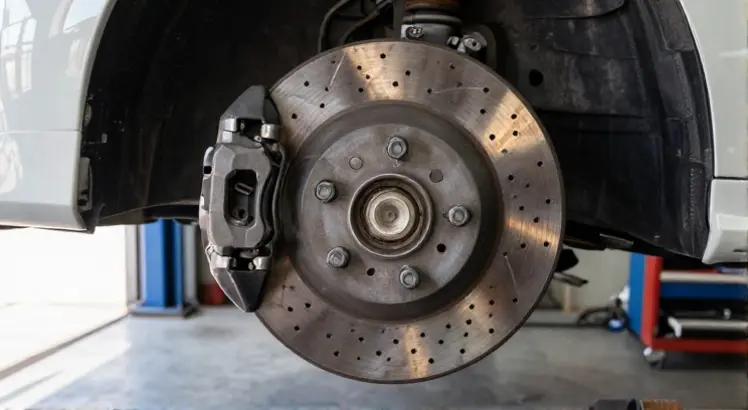
If you own a Honda, you already know the brand stands for reliability and thoughtful engineering. But when it comes time for a brake job, a common question pops up: what brake rotors does Honda use from the factory? The answer is not as simple as a single supplier name. Honda sources its Original Equipment Manufacturer rotors from several trusted Japanese brands, primarily Akebono and Advics, depending on the model and manufacturing plant.
Understanding your Honda’s factory rotor setup helps you make smarter decisions. Whether you need a direct OEM replacement or you are considering an upgrade, knowing the material, design, and supplier lets you match the original performance. This guide covers every angle, from which brands Honda trusts, to how you can identify the right rotor for your Civic, Accord, CR-V, or Odyssey.
We will also touch on aftermarket alternatives and explain when it makes sense to stick with genuine parts. Plus, you will find links to our in-depth reviews of Honda OEM rotor and pad kits and the best rotors for specific models like the Odyssey. Keep reading to become an informed Honda owner, and stop second-guessing your next brake service.
Understanding Honda’s Brake Rotor Philosophy

Detroit Axle – Brake Kit for 2008-2012 Honda Accord, Disc Brake Rotors and Ceramic Brakes Pads
Check PriceHonda does not manufacture its own brake rotors in-house. Instead, the company partners with Tier 1 Japanese suppliers who produce components to Honda’s exact specifications. This approach is common across the automotive industry and ensures consistent braking performance, noise control, and longevity across every vehicle that leaves the factory.
The most important thing to know is that Honda designs its brake systems to prioritize quiet operation, smooth pedal feel, and predictable wear. The rotors are typically made from a high-carbon cast iron formula that resists heat cracking and reduces brake judder. You will find the same engineering philosophy whether you drive a compact Fit or a heavy Pilot.
When someone asks what brake rotors does Honda use, they are really asking about the OEM suppliers. Honda uses two main brands that most drivers encounter during a dealership service or a DIY parts search. We will name those brands next and explain exactly where they appear in the lineup.
What Brand of Rotors Does Honda Use From the Factory?

Detroit Axle – 8pc Brake Kit for 2013-2017 Honda Accord Disc Brakes Rotors Ceramic Pads
Check PriceHonda fits its vehicles with rotors made primarily by Akebono and Advics. Both companies are massive Japanese brake system manufacturers with decades of experience supplying automakers. You might also see Nissin rotors on some older models or specific motorcycle applications, but for modern Honda cars, trucks, and SUVs, Akebono and Advics dominate.
Akebono Brake Rotors
Akebono is Honda’s most visible brake partner. The company provides complete corner modules, including calipers, pads, and rotors, for many high-volume models. The Akebono rotors used on Honda vehicles are designed with a specific carbon content and internal vane structure to balance heat dissipation and weight.
You will find Akebono-supplied rotors on popular models like the Honda Civic, Accord, CR-V, and HR-V. These rotors typically feature a non-directional finish right out of the box, which promotes even pad bedding and reduces break-in time. If you buy a genuine Honda rotor from a dealer, there is a strong chance Akebono manufactured it.
Advics (Sumitomo) Brake Rotors
Advics, a subsidiary of Sumitomo Electric Industries, is the other primary OEM rotor supplier for Honda. Advics components often show up on larger or more utility-focused vehicles. For example, you can expect to see Advics rotors on the Honda Pilot, Ridgeline, Passport, and Odyssey.
Advics rotors are engineered with a slightly different metal matrix that emphasizes durability under heavy load. This makes them ideal for minivans and SUVs that frequently carry passengers or cargo. The brand also provides many of the rear rotors across the Honda lineup, especially on models with electronic parking brakes.
To verify exactly which supplier made your factory rotors, you can check for stamped logos or part number prefixes before you discard the old parts. The replacement genuine Honda rotor you order from a parts catalog will typically be made by one of these two companies, even if the box only shows a Honda label. For a deeper look at genuine parts, you can browse a Honda genuine parts catalog directly.
Common Honda OEM Rotor Material and Design
Regardless of the supplier, Honda OEM rotors share a set of core characteristics. They use a high-carbon cast iron that starts with a tighter grain structure. This helps reduce the microscopic hot spots that cause pedal pulsation over time. The rotors also feature a carefully designed internal cooling vane configuration, usually a straight or slightly curved pillar pattern, tuned to each vehicle’s weight and power.
The factory rotor surface rarely comes with aggressive slots or drilled holes. Honda engineers a smooth, solid face to maximize pad contact area and minimize noise. Slotted or drilled rotors are reserved for performance models like the Civic Type R, and even then, Honda uses conservative patterns that will not crack under street use.
OEM vs Aftermarket Rotors: What is the Difference?

Detroit Axle – 10pc Brake Kit for 2017-2025 Honda CR-V, Disc Brake Rotors Ceramic Brake Pads
Check PriceWhen you know what brake rotors does Honda use from the factory, the next logical step is deciding if you should always buy the same thing. OEM rotors are designed to match your Honda’s original braking dynamics perfectly. They will deliver the quietest operation and the most predictable pedal feel, just like the day you drove off the lot.
Aftermarket rotors can be a solid alternative and sometimes offer upgraded features, but they introduce variables. A budget aftermarket rotor may use a lower-grade iron or a generic vane design that reduces heat capacity. On the other hand, a premium aftermarket rotor from brands like Centric or EBC can exceed OEM performance in corrosion resistance or initial bite.
The key difference comes down to quality control and metallurgy. OEM suppliers like Akebono and Advics must meet strict Honda standards for runout, balance, and hardness. Aftermarket suppliers have more freedom, so you need to pick a reputable name. I have seen many Honda owners who save money upfront only to chase brake noise and vibration for the next 20,000 miles.
If you want to keep things simple and your goal is long-term reliability, sticking with genuine Honda rotors is always a safe bet. For a complete look at those factory options, see our detailed Honda OEM rotors and pads guide. It breaks down kit pricing and part numbers for popular models.
When Should You Replace Your Honda Brake Rotors?

R1 Concepts Front and Rear Brake Kit Fits 2018-2025 Honda Accord
Check PriceKnowing what rotors Honda uses is only half the battle. You also need to recognize when they have reached the end of their service life. Honda rotors are built to last, typically between 50,000 and 70,000 miles, but your driving style and environment play a huge role. Stop-and-go city traffic, mountainous roads, and frequent towing will all shorten rotor life.
The most common signs that you need new rotors include a pulsating brake pedal, a steering wheel that shakes during braking, or visible scoring and a lip on the edge of the rotor surface. You may also hear a rhythmic grinding noise that changes with wheel speed. Never ignore these warnings, because worn rotors reduce overall stopping power and can damage your brake pads unevenly.
Another measurement to check is rotor thickness. Every Honda rotor has a minimum thickness specification stamped on the hat section or inside the cooling vanes. If your rotor has worn below that spec, or if a professional inspection reveals excessive runout, replacement is mandatory. Do not resurface a rotor that is already near its discard limit.
How to Choose the Right Rotors for Your Honda Model

PowerStop Front and Rear Brake Kit for Honda Civic 2016-21 – KOE7574
Check PriceChoosing the right rotor means matching your driving needs to the right technology. Start by deciding between OEM and premium aftermarket. If you have a daily commuter like a Civic or Accord, a genuine Honda rotor from Akebono or Advics will restore the factory quietness and feel. You do not need complex upgrades for a predictable, safe commute.
For heavier family haulers, such as an Odyssey or Pilot, you might want to consider a coated aftermarket rotor that fights rust on the non-swept areas. These vehicles sit at bus stops and school drop-off zones where moisture can quickly create unsightly surface rust. A geomet coating, like those found on Centric Premium rotors, keeps the hat and edges looking clean longer.
Performance-minded owners of the Civic Si, Accord Sport, or Type R often select high-carbon or slotted rotors. These designs provide more bite and better heat management during spirited driving. Just remember that aggressive rotors may produce slightly more noise and pad wear. Always pair any performance rotor with a pad compound that matches its friction characteristics.
Model-specific research pays off. We have already done the deep dive for one of Honda’s most popular minivans. Check out the best brake rotors for Honda Odyssey to see how OEM stacks up against aftermarket options in real-world usage. That comparison highlights what matters most for a vehicle that manages both daily errands and family road trips.
Tips for Extending the Life of Your Honda Rotors
Getting the most out of your Honda rotors involves a few simple habits. First, avoid hard braking whenever possible. Coasting to a stop and maintaining a safe following distance reduces the heat that causes warping and material transfer. This one change alone can add thousands of miles to your rotor life.
Second, always break in new pads and rotors properly. Honda recommends a series of moderate stops from 30 to 35 mph without coming to a complete standstill. This bed-in process transfers an even layer of pad material onto the rotor face, which prevents judder. Skipping this step is the fastest way to create uneven deposits that feel like a warped rotor.
Third, pay attention to the hardware. Clean and lubricate the caliper slide pins and use fresh pad shims every time you replace the rotors. Sticking calipers generate constant drag and excessive heat. That heat breaks down the rotor’s iron structure faster and leads to premature failure, even on a high-quality OEM part.
Frequently Asked Questions
Does Honda use Akebono brake rotors?
Yes, Akebono is one of Honda’s primary OEM rotor suppliers. Many Honda vehicles, including the Civic, Accord, and CR-V, come equipped with Akebono-manufactured rotors from the factory. When you purchase a genuine Honda replacement rotor from a dealer, Akebono often produces the part under a Honda part number.
What material are Honda OEM rotors made of?
Honda OEM rotors are made from a high-carbon cast iron alloy. This material provides excellent heat dissipation, reduced noise, and strong resistance to warping. The exact formulation meets strict Honda specifications that balance hardness with machinability, ensuring long pad and rotor life.
Can I use aftermarket rotors on my Honda without issues?
You can use aftermarket rotors if you choose a reputable brand that matches the OEM specifications. Premium aftermarket rotors from companies like Centric, EBC, or Raybestos often work well. However, low-cost generic rotors may cause noise, vibration, or faster wear. For a hassle-free experience, many Honda owners prefer genuine Akebono or Advics rotors.
How long do Honda brake rotors last?
Under normal driving conditions, Honda brake rotors typically last between 50,000 and 70,000 miles. Heavy towing, frequent stop-and-go traffic, and aggressive driving can reduce rotor life significantly. Regular inspections and measuring rotor thickness are the best ways to determine when a replacement is necessary.
Are Honda OEM rotors worth the extra cost?
For most daily drivers, the answer is yes. Honda OEM rotors are engineered to deliver quiet, consistent braking and a direct fit without modification. The additional cost buys peace of mind and a known friction relationship with OEM pads. If you value a maintenance-free experience, OEM rotors are worth the investment.
Conclusion
So, what brake rotors does Honda use? The answer centers on two trusted Japanese brands: Akebono and Advics. These companies supply the high-carbon cast iron rotors that define Honda’s smooth and reliable braking feel. Every part is built to a strict specification that balances heat management, noise control, and long-term durability.
Now you know what to look for when standing at the parts counter. You can confidently choose between genuine OEM replacement rotors and a premium aftermarket alternative that mirrors the factory metallurgy. The decision always comes back to how you drive and what you expect from your brakes. Stick with the proven suppliers Honda uses, and you will never be disappointed.
Take a minute to check your rotor thickness today, and plan your next brake service before the warning signs appear. Whether you are refreshing a Civic sedan or upgrading a Pilot for towing, using the rotor technology Honda intended will keep every stop safe, quiet, and predictable for years to come.