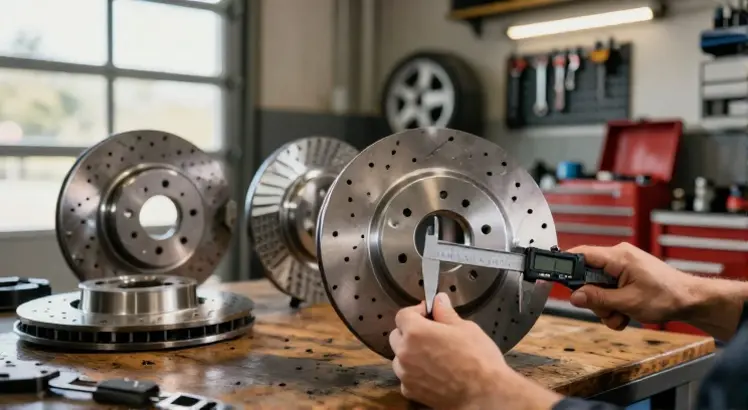
Your brakes are arguably the most critical safety system on your vehicle, and the rotors are the foundation that makes it all work. Knowing how to choose brake rotors can feel overwhelming with all the conflicting advice about drilled versus slotted designs, metallurgy, and brand hype. This guide breaks down exactly what matters, what doesn’t, and how to match the right rotor to your driving needs without wasting money.
From daily commutes to weekend track days, the right rotor improves pedal feel, reduces fade, and extends pad life. We’ll walk through rotor types, materials, warning signs that yours are worn, and common mistakes even seasoned DIYers make. By the end, you’ll be able to shop with confidence and make a purchase that suits your vehicle and driving style perfectly.
Understanding the Different Types of Brake Rotors

Detroit Axle – 10pc Brake Kit for Toyota Highlander Sienna Lexus RX350 RX450h, Drilled and Slotted Disc Brake Rotors Ceramic Brakes Pads Replacement : 12.91″ inch Front and 12.17″ inch Rear Rotor
Check PriceBefore diving into materials and brands, you need to understand the basic rotor styles. Each type has a specific purpose, and choosing the wrong one for your driving environment can lead to noise, cracking, or poor wet-weather performance. The main categories are solid, vented, drilled, slotted, and drilled-and-slotted rotors.
Solid (Non-Vented) Rotors
Solid rotors are the simplest and most affordable design. They consist of a single flat disc of metal without internal cooling channels. You typically find these on older vehicles or the rear axle of economy cars where braking loads are lower. They handle moderate heat well but are prone to fade if pushed hard or driven down steep grades repeatedly.
Vented Rotors
Vented rotors have a hollow core with internal vanes that pump air between the two friction faces. This dramatically improves cooling and reduces brake fade during heavy use. Most modern passenger cars use front vented rotors, and many SUVs and trucks run them on all four corners. If your vehicle came with vented rotors, stick with that style unless you are specifically upgrading for performance driving.
Drilled Rotors
Drilled rotors feature holes bored through the friction surface. They offer better gas dissipation and water evacuation in wet conditions, which gives a more consistent initial bite. However, cheap drilled rotors can crack around the holes under extreme heat cycles. For street use, high-quality drilled rotors work fine, but they are rarely the best choice for frequent towing or aggressive track driving.
Slotted Rotors
Slotted rotors have narrow grooves cut into the face. These slots sweep away debris, dust, and hot gases while shaving a fresh surface on the brake pad. They deliver more consistent friction and excellent bite without the cracking risk associated with drilled holes. Many performance-oriented street drivers and light-duty off-roaders prefer slotted rotors because they offer solid durability with a noticeable improvement in pedal feedback.
Drilled and Slotted Rotors
Combining both features, these rotors aim to deliver the best of both worlds. They look aggressive and perform well in spirited driving. That said, the combination still carries a small risk of stress cracks if the rotor casting is not fully heat-treated. For a daily driver that sees occasional canyon runs, a quality drilled-and-slotted set can be a satisfying upgrade, but you don’t need them for a minivan or a heavy work truck.
What Brake Rotor Material Should You Choose

PowerStop Front and Rear Brake Kit for Toyota Camry 2018-24 – Z17 Ceramic Brake Pads & Disc Rotors Replacement, KOE7931
Check PriceThe metallurgy of a rotor affects heat capacity, wear rate, and noise. Most aftermarket rotors fall into three material categories: standard grey iron, high-carbon iron, and carbon ceramic composites. Your choice depends on your car’s weight, horsepower, and how you use it.
Grey Iron
Standard grey iron is the industry workhorse. It absorbs heat well, resists warping under normal driving, and costs significantly less. The majority of OEM replacement rotors use this material. If you drive in a flat area, rarely carry heavy loads, and prioritize budget, grey iron rotors will serve you perfectly.
High-Carbon Alloys
High-carbon rotors contain a higher percentage of carbon and often molybdenum or chromium. This makes the rotor stronger, quieter, and more resistant to thermal cracking. They also dissipate heat faster. For trucks, SUVs, and enthusiastic drivers, high-carbon rotors offer a noticeable step up in durability without the extreme price of ceramics. Many premium brands, like those featured in our detailed comparison of top brake rotor, use this advanced metallurgy.
Carbon Ceramic
Carbon ceramic rotors are mostly found on high-end sports cars. They are incredibly light, resist fade almost indefinitely, and last tens of thousands of miles longer than iron rotors. The downside is cost, a set can exceed the value of many older vehicles. Unless you track your car heavily, these are overkill. Stick with high-carbon iron for a balanced blend of performance and value.
Key Design Features That Matter

Detroit Axle – Front Brake Rotors for 2011-2026 Chevy Silverado GMC Sierra 2500 3500 HD 2016-2019 Suburban 3500 HD Drilled & Slotted Brake Rotors : 13.98″ inch Rotors
Check PriceBeyond the basic type and material, several design details affect how a rotor performs over its lifespan. Paying attention to these can mean the difference between a quiet, smooth stop and a constant headache of vibration and noise.
Vane Configuration
The vanes inside a vented rotor can be straight, curved, or pillar-style. Straight vanes cool adequately and cost less. Curved or directional vanes pump air more efficiently and reduce left-to-right heat imbalance. Pillar vanes offer the highest strength and heat cycling resistance. If your vehicle is heavy or you tow, look for curved or pillar-vane rotors to prevent hot spots and judder.
Coating and Corrosion Protection
Rotor hats (the non-swept area) and edges rust quickly on uncoated parts. A quality geomet or zinc plating keeps the rotor looking clean and prevents the hub from bonding to the wheel. This matters especially if you live where roads are salted. Coated rotors cost a few dollars more but save hours of hammering rusty rotors off your car later.
Balanced and Precision-Machined Rotors
A rotor that arrives pre-balanced and with a fine surface finish will bed in quickly and deliver vibration-free braking. Many budget rotors skip this step. Invest in a respected brand that balances each rotor after machining, and you will avoid the dreaded steering wheel shake right after installation.
How Vehicle Type and Driving Habits Influence Your Choice

Detroit Axle – Front Brake Kit for 2018-2025 Honda Odyssey, 2019 2020 2021 2022 2023 2024 Drilled and Slotted Disc Brake Rotors Ceramic Brakes Pads with Hardware Replacement : 12.60″ inch Rotor
Check PriceThere is no single best rotor for everyone. The right choice depends heavily on how much your car weighs, where you drive, and how you use the brakes. Matching the rotor to your reality is where most people go wrong.
- Compact cars and daily commuters: Solid or vented grey iron rotors offer all the stopping power you need, plus great pad life. Avoid aggressive drilled designs that only add noise.
- SUVs, crossovers, and minivans: High-carbon vented rotors with a good coating handle extra mass without warping. For a model like the Honda Odyssey, specific fitment ensures proper heat capacity, you can find those details in our Honda Odyssey rotor recommendations.
- Trucks and towing rigs: Slotted high-carbon rotors with pillar or curved vanes keep temperatures in check when hauling. Drilled rotors should be avoided here because the extreme heat cycling can initiate cracks around the holes.
- Performance street and light track use: Slotted or high-quality drilled-and-slotted rotors paired with semi-metallic pads provide the bite and fade resistance you want. Always buy from a brand that specifically designs for thermal stress.
If your drive includes steep mountain descents, opt for a rotor with superior heat capacity, regardless of vehicle type. Constant light braking down a grade generates enormous heat that even a vented solid rotor can struggle to shed.
Signs You Need to Replace Your Rotors

AutoShack Front & Rear Brake Rotors & Premium Pads for Subaru, Forester 2019-2024 Crosstrek 2024-2026 Impreza 2024-2026, AWD H4 2.0L 2.5L – Coated Drilled & Slotted – Black Matte Finish – BlackShield
Check PriceBefore you even think about upgrades, know when your current rotors are done. Rotors wear out from friction material transfer, heat cycling, and corrosion. Look for these symptoms:
- Steering wheel wobble or pulsation when braking, typically a sign of thickness variation, not actual warping.
- Deep grooves, scoring, or a noticeable lip at the rotor edge. A fingernail catch on the surface means it is time.
- Blueish discoloration or heat spots indicating the rotor reached extreme temperatures and the metal has hardened unevenly.
- Rust jacking on vented rotors where the outboard face separates from the hat, causing noise and potential failure.
- The rotor has worn below the minimum thickness stamped on the hat. Never turn a rotor thinner than spec, it is unsafe.
If you are replacing pads, always measure rotor thickness. Many mechanics recommend fresh rotors with every pad swap to ensure a flat, even surface for bedding. It is a small upfront cost for a huge safety margin.
Matching Rotors to Brake Pads
Rotors and pads are a matched pair. The friction material in the pad interacts with the rotor surface to create the stopping force. Pick the wrong combination and you will either destroy the rotors quickly or never get the bite you wanted.
- Ceramic pads with solid or high-carbon rotors: Quiet, low dust, ideal for daily driving. Expect slightly less initial cold bite compared to semi-metallic pads.
- Semi-metallic pads with vented or slotted rotors: Best for heavier vehicles and towing. They generate more noise and dust but offer superior heat fade resistance.
- Performance organic pads with drilled or slotted rotors: Common on older cars. They are gentle on rotors but wear quickly. Not ideal for modern daily driving.
Using a highly abrasive pad on a soft grey iron rotor will chew through both components rapidly. Conversely, a ceramic pad on a rough, low-quality rotor will never bed in properly. For more pairing insights, our comparison of the best brake rotors and pads covers these dynamics in depth.
OEM Replacement vs. Performance Aftermarket Rotors

Metrix Premium Chassis Parts – 11.02 inch (280 mm) 2 PC Front Coated Vented Disc Brake Rotor Kit Fits 2021-2025 Hyundai Elantra, 2024-2026 Hyundai Kona FWD, 2023-2024 Kia Niro Replacement 982785FZN
Check PriceThe decision between grabbing a set of OEM-style replacements and stepping up to a performance aftermarket brand often comes down to your tolerance for noise and your actual driving demands. OEM rotors, either from the dealer or reputable brands like Centric Premium or Raybestos, are designed to meet the exact thermal and noise requirements of your vehicle. They are quiet, predictable, and generally excellent for 90% of drivers.
Performance aftermarket rotors from companies like EBC, StopTech, or Power Stop add features like slotting, better metallurgy, and corrosion-resistant coatings. They can reduce fade on a spirited backroad run and look far better behind open-spoke wheels. The trade-off might be slightly more pad wear and occasional light scraping noise from the slots. If you never push your car to the limit, stick with a premium coated OE replacement rotor and call it done.
Cost vs. Quality and Longevity
Brake rotors range from budget white-box parts to premium high-carbon sets. A rock-bottom rotor often comes without anti-corrosion coating, uses a softer iron mix, and may not be balanced. It will stop the car, but you may be replacing it again in a year.
Mid-range rotors from well-known manufacturers typically use high-carbon steel, include a geomet coating, and are balanced to OEM specs. These cost around 30 to 50 percent more than the cheapest option but last twice as long and keep vibrations away. When you factor in labor, buying a mid-to-premium rotor almost always saves money over time. If you want to understand what creates real longevity, Car and Driver’s expert rotor guide explores how material science affects wear.
Installation Tips and Common Mistakes
Even the best rotor will perform poorly if installed incorrectly. The most common mistake is reusing old hardware or failing to clean the hub face. A speck of rust or dirt between the hub and the new rotor creates runout that feels like a warped rotor from day one. Always wire-brush the hub flat and use a thin film of anti-seize, not grease, on the hub face to prevent future rust bonding.
Another critical step is the bedding-in procedure. New rotors and pads need a series of gradual stops from moderate speed to transfer an even layer of pad material onto the rotor surface. Skipping this leads to uneven deposits, vibrations, and reduced stopping power. Follow the pad manufacturer’s bedding instructions precisely. Also, torque the lug nuts in a star pattern and never use an impact gun for final tightening, uneven clamping can distort the rotor.
Frequently Asked Questions
Can I replace just the brake rotors without changing the pads?
Technically yes, but it is not recommended. Old pads have worn into the contours of the old rotors. Installing fresh flat rotors with used pads reduces the friction contact area and extends bed-in time. For the best braking performance and pad life, always replace pads and rotors as a set.
How do I know if my rotors are warped or just have deposits?
True warping of a rotor is rare. The pulsation you feel through the brake pedal is almost always caused by uneven brake pad material transfer. You can sometimes remove light deposits with an aggressive re-bedding procedure. If a shop measures thickness variation beyond 0.001 inches, replace the rotors.
Are drilled and slotted rotors better for daily driving?
For most daily drivers, they offer no real benefit beyond aesthetics. A high-quality coated vented rotor provides all the cooling and bite you need. Drilled and slotted designs can generate more noise and eat through pads slightly faster. Reserve them for spirited driving or if you simply love the look.
What is the minimum rotor thickness I should see before replacing?
Every rotor has a min thick value engraved on the hat or edge. If the rotor is at or below that number after machining, you must replace it. Never guess, a rotor below minimum thickness cannot absorb heat safely and risks cracking or brake fade.
Final Verdict on How to Choose Brake Rotors
Learning how to choose brake rotors boils down to matching the rotor type, material, and quality level to how you actually drive, not how you wish you drove. For the vast majority of drivers, a premium high-carbon coated vented rotor paired with a ceramic pad delivers quiet, reliable stops with minimal dust and long life. If you tow, drive aggressively, or navigate steep grades, step up to a slotted high-carbon rotor with semi-metallic pads for extra thermal capacity.
Avoid the temptation to buy the cheapest rotor you can find. The difference in corrosion protection, balancing, and metallurgy directly impacts noise, vibration, and how long the part lasts. Invest in a known brand, take the time to clean the hubs, and bed the pads properly. Your brake pedal will stay firm and smooth for tens of thousands of miles, and your maintenance costs will actually drop because you won’t be redoing the job prematurely.
When you’re ready to order, use the knowledge from this guide to filter out the marketing hype. Focus on the right features for your vehicle and driving environment. A smart rotor choice keeps you safer, gives you more confidence behind the wheel, and respects your budget. That is a combination worth braking for.